-1 Maintenance and inspection Contents Page General 1 Maintenance schedule 5 Daily 5 25 hours 6 50 hours 6 100 hours 7 250 hours 7 500 hours 8 1000 hours 9 2000 hours 9 Annually 10 When necessary or with an alarm 11 Bolted joints 12 Specific tightening torque 12 General tightening torque 12 Oils, grease and fluids 13 Instructions 15 Engine 15 Fuel system 17 Cooling system 19 Transmission 20 Hydraulic system 26 Brakes 33 Steering 37 Articulated joint 38 Crane - Grapple 38 Rotator 39 Wheel 40 Batteries 42 Washer container 42 Protective windscreens 43 Fire extinguishing 44 Air conditioning unit 45 Xenon lamps 46 After a long stoppage 47
0 Maintenance and inspection
1 Maintenance and inspection General This section deals with the routine maintenance and service work that can be carried out by the machine owner. In the Driver’s manual you will find a brief list of points to be checked before the daily work in the field. Major adjustments and repairs as well as the installation of optional extras should be carried out by an authorised service organisation. Your dealer can provide further information. Spare parts Always state the machine’s manufacturing number when ordering spare parts and contacting your dealer. Only use Valmet’s original parts (see the spare part catalogue). Tools Tools can be stored under the machine’s steps and behind the left-hand ventilation hood. Welding Some connectors must be disconnected during welding work in order to protect the machine’s electronics. For further instructions see the chapter “Special situations”. Checking the hydraulic pressure • The machine must be run warm when checking the hydraulic pressure, and the engine stopped when measuring equipment is assembled or dismantled. • Use a pressure gauge with the correct pressure range. • All repairs to the hydraulic system and any adjustments to the pressure must be carried out by authorised service personnel, if not otherwise stated in this Manual. Running-in period Special checks should be performed on the oil pressure, temperatures, etc., in the engine and gearbox/hydrostatic drive during the running-in period.
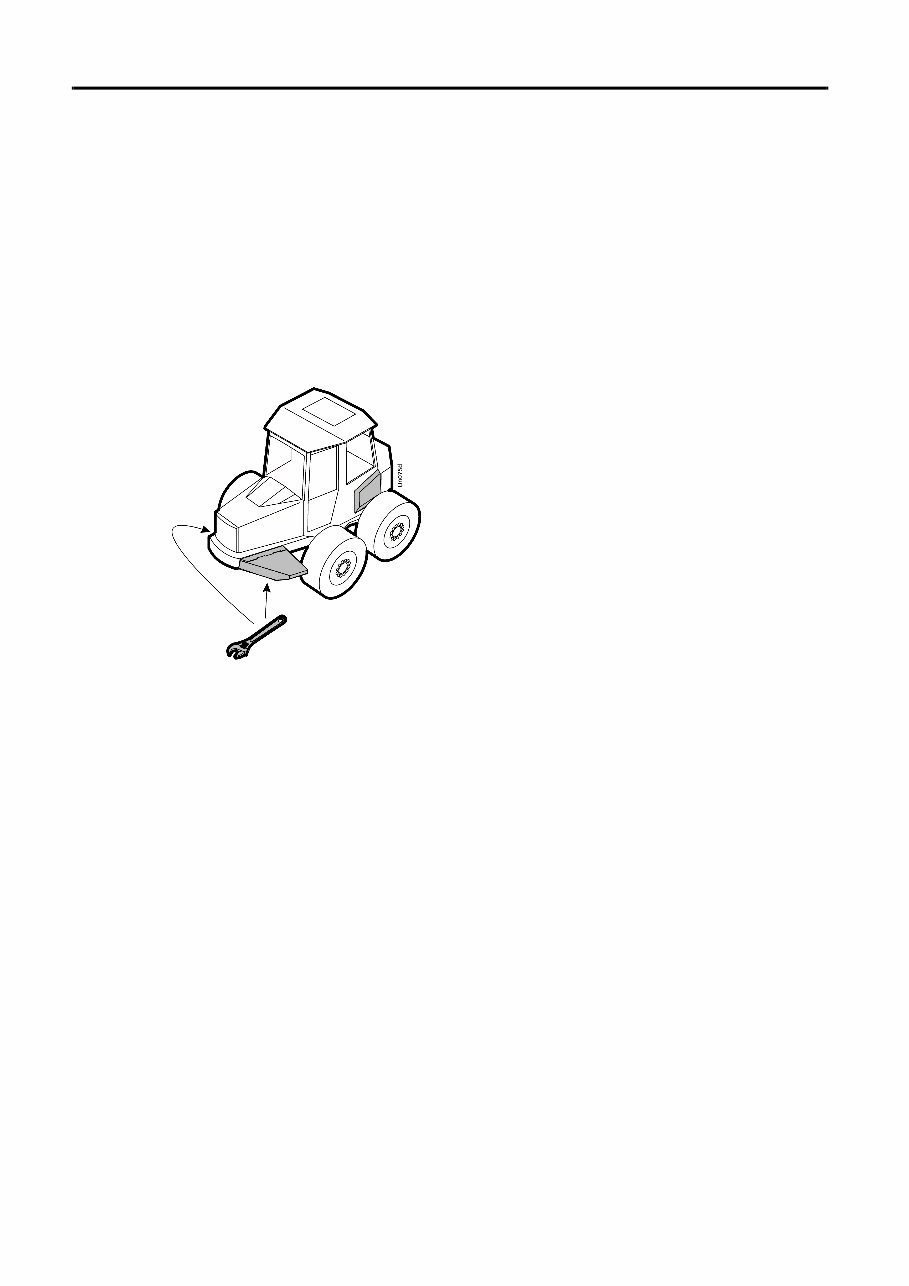
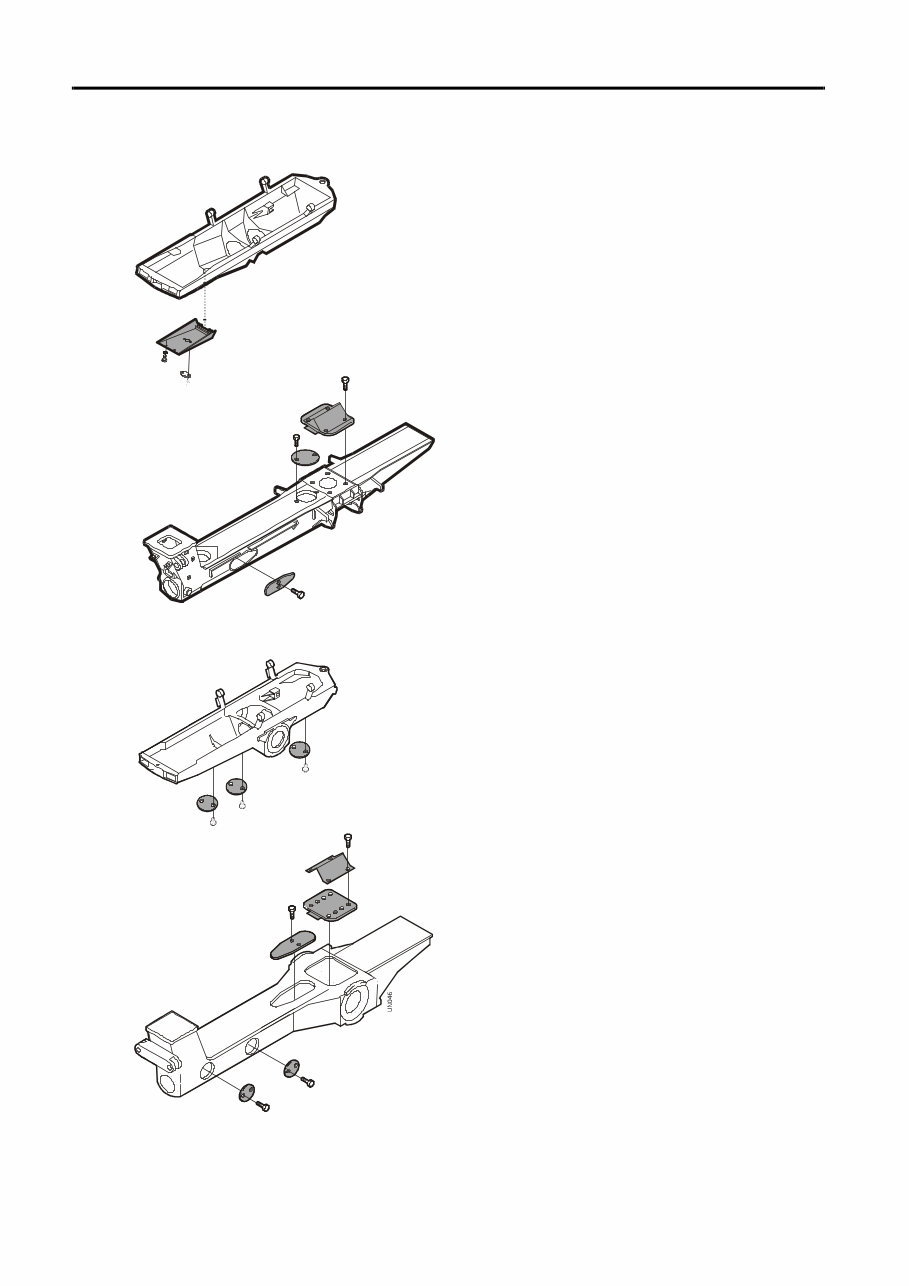
2 Maintenance and inspection Cleaning The fire extinguishing unit must be disconnected before washing. Disconnect the connector to the central unit in the cab. The insulation sheath on electric cables, bearings, seals, etc. can be damaged even at moderate pressure and temperatures. Exercise great care when using a high pressure washer. The front and rear frames have service hatches (illustrated) that can also be used when cleaning internal dirt. For environmental reasons, the front frame’s hatches are fitted with seals to prevent oil spillage. Use a collection tray when the hatches are opened for inspection as well as when washing. Large-scale cleaning should be performed in washing facilities where waste water can be dealt with. Waste Batteries, oil, filters, contaminated fuel, hydraulic hoses, plastics or similar waste should be handed in for recycling or destruction. U N 0 7 8 840 860 890
3 Maintenance and inspection General safety regulations Only personnel trained in the operation and service of the machine may carry out service work. Service and maintenance must be carried out in accordance with the manufacturer’s recommendations. The following applies for maintenance work: • The engine must be switched off and the battery disconnector turned off. • The parking brake should be activated. • The machine should be parked on a flat surface. • Chock the wheels using blocks if necessary. • Fit the lock on the articulated joint if necessary. • Let the machine cool. Risk of burn injuries: hot engine, exhaust pipe, replacing/cleaning the working lights. • If maintenance is to be carried out indoors, use an exhaust extractor or ensure that ventilation is sufficient. • Lifted machines must be supported on blocks. • Individual machine parts, for example, bogie lift, front blade, crane, grapple and gate must be supported on blocks during maintenance and inspection. The crane must be parked on the special support on the rear frame. If the crane has to be positioned differently dur- ing maintenance, it should be placed on a firm surface and positioned so that it does not collapse if the hydraulic pressure drops. Approved platforms should be used during maintenance for all high work. • All lifting devices must conform to national provisions for lifting equipment. • Check that the safety catch locks the cab before working under a tilted cab. For further instructions, see the chapter “Tilting the cab”. • Avoid climbing on the machine if possible. Use the machine’s ladders, which are fitted with anti-slip protection, or use the separate service ladder positioned on the tank. • Oils, grease, coolant and engine fuel are harmful to your health. Protect your skin with gloves and other appropriate clothing. Protect your eyes with protective glasses. • When cleaning using compressed air or water: note the risks of splashing particles and chemicals! Wear protective gloves and tight fitting protective glasses. • Avoid breathing in the fumes from hydraulic oil, especially hot oil. Wash skin exposed to oil spillage. Change any clothes with oil stains. • Open pressure vessels carefully. If the engine is hot, there will be a state of overpressure in the cooler and expansion tank. • Never wear jewellery or loose objects while working. • Do not stand in front of or behind the machine when the engine is running. • When starting after changing the hydraulic oil, air in the hydraulic system can result in crane movement that is difficult to control. The same can apply to the articulated joint steering. Check that no one is present in the crane’s working range.
The Valmet 860.1 maintenance electrical service workshop manual is a comprehensive resource for professionals and DIY enthusiasts alike. This manual provides detailed information on electrical system maintenance for the Valmet 860.1, offering valuable insights into troubleshooting, repair, and upkeep.
With clear and concise instructions, this manual covers a wide range of electrical components, including wiring diagrams, circuitry, and diagnostic procedures. Whether you're addressing issues with the vehicle's lighting, sensors, or other electrical systems, this manual equips you with the knowledge needed to effectively address maintenance tasks.
Designed to be user-friendly, the manual facilitates efficient navigation, allowing users to quickly locate the information they need. It serves as an indispensable tool for ensuring the proper functioning of the electrical systems in the Valmet 860.1, making it an essential addition to any workshop or garage.





 Lifetime Access