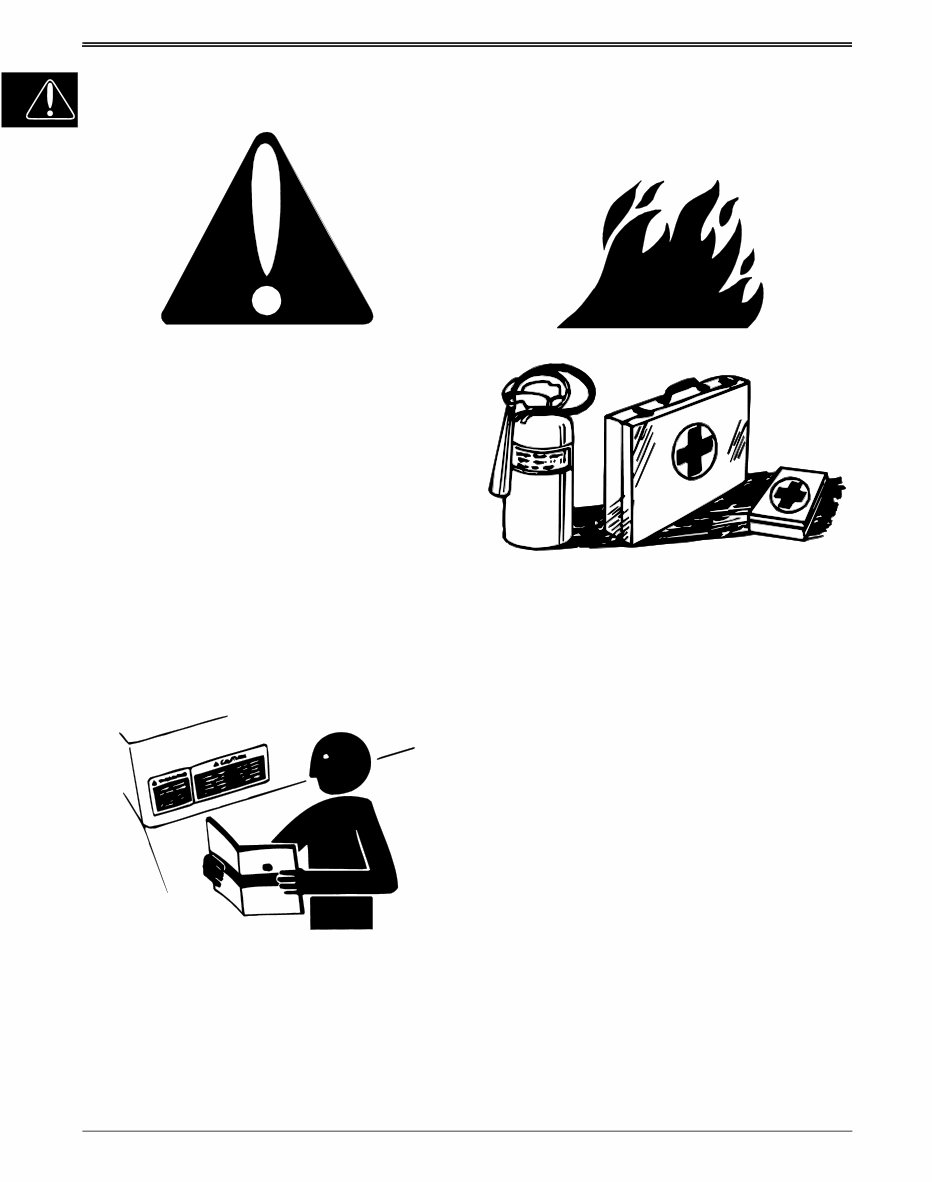
SAFETY 1-2 9/23/99 RECOGNIZE SAFETY INFORMATION This is the safety-alert symbol. When you see this symbol on your machine or in this manual, be alert to the potential for personal injury. Follow recommended precautions and safe servicing practices. Understand Signal Words A signal word—DANGER, WARNING, or CAUTION—is used with the safety-alert symbol. DANGER identifies the most serious hazards. DANGER or WARNING safety signs are located near specific hazards. General precautions are listed on CAUTION safety signs. CAUTION also calls attention to safety messages in this manual. REPLACE SAFETY SIGNS Replace missing or damaged safety signs. See the machine operator’s manual for correct safety sign placement. HANDLE FLUIDS SAFELY—AVOID FIRES Be Prepared for Emergencies When you work around fuel, do not smoke or work near heaters or other fire hazards. Store flammable fluids away from fire hazards. Do not incinerate or puncture pressurized containers. Make sure machine is clean of trash, grease, and debris. Do not store oily rags; they can ignite and burn spontaneously. Be prepared if a fire starts. Keep a first aid kit and fire extinguisher handy. Keep emergency numbers for doctors, ambulance service, hospital, and fire department near your telephone.
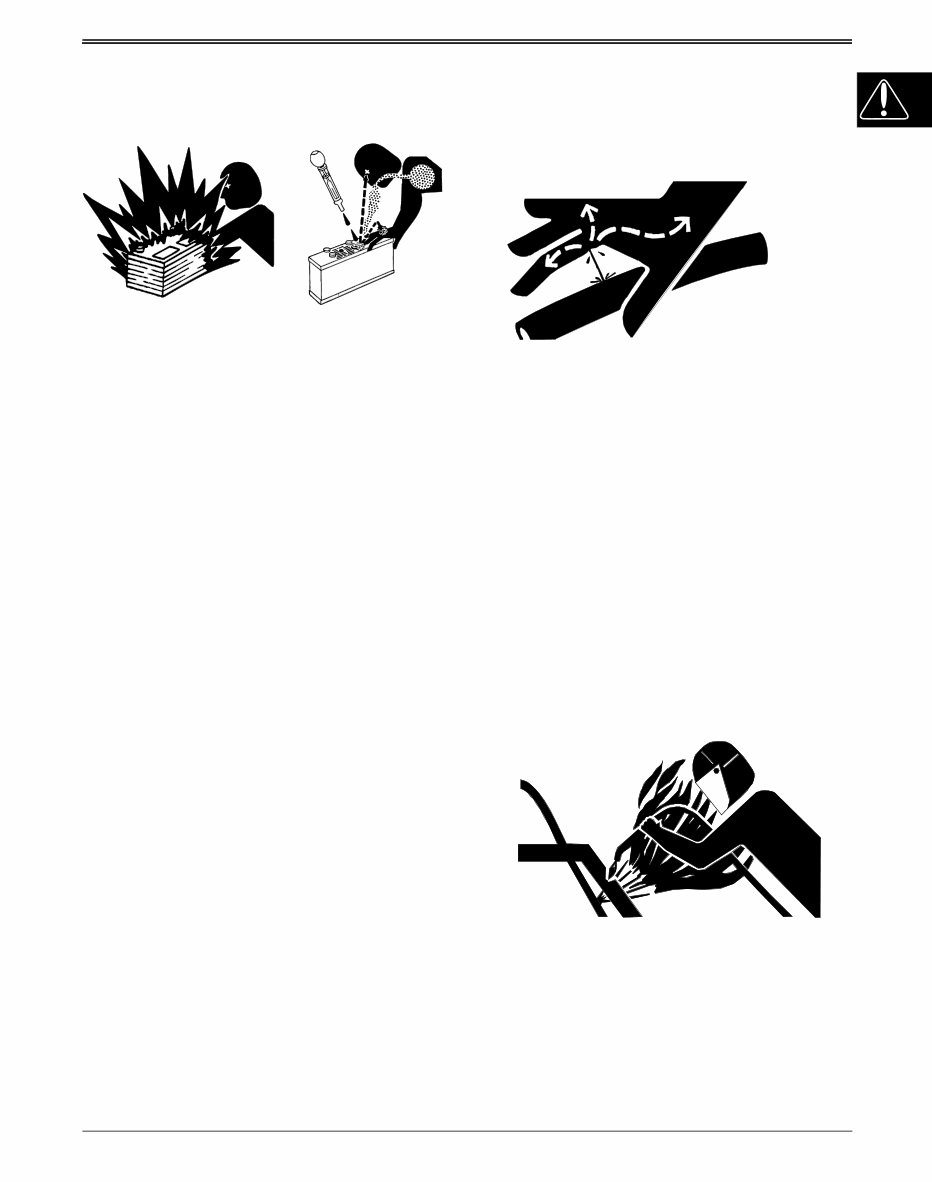
SAFETY 9/23/99 1-3 USE CARE IN HANDLING AND SERVICING BATTERIES Prevent Battery Explosions • Keep sparks, lighted matches, and open flame away from the top of battery. Battery gas can explode. • Never check battery charge by placing a metal object across the posts. Use a voltmeter or hydrometer. • Do not charge a frozen battery; it may explode. Warm battery to 16°C (60°F). Prevent Acid Burns • Sulfuric acid in battery electrolyte is poisonous. It is strong enough to burn skin, eat holes in clothing, and cause blindness if splashed into eyes. • Avoid acid burns by: 1. Filling batteries in a well-ventilated area. 2. Wearing eye protection and rubber gloves. 3. Avoiding breathing fumes when electrolyte is added. 4. Avoiding spilling or dripping electrolyte. 5. Using proper jump start procedure. • If you spill acid on yourself: 1. Flush your skin with water. 2. Apply baking soda or lime to help neutralize the acid. 3. Flush your eyes with water for 10—15 minutes. 4. Get medical attention immediately. • If acid is swallowed: 1. Drink large amounts of water or milk. 2. Then drink milk of magnesia, beaten eggs, or vegetable oil. 3. Get medical attention immediately. USE CARE AROUND HIGH- PRESSURE FLUID LINES Avoid High-Pressure Fluids Escaping fluid under pressure can penetrate the skin causing serious injury. Avoid injury from escaping fluid under pressure by stopping the engine and relieving pressure in the system before disconnecting or connecting hydraulic or other lines. Tighten all connections before applying pressure. Search for leaks with a piece of cardboard. Protect hands and body from high-pressure fluids. If an accident occurs, see a doctor immediately. Any fluid injected into the skin must be surgically removed within a few hours or gangrene may result. Doctors unfamiliar with this type of injury should reference a knowledgeable medical source. Such information is available from Deere & Company Medical Department in Moline, Illinois, U.S.A. Avoid Heating Near Pressurized Fluid Lines Flammable spray can be generated by heating near pressurized fluid lines, resulting in severe burns to yourself and bystanders. Do not heat by welding, soldering, or using a torch near pressurized fluid lines or other flammable materials. Pressurized lines can be accidentally cut when heat goes beyond the immediate flame area. www.servicemanualall.com
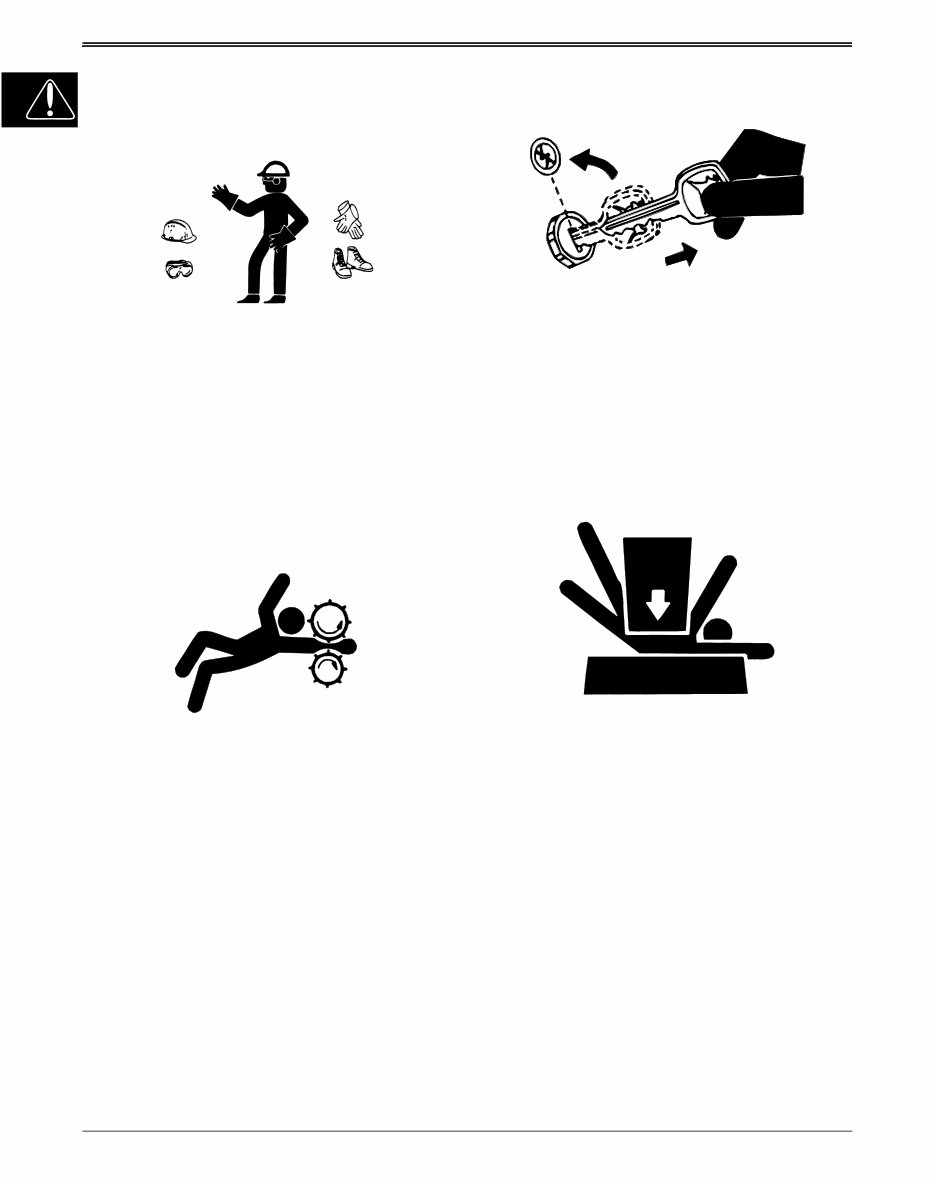
SAFETY 1-4 9/23/99 USE SAFE SERVICE PROCEDURES Wear Protective Clothing Wear close fitting clothing and safety equipment appropriate to the job. Prolonged exposure to loud noise can cause impairment or loss of hearing. Wear a suitable hearing protective device such as earmuffs or earplugs to protect against objectionable or uncomfortable loud noises. Operating equipment safely requires the full attention of the operator. Do not wear radio or music headphones while operating machine. Service Machines Safely Tie long hair behind your head. Do not wear a necktie, scarf, loose clothing, or necklace when you work near machine tools or moving parts. If these items were to get caught, severe injury could result. Remove rings and other jewelry to prevent electrical shorts and entanglement in moving parts. Use Proper Tools Use tools appropriate to the work. Makeshift tools and procedures can create safety hazards. Use power tools only to loosen threaded parts and fasteners. For loosening and tightening hardware, use the correct size tools. DO NOT use U.S. measurement tools on metric fasteners. Avoid bodily injury caused by slipping wrenches. Use only service parts meeting John Deere specifications. Park Machine Safely Before working on the machine: 1. Lower all equipment to the ground. 2. Stop the engine and remove the key. 3. Disconnect the battery ground strap. 4. Hang a “DO NOT OPERATE” tag in operator station. Support Machine Properly and Use Proper Lifting Equipment If you must work on a lifted machine or attachment, securely support the machine or attachment. Do not support the machine on cinder blocks, hollow tiles, or props that may crumble under continuous load. Do not work under a machine that is supported solely by a jack. Follow recommended procedures in this manual. Lifting heavy components incorrectly can cause severe injury or machine damage. Follow recommended procedure for removal and installation of components in the manual. Work in Clean Area Before starting a job: 1. Clean work area and machine. 2. Make sure you have all necessary tools to do your job. 3. Have the right parts on hand. 4. Read all instructions thoroughly; do not attempt shortcuts. www.servicemanualall.com
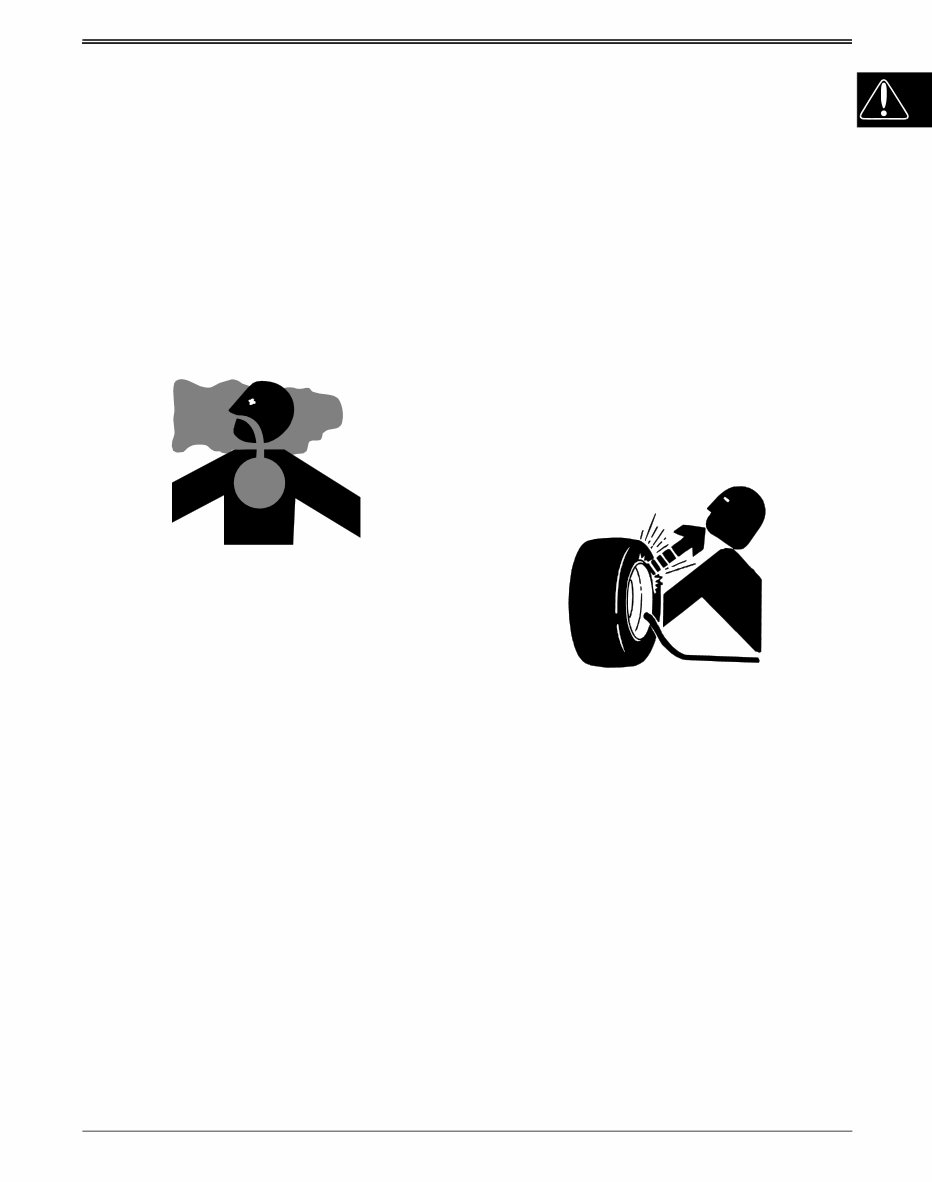
SAFETY 9/23/99 1-5 Using High—Pressure Washers Directing pressurized water at electronic/electrical components or connectors, bearings, hydraulic seals, fuel injection pumps or other sensitive parts and components may cause product malfunctions. Reduce pressure and spray at a 45 to 90 degree angle. Illuminate Work Area Safely Illuminate your work area adequately but safely. Use a portable safety light for working inside or under the machine. Make sure the bulb is enclosed by a wire cage. The hot filament of an accidentally broken bulb can ignite spilled fuel or oil. Work in Ventilated Area Engine exhaust fumes can cause sickness or death. If it is necessary to run an engine in an enclosed area, remove the exhaust fumes from the area with an exhaust pipe extension. If you do not have an exhaust pipe extension, open the doors and get outside air into the area. WARNING: California Proposition 65 Warning Diesel engine exhaust and some of its constituents are known to the State of California to cause cancer, birth defects, and other reproductive harm. Gasoline engine exhaust from this product contains chemicals known to the State of California to cause cancer, birth defects, or other reproductive harm. Remove Paint Before Welding or Heating Avoid potentially toxic fumes and dust. Hazardous fumes can be generated when paint is heated by welding, soldering, or using a torch. Do all work outside or in a well ventilated area. Dispose of paint and solvent properly. Remove paint before welding or heating. If you sand or grind paint, avoid breathing the dust. Wear an approved respirator. If you use solvent or paint stripper, remove stripper with soap and water before welding. Remove solvent or paint stripper containers and other flammable material from area. Allow fumes to disperse at least 15 minutes before welding or heating. Avoid Harmful Asbestos Dust Avoid breathing dust that may be generated when handling components containing asbestos fibers. Inhaled asbestos fibers may cause lung cancer. Components in products that may contain asbestos fibers are brake pads, brake band and lining assemblies, clutch plates, and some gaskets. The asbestos used in these components is usually found in a resin or sealed in some way. Normal handling is not hazardous as long as airborne dust containing asbestos is not generated. Avoid creating dust. Never use compressed air for cleaning. Avoid brushing or grinding material containing asbestos. When servicing, wear an approved respirator. A special vacuum cleaner is recommended to clean asbestos. If not available, apply a mist of oil or water on the material containing asbestos. Keep bystanders away from the area. SERVICE TIRES SAFELY Explosive separation of a tire and rim parts can cause serious injury or death. Do not attempt to mount a tire unless you have the proper equipment and experience to perform the job. Always maintain the correct tire pressure. Do not inflate the tires above the recommended pressure. Never weld or heat a wheel and tire assembly. The heat can cause an increase in air pressure resulting in a tire explosion. Welding can structurally weaken or deform the wheel. When inflating tires, use a clip-on chuck and extension hose long enough to allow you to stand to one side and NOT in front of or over the tire assembly. Use a safety cage if available. Check wheels for low pressure, cuts, bubbles, damaged rims or missing lug bolts and nuts. www.servicemanualall.com
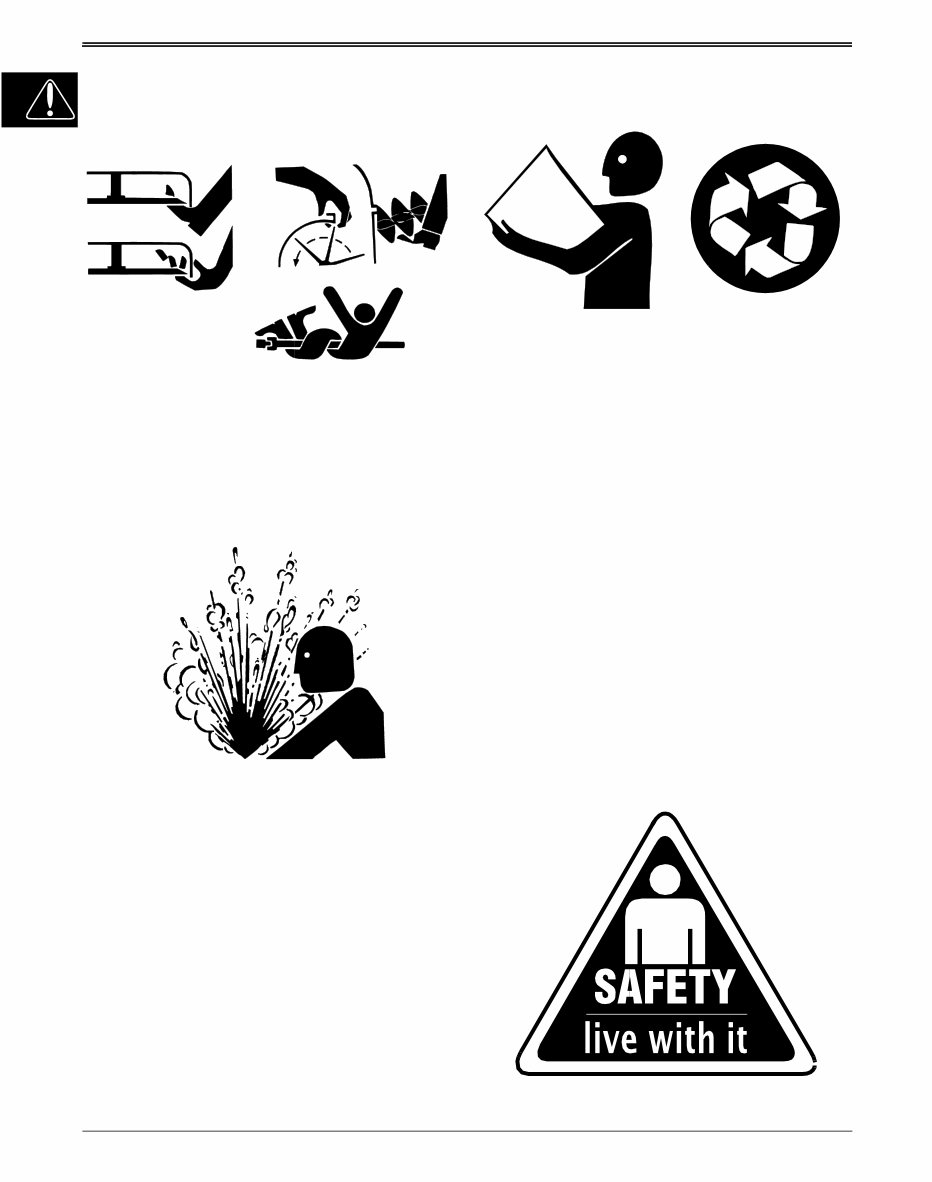
SAFETY 1-6 9/23/99 AVOID INJURY FROM ROTATING BLADES, AUGERS AND PTO SHAFTS Keep hands and feet away while machine is running. Shut off power to service, lubricate, or remove mower blades, augers, or PTO shafts. SERVICE COOLING SYSTEM SAFELY Explosive release of fluids from pressurized cooling system can cause serious burns. Shut off machine. Remove filler cap only when cool enough to touch with bare hands. Slowly loosen cap to first stop to relieve pressure before removing completely. HANDLE CHEMICAL PRODUCTS SAFELY Direct exposure to hazardous chemicals can cause serious injury. Potentially hazardous chemicals used with John Deere equipment include such items as lubricants, coolants, paints, and adhesives. A Material Safety Data Sheet (MSDS) provides specific details on chemical products: physical and health hazards, safety procedures, and emergency response techniques. Check the MSDS before you start any job using a hazardous chemical. That way you will know exactly what the risks are and how to do the job safely. Then follow procedures and recommended equipment. Dispose of Waste Properly Improperly disposing of waste can threaten the environment and ecology. Potentially harmful waste used with John Deere equipment includes such items as oil, fuel, coolant, brake fluid, filters, and batteries. Use leakproof containers when draining fluids. Do not use food or beverage containers that may mislead someone into drinking from them. Do not pour waste onto the ground, down a drain, or into any water source. Inquire on the proper way to recycle or dispose of waste from your local environmental or recycling center, or from your John Deere dealer. LIVE WITH SAFETY Before returning machine to customer, make sure machine is functioning properly, especially the safety systems. Install all guards and shields. www.servicemanualall.com
SPECIFICATIONS AND INFORMATION CONTENTS Page CONTENTS 9/23/99 2-1 SPECIFICATIONS AND INFORMATION GENERAL VEHICLE SPECIFICATIONS ........................ 10 TORQUE VALUES, NON-STANDARD FASTENERS ........................ 10 GASOLINE ENGINE ................................................. 10 DIESEL ENGINE .................................................... 11 POWER TRAIN, HYDROSTATIC........................................ 12 STEERING ........................................................ 12 BRAKES .......................................................... 12 HYDRAULICS ...................................................... 12 METRIC FASTENER TORQUEVALUES ........................ 13 INCH FASTENER TORQUE VALUES .......................... 14 O-RING SEAL SERVICE RECOMMENDATIONS ................. 15 FACE SEAL FITTINGS WITH INCH STUD ENDS TORQUE .................. 15 FACE SEAL FITTINGS WITH METRIC STUD ENDS TORQUE ................ 16 O-RING FACE SEAL FITTINGS ........................................ 17 O-RING BOSS FITTINGS ............................................. 17 STRAIGHT FITTING OR SPECIAL NUT TORQUES ........................ 18 METRIC FASTENER TORQUE VALUE—GRADE 7 (SPECIAL) ............... 18 GASOLINE ............................................... 19 4–CYCLE ENGINES ................................................. 19 GASOLINE STORAGE ............................................... 19 DIESEL FUEL ............................................. 20 DIESEL FUEL LUBRICITY ............................................ 20 DIESEL FUEL STORAGE ............................................. 20 ENGINE OIL SPECIFICATIONS ............................... 21 4–CYCLE DIESEL ENGINE OIL ........................................ 21 4–CYCLE GASOLINE ENGINE OIL ..................................... 22 BREAK-IN ENGINE OIL—DIESEL ...................................... 23 BREAK-IN ENGINE OIL—4-CYCLE GASOLINE ........................... 24 HYDROSTATIC TRANSMISSION AND HYDRAULIC OIL ........... 25 HYDROSTATIC TRANSMISSION AND HYDRAULIC OIL .................... 25 GEAR CASE OIL SPECIFICATIONS ........................... 26 GEAR CASE OIL .................................................... 26 GEAR TRANSMISSION GREASE SPECIFICATIONS.............. 27 GEAR TRANSMISSION GREASE ...................................... 27 ALTERNATIVE LUBRICANTS ................................ 28 SYNTHETIC LUBRICANTS............................................ 28 LUBRICANT STORAGE .............................................. 28 MIXING OF LUBRICANTS ............................................ 28 OIL FILTERS ....................................................... 28 COOLANT SPECIFICATIONS ................................ 29 DIESEL AND GASOLINE ENGINE COOLANT ............................. 29 DIESEL AND GASOLINE ENGINE COOLANT DRAIN INTERVAL ............. 29 SERIAL NUMBER LOCATIONS ............................... 30 www.servicemanualall.com
CONTENTS SPECIFICATIONS AND INFORMATION 2-2 9/23/99 Page PRODUCT SERIAL NUMBER ......................................... 30 DIESEL ENGINE SERIAL NUMBER LOCATION........................... 30 GASOLINE ENGINE SERIAL NUMBER LOCATION ........................ 30 TRANSAXLE SERIAL NUMBER LOCATION .............................. 30 www.servicemanualall.com TNEWCAMP@PAYLOADZ
9/28/99 2-3 SPECIFICATIONS AND INFORMATION GENERAL VEHICLE SPECIFICATIONS GENERAL VEHICLE SPECIFICATIONS TORQUE VALUES, NON-STANDARD FASTENERS All torque specifications are subject to final verication. NOTE: Torques listed in this GROUP apply ONLY to “special” and/or NON-STANDARD fasteners. Unless otherwise specified, STANDARD fasteners should be torqued per “TORQUE VALUES, STANDARD METRIC METRIC FASTENER” or ‘TORQUE VALUES, STANDARD INCH FASTENER”. GASOLINE ENGINE Engine Mounting Cap Screws ................................ 80 N•m (60 lb-ft) Valve Clearance Adjusting Nut ............................... 9 N•m (79 lb-in.) Carburetor Mounting Nuts ................................... 17 N•m (12 lb-ft) Intake Manifold Cap Screw (Final) ............................ 6 N•m (53 lb-in.) Pressure Relief Plug ..................................... 15 N•m (133 lb-in.) Thermostat Housing Cap Screws ............................. 6 N•m (53 lb-in.) Rocker Arm Adjuster Screw Lock Nut ......................... 9 N•m (79 lb-in.) Cylinder Head Cap Screw (Final) ........................... 21 N•m (186 lb-in.) Spark Plug............................................. 20 N•m (177 lb-in.) Crankcase Cover Cap Screw .............................. 21 N•m (186 lb-in.) Crankcase Drain Plug .................................... 23 N•m (204 lb-in.) Connecting Rod Cap Screw ............................... 21 N•m (186 lb-in.) Coolant Pump Cap Screw ................................... 8 N•m (70 lb-in.) Crankcase Cover Cap Screw ................................ 23 N•m (17 lb-ft) Oil Pump Cover Cap Screw ................................ 7.8 N•m (69 lb-in.) Ignition Coil Cap Screws ................................... 9.8 N•m (87 lb-in.) Starting Motor Mounting Cap Screw ........................ 15.3 N•m (135 lb-in.) Governor Arm Nut ........................................ 7.8 N•m (69 lb-in.) Flywheel: Flywheel Nut ............................................ 108 N•m (80 lb-ft) Flywheel Sheave ......................................... 15 N•m (130 lb-ft) Fan Belt Drive Sheave Screw .............................. 15 N•m (133 lb-in.) Carburetor—425: Throttle Shaft Retaining Screw ............................... 2 N•m (17 lb-in.) Drain Screw............................................. 1.2 N•m (10 lb-in.) Choke and Throttle Valve Screw ........................... 0.88 N•m (7.8 lb-in.) Solenoid Valve Torque..................................... 9.8 N•m (87 lb-in.) Main Jet and Main Air Jet Torque ........................... 1.0 N•m (8.9 lb-in.) Air Horn Mounting Screws .................................. 2.9 N•m (26 lb-ft) Throttle Body—445: Throttle Shaft Retaining Screw ............................... 2.0 N•m (17 lb-ft) Throttle Plate Screws ...................................... 2.0 N•m (17 lb-ft) Mounting Stud Nuts Torque.................................. 17 N•m (12 lb-ft) www.servicemanualall.com
Our repair manual, owner's manuals, and parts catalogs contain all the information you'll need to perform repairs, look up parts, or do routine maintenance on your machine. You will have access to information regarding the following topics:
General Information
Routine Maintenance
Engine Removal and Installation
Fuel System
Lubrication and Cooling System
Engine Specifications
Transmission, Drive Chain & Sprockets
Steering System
Shocks
Body Work
Intake & Exhaust
Electrical System
Advanced Troubleshooting
And more!
With our downloadable repair manual, find the page pertaining to your job, print it off, and get working on your machine. No more ruining your expensive paper shop manual with grease and dirt.
Broken down on the trail or site and have a smartphone? What an easy way to find your problem and repair it on the spot, no downtime on the job site. With our downloadable repair manuals, you instantly have access to the material needed to get you running again. Kind of tough to do that with a paper manual.
All our repair manuals come with a Lifetime Protection Policy. If lost or damaged, simply contact us, and we'll replace it free of charge for life.
We provide various repair service manuals, workshop manuals, repair manuals, owner's manuals, parts catalogs, and other various manuals for UTVs, motorcycles, ATVs, quads, snowmobiles, Seadoos, equipment, small engines, inboards, outboards, and more, all in an electronic downloadable format.
Instant Access after Payment
No Shipping Cost with Download
Get a Download so no waiting, repair it now
If you are looking for a specific manual and cannot find it or do not see it listed, then contact our customer support team via the CONTACT US LINK ABOVE with details of the required manual, and we will do our absolute best to find and list it for you.
Instant Access after Payment. Thank you.
Recently Viewed
5,521,897Happy Clients
2,594,462eManuals
1,120,453Trusted Sellers
15Years in Business
Price:
Actual Price:
1992-2001 John Deere 425/445/455 Lawn Tractor Service & Repair Manual




 Lifetime Access