Chapter One General Information Chapter Two Periodic Maintenance and Tune-up Chapter Three Troubleshooting Chapter Four Engine Chapter Five Fuel System Chapter Six Electrical System Chapter Seven Power Train Chapter Eight Front Suspension and Steering Chapter Nine Rear Suspension and Track Chapter Ten Liquid Cooling System Index Wiring Diagrams
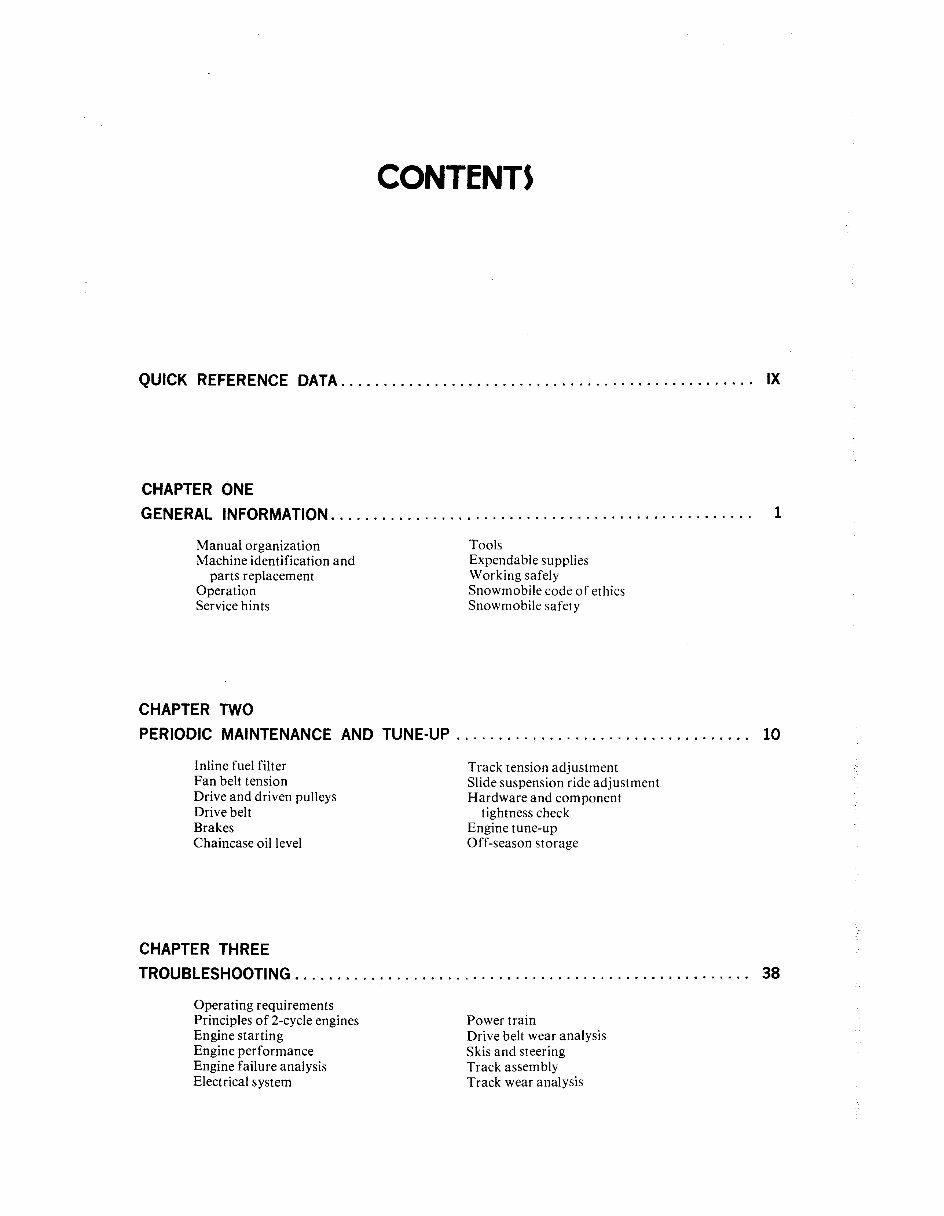
CONTENTS QUICK REFERENCE DATA ................................................. IX CHAPTER ONE GENERAL INFORMATION .................................................. 1 Manual organization Machine identification and parts replacement Operation Service hints Tools Expendable supplies Working safely Snowmobile code of ethics Snowmobile safety CHAPTER TWO PERIODIC MAINTENANCE AND TUNE-UP. ................................ .. 10 Inline fuel filter Fan belt tension Drive and driven pulleys Drive belt Brakes Chaincase oil level Track tension adjustment Slide suspension ride adjustment Hardware and component tightness check Engine tune-up Off-season storage CHAPTER THREE TROUBLESHOOTING. ................................................... .. 38 Operating requirements Principles of 2-cycle engines Engine starting Engine performance Engine failure analysis Electrical system Power train Drive belt wear analysis Skis and steering Track assembly Track wear analysis
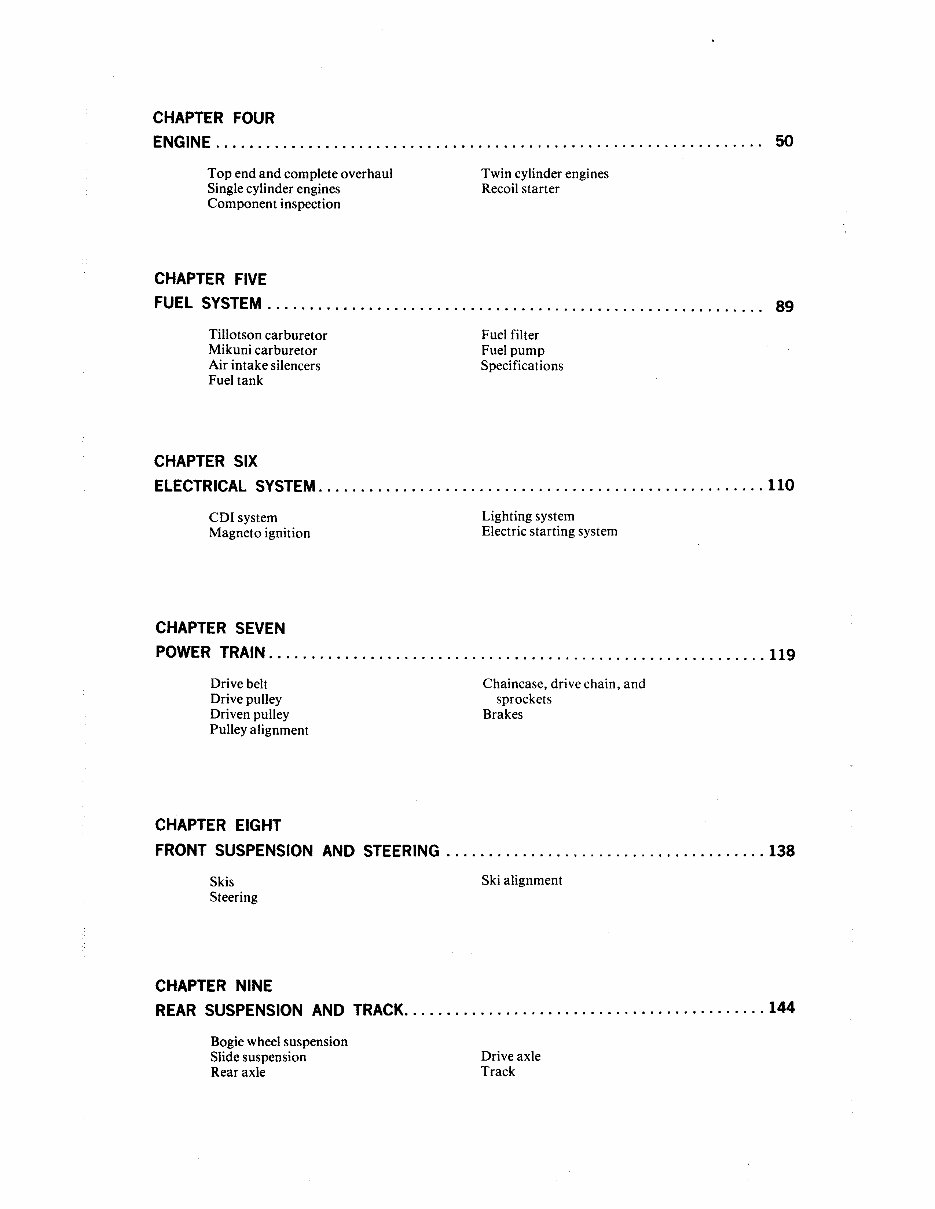
CHAPTER FOUR ENGINE 50 Top end and complete overhaul Single cylinder engines Component inspection Twin cylinder engines Recoil starter CHAPTER FIVE FUEL SYSTEM . 89 Tillotson carburetor Mikuni carburetor Air intake silencers Fuel tank Fuel filter Fuel pump Specifications CHAPTER SIX ELECTRICAL SySTEM 110 cm system Magneto ignition Lighting system Electric starting system CHAPTER SEVEN POWER TRAIN 119 Drive belt Drive pulley Driven pulley Pulley alignment Chaincase, drive chain, and sprockets Brakes CHAPTER EIGHT FRONT SUSPENSION AND STEERING 138 Skis Steering Ski alignment CHAPTER NINE REAR SUSPENSION AND TRACK 144 Bogie wheel suspension Slide suspension Rear axle Drive axle Track
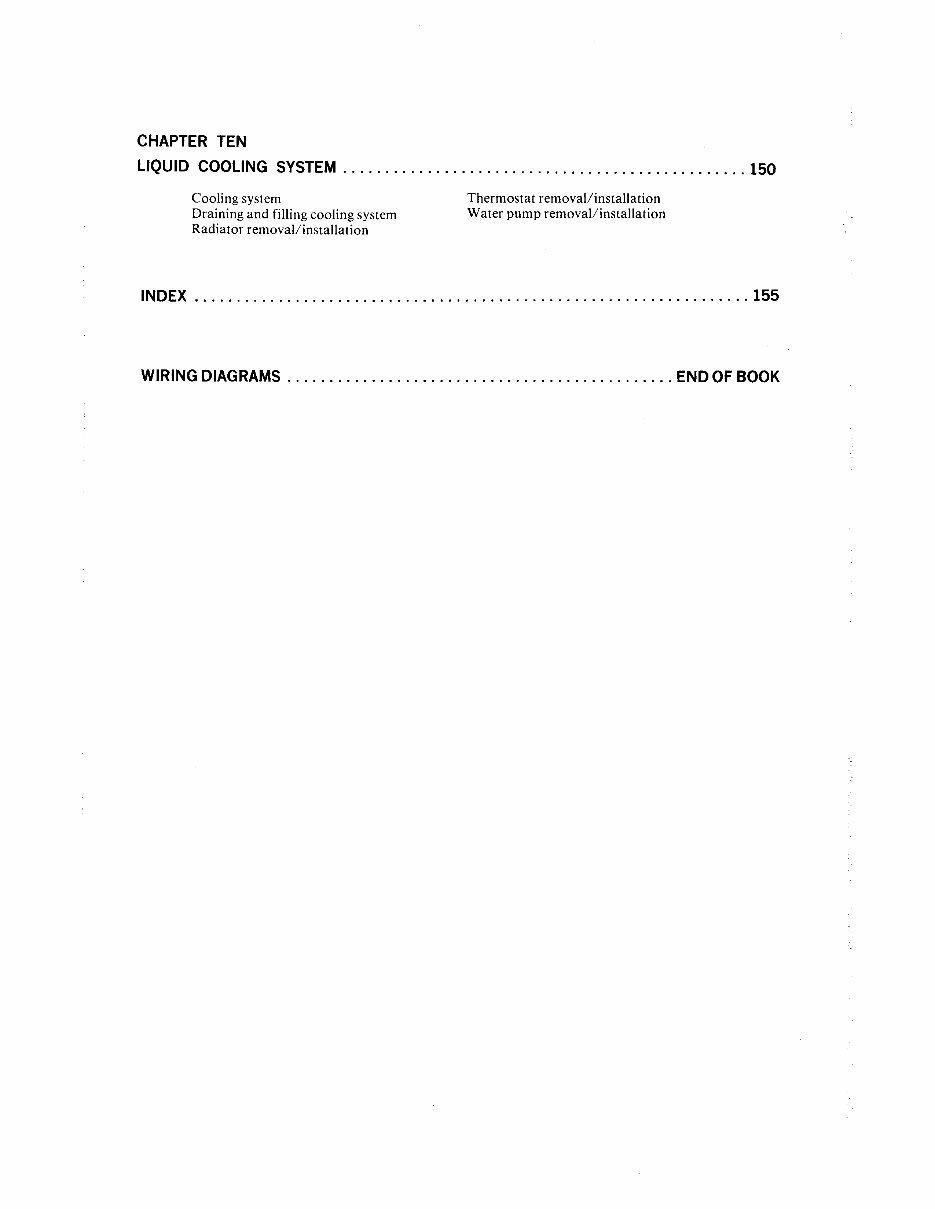
CHAPTER TEN LIQUID COOLING SYSTEM 150 Cooling system Draining and filling cooling system Radiator removal/installation Thermostat removal/installation Water pump removal/installation INDEX 155 WIRING DIAGRAMS END OF BOOK
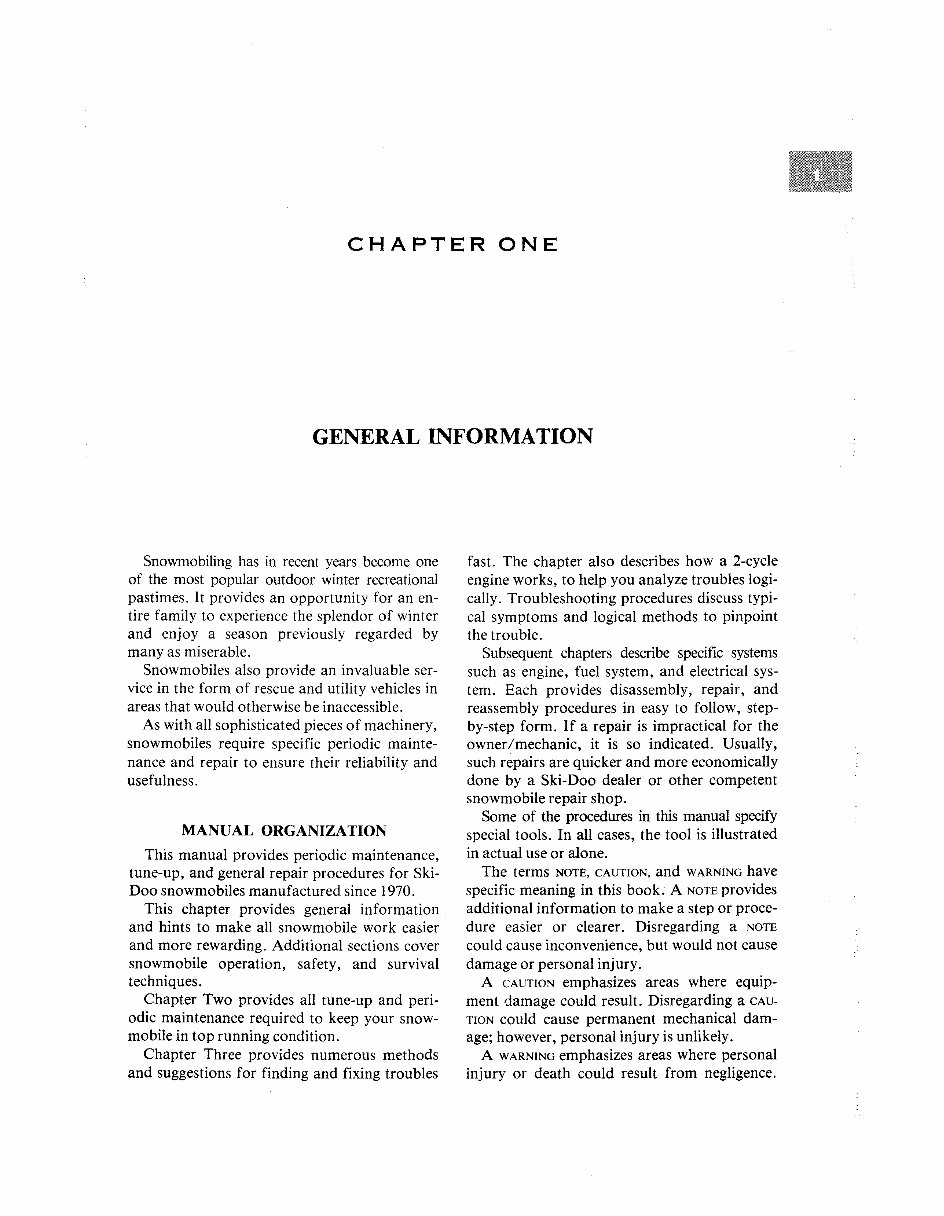
CHAPTER ONE GENERAL INFORMATION Snowmobiling has in recent years become one of the most popular outdoor winter recreational pastimes. It provides an opportunity for an en- tire family to experience the splendor of winter and enjoy a season previously regarded by many as miserable. Snowmobiles also provide an invaluable ser- vice in the form of rescue and utility vehicles in areas that would otherwise be inaccessible. As with all sophisticated pieces of machinery, snowmobiles require specific periodic mainte- nance and repair to ensure their reliability and usefulness. MANUAL ORGANIZATION This manual provides periodic maintenance, tune-up, and general repair procedures for Ski- Doo snowmobiles manufactured since 1970. This chapter provides general information and hints to make all snowmobile work easier and more rewarding. Additional sections cover snowmobile operation, safety, and survival techniques. Chapter Two provides all tune-up and peri- odic maintenance required to keep your snow- mobile in top running condition. Chapter Three provides numerous methods and suggestions for finding and fixing troubles fast. The chapter also describes how a 2-cycle engine works, to help you analyze troubles logi- cally. Troubleshooting procedures discuss typi- cal symptoms and logical methods to pinpoint the trouble. Subsequent chapters describe specific systems such as engine, fuel system, and electrical sys- tem. Each provides disassembly, repair, and reassembly procedures in easy to follow, step- by-step form. If a repair is impractical for the owner/mechanic, it is so indicated. Usually, such repairs are quicker and more economically done by a Ski-Doo dealer or other competent snowmobile repair shop. Some of the procedures in this manual specify special tools. In all cases, the tool is illustrated in actual use or alone. The terms NOTE, CAUTION, and WARNING have specific meaning in this book. A NOTE provides additional information to make a step or proce- dure easier or clearer. Disregarding a NOTE could cause inconvenience, but would not cause damage or personal injury. A CAUTION emphasizes areas where equip- ment damage could result. Disregarding a CAU- TION could cause permanent mechanical dam- age; however, personal injury is unlikely. A WARNING emphasizes areas where personal injury or death could result from negligence.
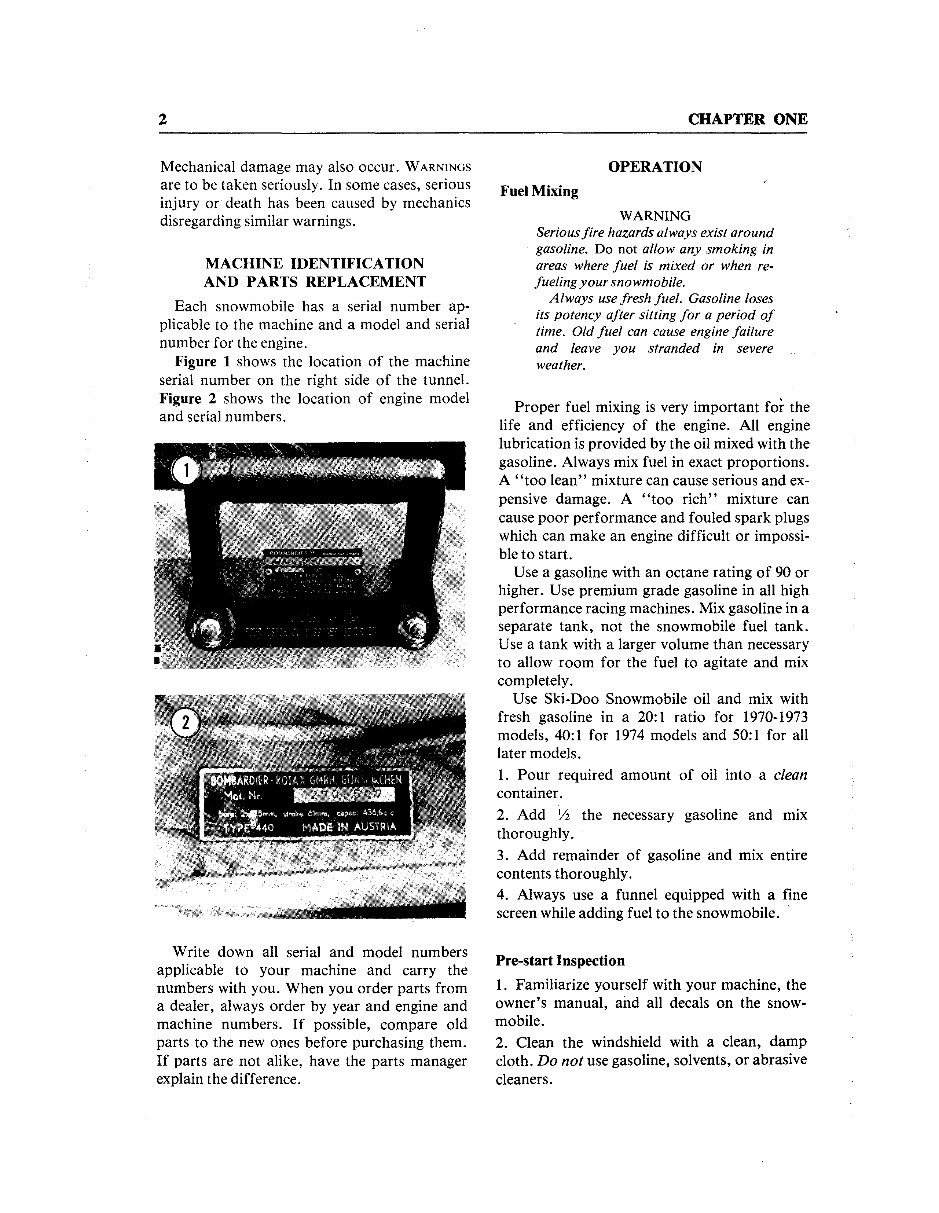
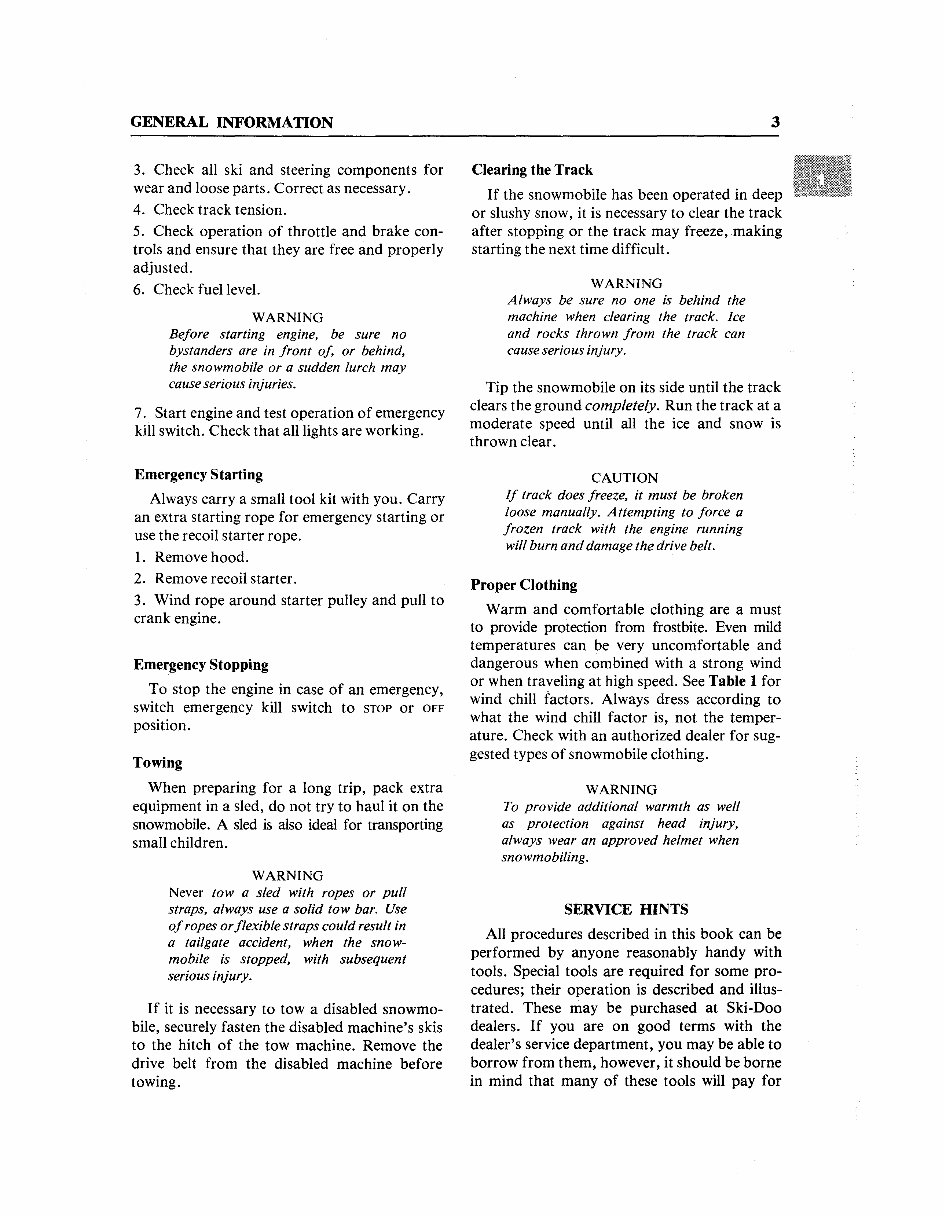
2 Mechanical damage may also occur. WARNINGS are to be taken seriously. In some cases, serious injury or death has been caused by mechanics disregarding similar warnings. MACHINE IDENTIFICATION AND PARTS REPLACEMENT Each snowmobile has a serial number ap- plicable to the machine and a model and serial number for the engine. Figure 1 shows the location of the machine serial number on the right side of the tunnel. Figure 2 shows the location of engine model and serial numbers. Write down all serial and model numbers applicable to your machine and carry the numbers with you. When you order parts from a dealer, always order by year and engine and machine numbers. If possible, compare old parts to the new ones before purchasing them. If parts are not alike, have the parts manager explain the difference. CHAPTER ONE OPERATION Fuel Mixing WARNING Serious fire hazards always exist around gasoline. Do not allow any smoking in areas where fuel is mixed or when re- fueling your snowmobile. Always use fresh fuel. Gasoline loses its potency after sitting for a period of time. Old fuel can cause engine failure and leave you stranded in severe weather. Proper fuel mixing is very important for the life and efficiency of the engine. All engine lubrication is provided by the oil mixed with the gasoline. Always mix fuel in exact proportions. A "too lean" mixture can cause serious and ex- pensive damage. A "too rich" mixture can cause poor performance and fouled spark plugs which can make an engine difficult or impossi- ble to start. Use a gasoline with an octane rating of 90 or higher. Use premium grade gasoline in all high performance racing machines. Mix gasoline in a separate tank, not the snowmobile fuel tank. Use a tank with a larger volume than necessary to allow room for the fuel to agitate and mix completely. Use Ski-Doo Snowmobile oil and mix with fresh gasoline in a 20:1 ratio for 1970-1973 models, 40:1 for 1974 models and 50:1 for all later models. 1. Pour required amount of oil into a clean container. 2. Add Y2 the necessary gasoline and mix thoroughly. 3. Add remainder of gasoline and mix entire contents thoroughly. 4. Always use a funnel equipped with a fine screen while adding fuel to the snowmobile. Pre-start Inspection 1. Familiarize yourself with your machine, the owner's manual, and all decals on the snow- mobile. 2. Clean the windshield with a clean, damp cloth. Do not use gasoline, solvents, or abrasive cleaners.
GENERAL INFORMATION 3. Check all ski and steering components for wear and loose parts. Correct as necessary. 4. Check track tension. 5. Check operation of throttle and brake con- trols and ensure that they are free and properly adjusted. 6. Check fuel level. WARNING Before starting engine, be sure no bystanders are in front of, or behind, the snowmobile or a sudden lurch may cause serious injuries. 7. Start engine and test operation of emergency kill switch. Check that all lights are working. Emergency Starting Always carry a small tool kit with you. Carry an extra starting rope for emergency starting or use the recoil starter rope. 1. Remove hood. 2. Remove recoil starter. 3. Wind rope around starter pulley and pull to crank engine. Emergency Stopping To stop the engine in case of an emergency, switch emergency kill switch to STOP or OFF position. Towing When preparing for a long trip, pack extra equipment in a sled, do not try to haul it on the snowmobile. A sled is also ideal for transporting small children. WARNING Never tow a sled with ropes or pull straps, always use a solid tow bar. Use of ropes or flexible straps could result in a tailgate accident, when the snow- mobile is stopped, with subsequent serious injury. If it is necessary to tow a disabled snowmo- bile, securely fasten the disabled machine's skis to the hitch of the tow machine. Remove the drive belt from the disabled machine before towing. 3 Clearing the Track If the snowmobile has been operated in deep or slushy snow, it is necessary to clear the track after stopping or the track may freeze,making starting the next time difficult. WARNING Always be sure no one is behind the machine when clearing the track. Ice and rocks thrown from the track can cause serious injury. Tip the snowmobile on its side until the track clears the ground completely. Run the track at a moderate speed until all the ice and snow is thrown clear. CAUTION If track does freeze, it must be broken loose manually. Attempting to force a frozen track with the engine running will burn and damage the drive belt. Proper Clothing Warm and comfortable clothing are a must to provide protection from frostbite. Even mild temperatures can be very uncomfortable and dangerous when combined with a strong wind or when traveling at high speed. See Table 1 for wind chill factors. Always dress according to what the wind chill factor is, not the temper- ature. Check with an authorized dealer for sug- gested types of snowmobile clothing. WARNING To provide additional warmth as well as protection against head injury, always wear an approved helmet when snowmobiling. SERVICE HINTS All procedures described in this book can be performed by anyone reasonably handy with tools. Special tools are required for some pro- cedures; their operation is described and illus- trated. These may be purchased at Ski-Doo dealers. If you are on good terms with the dealer's service department, you may be able to borrow from them, however, it should be borne in mind that many of these tools will pay for
This manual is a comprehensive guide for the Ski-Doo Olympique 335 1970-1971, providing detailed instructions for both professional mechanics and DIY enthusiasts. It covers a wide range of repairs and maintenance tasks, from simple oil changes to more complex transmission swaps. With hundreds of pages, it includes clear illustrations and easy-to-follow text to assist you throughout the process.
Whether you're looking to troubleshoot a specific issue or simply maintain your sled, this Factory Service Repair Manual offers step-by-step guidance. It equips owners with the knowledge needed to make informed decisions about their machine's upkeep. The manual also features a search function for easy navigation and the option to print specific pages as needed.
For those seeking reliable maintenance and repair guidance, this manual is an invaluable resource. Please note that this is a PDF manual, not interactive software. For additional service manuals, please visit www.johnsmanuals.com.




 Lifetime Access