TABLE OF CONTENTS Section 1. General Information/Specifications 2. Engine 3. Engine-Related Items 4. Fuel Systems 5. Electrical Systems 6. Drive Train/Track/Brake Systems 7. Rear Suspension 8. Steering and Body
1-1 1 SECTION 1 — GENERAL INFORMATION/ SPECIFICATIONS Table of Contents General Specifications ...................................................... 1-2 Snowmobile Identification.................................................. 1-2 Recommended Gasoline and Oil ...................................... 1-2 Engine Break-In................................................................. 1-2 Drive Belt Break-In ............................................................ 1-3 Genuine Parts ................................................................... 1-3 Varying Altitude Operation.................................................1-3 Preparation For Storage .................................................... 1-5 Preparation After Storage.................................................. 1-6 After Break-In Checkup/Checklist ...........................................1-6 Engine Specifications ........................................................ 1-8 Crankshaft Runout/Repair Specifications (2-Stroke) ......... 1-9 Arctic Power Valve (APV) System Specifications (800 cc)...1-9 Carburetor Specifications (570 cc) .................................... 1-9 Electrical Specifications................................................... 1-10 Ignition Timing Specifications (2-Stroke) ......................... 1-11 Drive System Specifications ............................................ 1-12 Drive Clutch/Driven Clutch-Related Specifications.......... 1-12 Drive System Components.............................................. 1-12 Drive Belt Dimensions ..................................................... 1-12 Gear Case Performance Calibrations.............................. 1-13 Chain Case Performance Calibrations ............................ 1-14 Suspension Specifications .............................................. 1-15 Track Specifications ......................................................... 1-15 Torque Specifications ...................................................... 1-16 Torque Conversions......................................................... 1-17
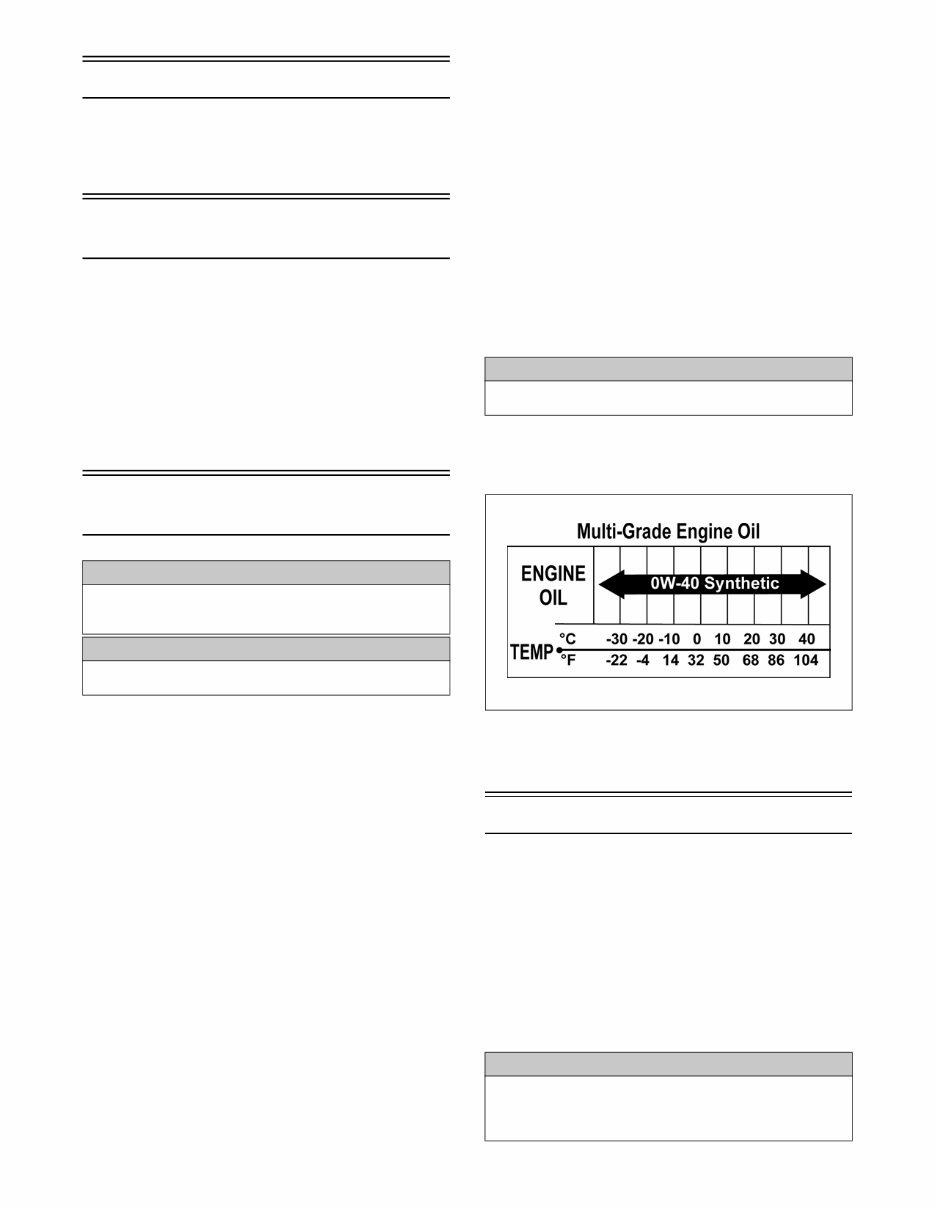
1-2 General Specifications NOTE: General specifications for each 2013 Arctic Cat Snowmobile can be accessed from the Arctic Cat Cat Tracker Dealer Communication System online. Snowmobile Identification The Arctic Cat Snowmobile has two important identifica- tion numbers. The Vehicle Identification Number (VIN) is stamped into the tunnel near the right-side footrest or on top of the tunnel. The decal also displays pertinent production information. The Engine Serial Number (ESN) is stamped into the crankcase of the engine. These numbers are required to complete warranty claims properly. No warranty will be allowed by Arctic Cat if the engine serial number or VIN is removed or mutilated in any way. Recommended Gasoline and Oil RECOMMENDED GASOLINE (500/ 570/1100 cc Non-Turbo) The recommended gasoline to use in these snowmobiles is 87 octane regular unleaded. In many areas, oxygenates are added to the gasoline. Oxygenated gasolines contain- ing up to 10% ethanol are acceptable gasolines; however, on the 570 cc models whenever using oxygenated gaso- lines, the carburetor main jet must be one size larger than the main jet required for regular unleaded gasoline. For example, if a 220 main jet is recommended for regular unleaded gasoline, a 230 main jet must be installed if using an oxygenated gasoline. When using ethanol blended gasoline, adding a gasoline antifreeze is not necessary since ethanol will prevent the accumulation of moisture in the fuel system. NOTE: On 500 cc models for optimum performance, do not exceed the recommended 87 octane gasoline. Using a higher octane gasoline will not increase over- all performance. RECOMMENDED GASOLINE (800/1100 cc Turbo) The recommended gasoline to use in these snowmobiles is 91 octane (minimum). NOTE: If a situation arises in which 91 octane gaso- line is not available, 87 octane gasoline can be substi- tuted; however, do not prolong the usage of 87 octane gasoline as it will cause poor engine performance. In many areas, oxygenates are added to the gasoline. Oxygenated gasolines containing up to 10% ethanol are acceptable gasolines. Do not use gasolines containing methanol. RECOMMENDED OIL (2-Stroke) The recommended oil to use in the oil-injection system is Arctic Cat Formula 50 Injection Oil for 500/570 cc models or either Arctic Cat APV Synthetic 2-Cycle Oil or Formula SS Semi-Synthetic Oil for 800 cc models. These oils are specially formulated to be used either as an injection oil or as a pre-mix oil (for break-in) and meets all of the lubrica- tion requirements of the Arctic Cat snowmobile engine. RECOMMENDED OIL (4-Stroke) The recommended oil to use is Synthetic 0W-40 Oil in all temperatures and conditions. OILCHARTJ After the engine break-in period, the engine oil should be changed every 2500-3000 miles (non-turbo) or 1500- 2000 miles (turbo) and before prolonged storage. Engine Break-In 2-STROKE The Arctic Cat 2-stroke engine (when new or rebuilt) requires a short break-in period before the engine is sub- jected to heavy load conditions. Arctic Cat requires that the first tankful of fuel be premixed at a 100:1 ratio in all oil-injection models. During the break-in period, a maximum of 1/2 throttle is recommended; however, brief full-throttle accelerations and variations in driving speeds contribute to good engine break-in. CAUTION Do not use white gas or gasoline containing methanol. Only Arctic Cat approved gasoline additives should be used. CAUTION Any oil used in place of the recommended oil may cause serious damage. CAUTION Any oil used in place of the recommended oil could cause serious engine damage. CAUTION DO NOT exceed the one (1) tankful limitation of a 100:1 gas/oil break-in mixture. Continuous use of a gas/oil mixture could cause spark plug fouling and excessive carbon buildup.
1-3 1 4-STROKE The Arctic Cat 4-stroke engine (when new or rebuilt) requires a short break-in period before the engine is sub- jected to heavy load conditions. This engine does not require any pre-mixed fuel during the break-in period. To ensure trouble-free operation, careful adherence to the following break-in guidelines will be beneficial. * With occasional full-throttle operation. To ensure proper engine break-in, Arctic Cat recommends that the engine oil and filter be changed after 500 miles or after one month, whichever comes first. This service is at the discretion and expense of the snowmobile owner. Drive Belt Break-In Drive belts require a break-in period of approximately 25 miles. Drive the snowmobile for 25 miles at 3/4 throttle or less. By revving the engine up and down (but not exceed- ing 60 mph), the exposed cord on the side of a new belt will be worn down. This will allow the drive belt to gain its optimum flexibility and will extend drive belt life. NOTE: Before starting the snowmobile in extremely cold temperatures, the drive belt should be removed and warmed up to room temperature. Once the drive belt is at room temperature, install the drive belt (see Drive Belt sub-section in Section 6 of this manual). Genuine Parts When replacement of parts is necessary, use only genuine Arctic Cat parts. They are precision-made to ensure high quality and correct fit. Varying Altitude Operation Operating a snowmobile at varying altitudes requires recal- ibration of carburetor and/or drive system components. The altitude information decal is located beneath the hood of the snowmobile on the belt guard on the 500/570/1100 cc non-turbo models. Consult the appropriate specification sheet on Cat Tracker Online for the F/M/XF models. Following are basic altitude theories for clutching, engine, suspension, and track. CLUTCHING On a normally-aspirated engine as altitude changes, engine horsepower changes with it. As you go up in alti- tude, the engine loses horsepower. Because of this, the continuously variable transmission (CVT) system needs to be calibrated to compensate for the horsepower loss. At altitudes above 5000 ft, the engine loses peak horse- power but will also lose horsepower at engagement speed. For this reason, calibrating the drive system is usually needed in order to attain acceptable performance. Changing drive clutch engagement speed can be done several ways. Some of the methods will affect other characteristics of CVT operation, so you must be careful what you change. Drive clutch springs are the most common way to increase engagement speed; however, by simply changing the cam arms to a lighter weight from the heavier sea level cam arm, you will gain some engagement speed. Other more complicated methods exist such as engage- ment notches and changing the position of the cam arm center of gravity in relation to the roller. This is called “tucking the weight” and can be used, but, like the engagement notch, it can hurt belt life. The driven clutch will also play a part in CVT tuning for high altitude operation. A steeper helix (torque bracket) angle in the driven clutch will mean a quicker up-shift. A shallower angle will mean a slower up-shift. If the up-shift is too quick, due to a very steep helix, RPM will be pulled down under the peak operating RPM of the engine (where the horsepower is) and performance will suffer. The engine may even bog. If you have a helix that is too shallow, the engine may over-rev or have poor acceleration. Usually, angles shallower than the sea level calibrations work best. The driven spring will also affect driven clutch tuning. Tighten the spring, and RPM will increase. Loosen the spring, and RPM will decrease. The spring should be used to fine-tune and complement the helix selection. Carburetor calibration changes for high altitude operation will have an effect on the CVT system and how it operates. Under- standing the basics of CVT operation is important in order to make the correct high altitude CVT calibration changes. ENGINE A normally aspirated engine will generate more horsepower at sea level than it does at higher altitudes. The reason is that the higher you go, less oxygen is available for the engine to use during its combustion process. Less oxygen means it needs less fuel to obtain the correct air/fuel ratio to operate properly. This is why the fuel ratio has to be recalibrated. High altitude engines operate as though they have a lower compression ratio. This, along with less oxygen and less fuel, means that the engine generates less horsepower. The carbureted models will also have lower pressure applied to the float chamber because of pressure changes in the atmo- sphere between high altitude and sea level. All of these char- acteristics will become more evident the higher the altitude. CAUTION DO NOT use premixed fuel in the snowmobile gas tank. Engine damage will occur. 0-200 miles 1/2 Throttle (45 MPH-max) 200-400 miles 1/2-3/4 Throttle 400-600 miles 1/2-3/4 Throttle * CAUTION Running the engine with the drive belt removed could result in serious engine damage and drive clutch failure. CAUTION On the 570 cc, carefully follow the Carburetor Jet Chart recommendations for proper carburetor calibration for altitude, temperature, and gasoline being used.
1-4 TURBOCHARGING Turbocharging is one method of compensating for loss of air density that works extremely well when applied to four-cycle internal combustion engines. Exhaust gasses are directed through the turbocharger tur- bine wheel which is attached to the compressor through a common shaft. As the exhaust gasses spin the turbine, the compressor is spun at very high RPM. Inlet air is drawn into the compressor, compressed, and routed to the intake mani- fold of the engine. Intake pressure, therefore, is maintained at the optimum level as altitude or temperature increases. The turbocharger output must be regulated to maintain the optimum manifold pressure throughout the designed oper- ating range. This is accomplished by regulating the volume of exhaust gasses passing through the turbine by controlling a diverter valve (waste gate) at the turbocharger turbine inlet. At lower altitudes/temperatures, excessive exhaust gasses are diverted past the turbine and into the exhaust downstream of the turbocharger thus limiting the compres- sor output to maintain correct manifold pressure. As altitude increases, the manifold pressure is held constant by diverting less exhaust past the turbine, thus increasing compressor speed. This will continue until the waste-gate is completely closed at which time manifold pressure will start to decrease much the same as a normally aspirated engine. The waste gate is controlled by a spring/diaphragm mechanism that is connected to the intake manifold by an air line. A mechanical linkage connects the diaphragm to the waste gate control arm. Air is heated by friction and compression through the turbo- charger and air density is lost by heating the air; therefore, an after-cooler is installed between the turbocharger compressor and the intake manifold. This is an air-to-air after-cooler that uses outside air directed through a radiator-type cooler to cool the compressed air prior to entering the intake manifold. SUSPENSION The different riding styles of the individual operator, the varying snow conditions, and the type of terrain are all factors that affect the suspension at high altitude. Trail riding versus powder snow riding versus combination riding will all require different suspension settings. The normal setting for front ski suspension is as little spring pre-load tension as possible for powder snow riding allow- ing the skis to float across the snow with the least amount of resistance. Trail riding will require more spring tension to carry the varying load more effectively. Many different settings and spring tensions to consider exist when adjust- ing for riding style and snow conditions. The rear suspension has a number of spring settings that produce different riding characteristics. The front arm spring and shock will also affect the ride and handling when either on a trail or in powder snow. A strong spring setting on this shock will cause the snowmobile to tend to “dig” more when riding in the powder snow rather than climbing up on top of the snow. But, it will work more effectively when riding on a trail. A softer spring setting will allow the front of the rear suspension to collapse much quicker and change the angle of the track to the snow. A more gradual angle will tend to raise the snowmobile up on the snow rather than digging into it. Many possible variables and adjustments to the rear sus- pension exist depending on snow conditions, riding style, and type of terrain. These adjustments can be made to indi- vidualize the snowmobile to the riding style of the operator. M/XF High Country As snow cover and riding conditions change, several dif- ferent adjustments can be made to change the ride and han- dling characteristics for operator preference. Located on the front suspension arm are limiter straps. They limit the amount of “fallout” the front arm can have. These straps may be adjusted in or out due to conditions and riding style. The more the straps are brought up, the more steering power the operator has due to the amount of ski pressure. Another adjustment that can be made on the rear suspen- sion is the front arm shock spring tension. As trail condi- tions change, the spring pre-load may be used to decrease the chance of the front end “bottoming out.” With a stiffer spring pre-load, the ride of the snowmobile will improve on the trail but will affect the performance in the deep powder snow. In deep powder snow, the stiffer spring pre-load will cause the front-end to “dig” and possibly take longer for it to plane off. Several different-rate springs are available for different riding styles and terrain conditions. On the standard models, the front shock springs are also individually adjustable for the terrain conditions and driving style of the operator. The spring adjuster has been set at the factory so the correct amount of threads are exposed between the spring adjuster and the shock hous- ing as an initial setting. Additional ski pressure can be obtained by tightening the spring tension; ski pressure can be decreased by relaxing spring tension. Springs with different spring rates are available for operator choice and snow conditions. A limit exists as to how far you can pre-load the springs before “coil bind” takes effect where the wire on the spring actually runs into itself and causes binding. Equal adjustments should be maintained on both sides of the snowmobile. On the Sno Pro models with air shocks, they are individually adjustable for the terrain conditions and driving style of the operator. The shocks are preset at the factory (see chart) as an initial setting; however, it is possible to “fine tune” the shocks to match the operator’s weight, riding style, and terrain conditions. Checking and adjusting air pressure must be done at riding temperature (outside). Also, it is advisable to check air pres- sure when the outside temperature varies more than 25°. NOTE: Care should be taken to have equal pressure in the ski shocks before operating the snowmobile. Finally, track tension should be looked at to make sure that it is within recommended specifications to affect the efficiency of the snowmobile. On models with the torque sensing link, the track is actually tightening as the suspension moves through its range of motion causing the track to sag in the middle and rub on the top part of the rear suspension arm. Initial Setting Chart Model Front Shock (Ski) Rear Arm Shock M Sno Pro 6.3 kg/cm 2 (90 psi) 10.2-10.6 kg/cm 2 (145-150 psi) XF Sno Pro 5.3 kg/cm 2 (75 psi) 10.19 kg/cm 2 (145 psi) XF Cross-Tour N/A 14.06 kg/cm 2 (200 psi)
1-5 1 TRACK Carefully matching the riding requirements to the type of track will ensure the maximum use of all available engine power. Lug height and track durometer are the two main concerns when selecting a track for various riding styles. Tracks exist with lug heights from 0.750” up to 2.6” to accommodate various snow conditions. Generally, the deeper the snow, the taller the lug. It must be noted that the installation of any deep-lug track may reduce top end speed and promote premature wear strip wear in marginal snow conditions. Durometer is a measurement of how hard a rubber is. The lugs on most tracks range between 60 and 85 durometer. On the durometer scale, the higher the number, the harder the lugs. For riding in deep powder snow, a softer durome- ter track works best. The softer rubber allows the track to “give” a little and pack the snow creating lift rather than digging its way straight down. When hill-climbing, the harder lug of an 80 durometer track works the best due to penetrating the hard snow creating more bite. Some tracks come with a dual durometer rating, such as a track with a 80/60 durometer rating. The lugs on this track are 80% 80 durometer rubber, and the top 20% is made of the softer 60 durometer rubber. This track is designed to be a good all-around track for riding mostly in deep powder snow but can climb the occasional hard snow hill. Preparation For Storage Prior to storing the snowmobile, it must be properly ser- viced to prevent corrosion and component deterioration. 1. Clean the seat cushion with a damp cloth and Arctic Cat Vinyl Protectant. 2. Clean the snowmobile thoroughly by hosing dirt, oil, grass, and other foreign matter from the skid frame, tunnel, hood, and belly pan. Allow the snowmobile to dry thoroughly. DO NOT get water into any part of the engine. 3. On the 1100 cc, change the engine oil and replace the air filter on the turbo models if necessary; then pro- ceed to step 6. 4. On the Bearcat/F-Series/T-Series, carefully pry the intake boots partially over the carburetor inlets/throt- tle body inlets. On the F/M/XF, remove the hood. 5. Place the rear of the snowmobile up on a shielded safety stand; then start the engine and allow to idle. Spray an Engine Storage Preserver into the intakes until the engine exhaust starts to smoke heavily or until the engine starts to drop in RPM. Turn engine off. Install the intake boots. 6. Plug the exhaust system outlet with a clean cloth. 7. On the 2-stroke with the ignition switch in the OFF position: A. Disconnect the high tension leads from the spark plugs; then remove the plugs, connect them to the leads, and ground them on the cylinder heads. B. Pour 29.5 ml (1 fl oz) of SAE #30 petroleum- based oil into each spark plug hole and pull the recoil starter handle slowly about 10 times. C. Install the spark plugs and connect the high ten- sion leads. NOTE: At this point on the 570 cc, drain the gas from each carburetor float chamber. 8. Fill the gas tank to its rated capacity; then add Arctic Cat Fuel Stabilizer to the gas tank following direc- tions on the container for the stabilizer/gasoline ratio. Tighten the gas tank cap securely. 9. On the ACT drive models, flush the gear case and change the lubricant (see Section 6). On the chain drive models with the snowmobile level, check the lubricant level in the chain case. If low, add chain lube through the fill plug hole. 10. Remove the drive belt from the drive clutch/driven clutch (see Section 6). Lay the belt on a flat surface or slide it into a cardboard sleeve to prevent warping or distortion during storage; then clean and inspect the drive clutch and driven clutch. 11. Apply light oil to the upper steering post bushings and to the shafts of the shock absorbers; then lubri- cate the rear suspension with an all-temperature grease. 12. On the Bearcat/F-Series/T-Series, lubricate the spin- dles and steering arm with an all-temperature grease. 13. Tighten all nuts, bolts, and cap screws making sure all calibrated nuts, bolts, and cap screws are tight- ened to specifications. Make sure all rivets holding the components together are tight. Replace all loose rivets. 14. Clean and polish the hood, console, and chassis with Cat Cleaner. DO NOT USE SOLVENTS. THE PRO- PELLENT WILL DAMAGE THE FINISH. 15. On electric start models, disconnect the battery cables making sure to disconnect the negative cable first; then clean the battery posts and cables. CAUTION Do not run the engine without the belt guard in place and secured. CAUTION Never crank the engine over without grounding the spark plugs. Damage to coils and/or ECM may result. CAUTION Sealed batteries require charging if left for extended non-start periods. Arctic Cat recommends trickle charg- ing once a month. Follow the manufacturer’s instruc- tions and cautions. CAUTION On models with remote start, make sure to leave the battery cables disconnected. Failure to disconnect the battery cables when storing the snowmobile for a pro- longed period of time (six weeks or more) will result in a discharged or damaged battery.
This Arctic Cat Service Manual is a valuable resource for anyone working with Model Year 2013 Arctic Cat Snowmobiles (except the Sno Pro 120). It contains comprehensive service and maintenance information, divided into sections that cover specific snowmobile components or systems. In addition to standard service procedures, the manual includes detailed instructions for assembling, disassembling, and inspecting. It is designed to assist service personnel in various service-oriented applications.
When using this manual as a guide, technicians are advised to use discretion regarding the extent of disassembly required to address specific conditions. It is essential for the service technician to thoroughly study the complete manual to become familiar with the operation and construction of the components or systems. This familiarity will enhance efficiency in servicing procedures, ultimately building consumer confidence and saving time and labor.



 Lifetime Access