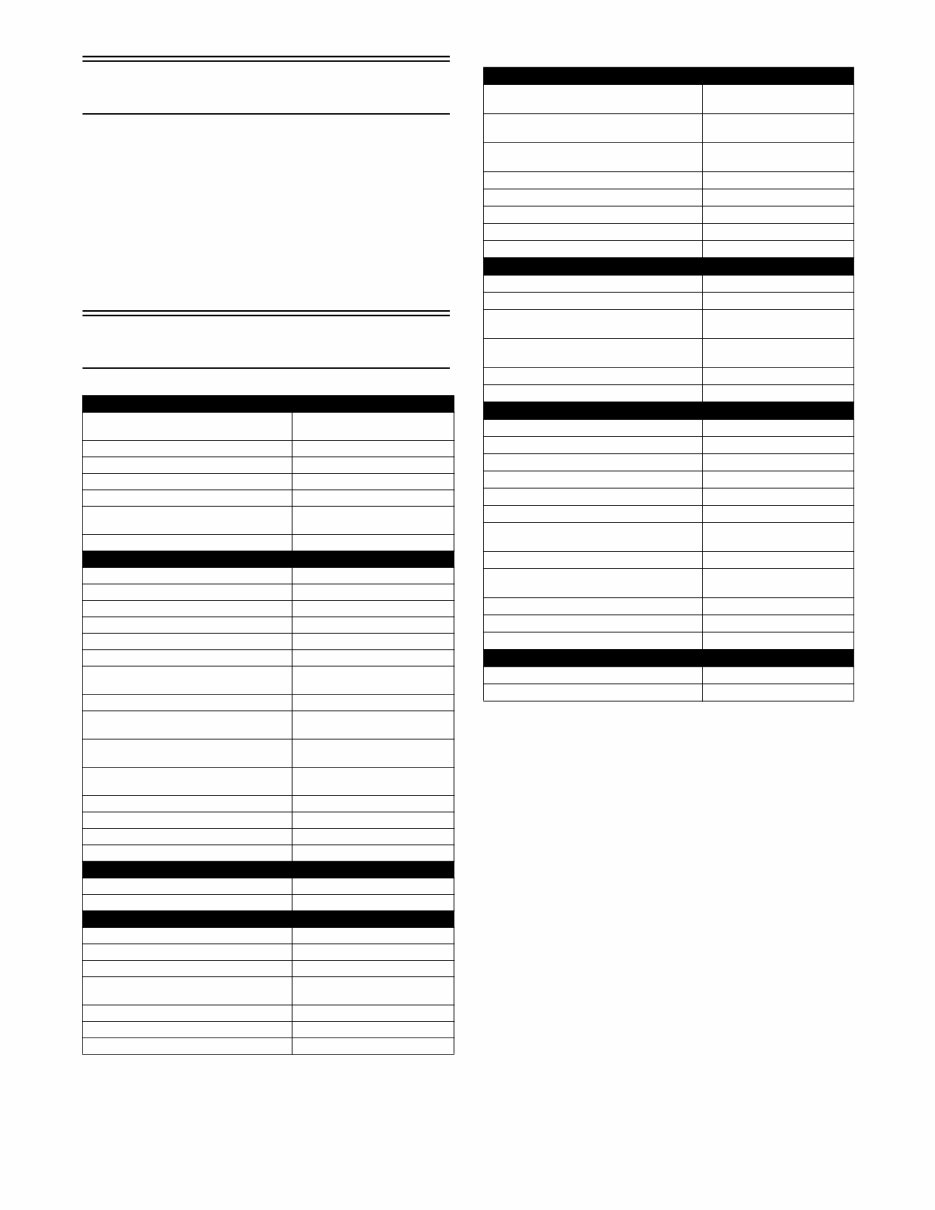
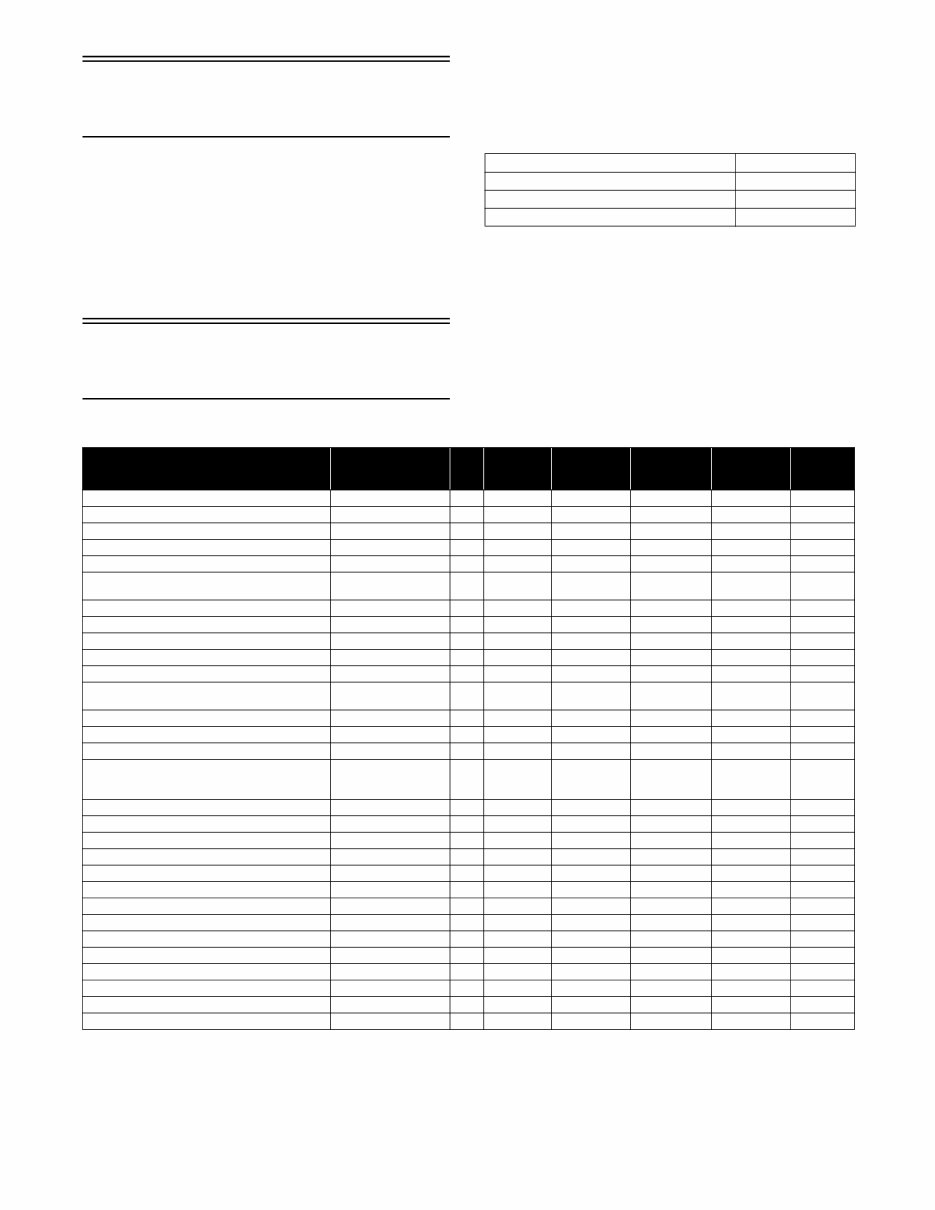
2 General Information NOTE: Some photographs and illustrations used in this manual are used for clarity purposes only and are not designed to depict actual conditions. NOTE: Whenever a part is worn excessively, cracked, or damaged in any way, replacement is necessary. NOTE: Never reuse a lock nut. Once a lock nut has been removed, it must be replaced with a new lock nut. General Specifications * Visible at plug threads. Specifications subject to change without notice. CHASSIS Dry Weight (approx) 478 kg (1054 lb) - Sport/XT 487 kg (1074 lb) - Limited ROPS Tested Curb Weight 845 kg (1864 lb) Length (overall) 280.6 cm (110.5 in.) Height (overall) 163.3 cm (64.3 in.) Width (overall) 152 cm (60 in.) Tire Size 26 x 9-12R (Front) 26 x 11-12R (Rear) Tire Inflation Pressure 0.98 kg/cm² (14 psi) MISCELLANY Spark Plug Type NGK CR8EB Spark Plug Gap 0.6-0.8 mm (0.023-0.031 in.) Gas Tank Capacity 28 L (7.4 U.S. gal.) Coolant Capacity 3.1 L (3.2 U.S. qt) Front Differential Capacity 200 ml (6.8 fl oz)* Transaxle Capacity 1.2 L (1.2 U.S. qt)* Engine Oil Capacity 2.8 L (3.0 U.S. qt) - Change 3.34 L (3.4 U.S. qt) - Overhaul Gasoline (recommended) 87 Octane Regular Unleaded Engine Oil (recommended) Arctic Cat ACX All Weather Synthetic Front Differential Lubricant SAE Approved 80W-90 Hyp- oid Transaxle Lubricant Arctic Cat Synthetic Transaxle Fluid Belt Width 31.3 mm (1.23”) Brake Fluid DOT 4 Taillight/Brakelight High Intensity LED Headlight Halogen COOLING SYSTEM Cooling Fan On 203° F (95° C) Cooling Fan Off 194° F (90° C) ELECTRICAL SYSTEM Spark Plug Cap 5000 ohms Ignition Coil Resistance(primary) Less than 1 ohm Ignition Coil Primary Voltage Battery Voltage Stator Coil (crankshaft position sensor) Resistance(AC generator) 100-150 ohms Less than 1 ohm Crankshaft Position Sensor 1.5 AC Volts or more AC Generator Output (no load) 65 AC volts @ 4000 RPM Ignition Timing 10° BTDC @ 1500 RPM VALVES AND GUIDES Valve Face Diameter (intake) (exhaust) 31.6 mm 27.9 mm Valve/Tappet Clearance (intake) (cold engine) (max) (exhaust) 0.16 mm 0.22 mm Valve Guide/Stem (intake) Clearance (max) (exhaust) 0.08 mm 0.10 mm Valve Guide Inside Diameter (max) 4.532 mm Valve Head Thickness (min) 2.3 mm Valve Seat Angle 45° +15’/+30’ Valve Spring Free Length (min) 38.7 mm Valve Spring Tension @ 31.5 mm 19.0 kg (42 lb) CAMSHAFT AND CYLINDER HEAD Cam Lobe Height (min) 36.5 mm Camshaft Journal Oil Clearance (max) 0.07 mm Camshaft Journal Holder(right & center) Inside Diameter (left) 21.94-22.04 mm 17.44-17.48 mm Camshaft Journal Outside(right & center) Diameter (left) 21.96-21.98 mm 17.48-17.53 mm Camshaft Runout (max) 0.05 mm Cylinder Head/Cover Distortion (max) 0.05 mm CYLINDER, PISTON, AND RINGS Piston/Cylinder Clearance 0.14mm Cylinder Bore (max) 76.965 mm Piston Diameter 10 mm from Skirt End 76.825 mm Piston Ring Free End Gap (min) (1st/2nd) 12.5 mm Bore x Stroke 76.9 x 75.3 mm Cylinder Trueness (max) 0.05 mm Piston Ring End Gap (1st/2nd) - Installed (max) (oil) 0.65 mm 0.85 mm Piston Ring to Groove Clearance (max) 0.1 mm Piston Ring Groove Width (1st/2nd) (oil) 1.202-1.204 mm 2.501-2.503 mm Piston Ring Thickness (1st/2nd) 1.170-1.195 mm Piston Pin Bore (max) 18.018 mm Piston Pin Outside Diameter (min) 17.984 mm CRANKSHAFT Connecting Rod (small end bore) (max) 18.044 mm Crankshaft Runout (max) 0.03 mm
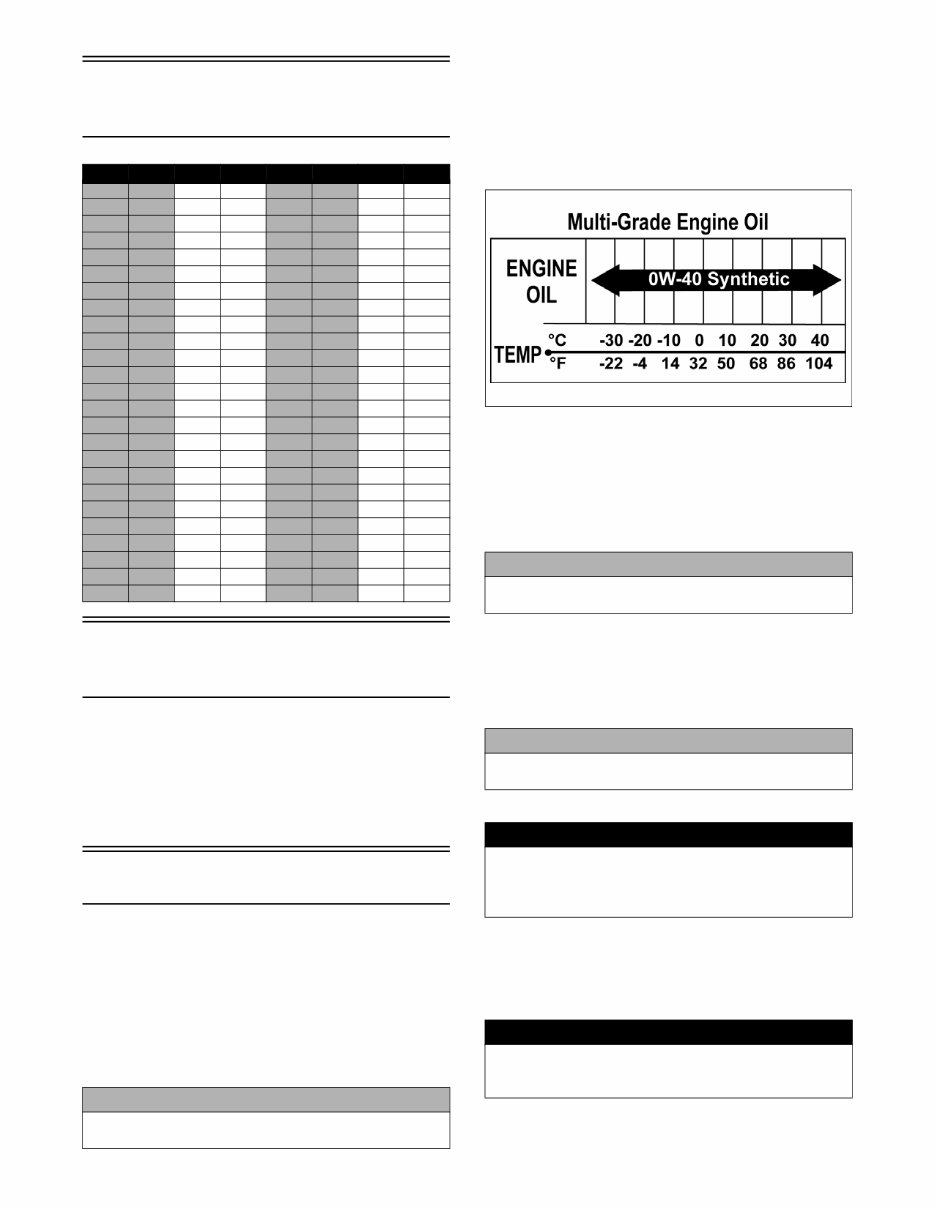
4 Torque Conversions (ft-lb/N-m) Drive Belt Break-In Procedure New drive belts require a break-in period of approximately 25 miles. During this period, drive the vehicle for 25 miles at 3/4 throttle or less while varying throttle position (but not exceeding 40 mph). By varying throttle position, the exposed cord on the side of a new belt will be conditioned allowing the drive belt to gain its optimum flexibility and will extend drive belt life. Gasoline - Oil - Lubricant RECOMMENDED GASOLINE The recommended gasoline to use is 87 minimum octane regular unleaded. In many areas, oxygenates are added to the gasoline. Oxygenated gasolines containing up to 10% ethanol or 5% methane are acceptable gasolines. When using ethanol blended gasoline, it is not necessary to add a gasoline antifreeze since ethanol will prevent the accumulation of moisture in the fuel system. RECOMMENDED ENGINE OIL The recommended oil to use is Arctic Cat ACX All Weather synthetic engine oil, which has been specifically formulated for use in this Arctic Cat engine. Although Arctic Cat ACX All Weather synthetic engine oil is the only oil recommended for use in this engine, use of any API certified SM 0W-40 oil is acceptable. OILCHARTJ RECOMMENDED FRONT DIFFERENTIAL LUBRICANT The recommended lubricant is Arctic Cat Gear Lube or an equivalent gear lube which is SAE approved 80W-90 hypoid. This lubricant meets all of the lubrication requirements of the Arctic Cat vehicle front differential and rear drive. RECOMMENDED TRANSAXLE LUBRICANT The recommended transaxle lubricant is Arctic Cat Syn- thetic Transaxle Fluid. This lubricant meets all of the lubri- cation requirements of this vehicle. FILLING GAS TANK Since gasoline expands as its temperature rises, the gas tank must be filled to its specified capacity only. Expan- sion room must be maintained in the tank particularly if the tank is filled with cold gasoline and then moved to a warm area. ft-lb N-m ft-lb N-m ft-lb N-m ft-lb N-m 1 1.4 26 35.4 51 69.4 76 103.4 2 2.7 27 36.7 52 70.7 77 104.7 3 4.1 28 38.1 53 72.1 78 106.1 4 5.4 29 39.4 54 73.4 79 107.4 5 6.8 30 40.8 55 74.8 80 108.8 6 8.2 31 42.2 56 76.2 81 110.2 7 9.5 32 43.5 57 77.5 82 111.5 8 10.9 33 44.9 58 78.9 83 112.9 9 12.2 34 46.2 59 80.2 84 114.2 10 13.6 35 47.6 60 81.6 85 115.6 11 15 36 49 61 83 86 117 12 16.3 37 50.3 62 84.3 87 118.3 13 17.7 38 51.7 63 85.7 88 119.7 14 19 39 53 64 87 89 121 15 20.4 40 54.4 65 88.4 90 122.4 16 21.8 41 55.8 66 89.8 91 123.8 17 23.1 42 57.1 67 91.1 92 125.1 18 24.5 43 58.5 68 92.5 93 126.5 19 25.8 44 59.8 69 93.8 94 127.8 20 27.2 45 61.2 70 95.2 95 129.2 21 28.6 46 62.6 71 96.6 96 130.6 22 29.9 47 63.9 72 97.9 97 131.9 23 31.3 48 65.3 73 99.3 98 133.3 24 32.6 49 66.6 74 100.6 99 134.6 25 34 50 68 75 102 100 136 CAUTION Do not use white gas. Only Arctic Cat approved gaso- line additives should be used. CAUTION Any lubricant used in place of the recommended lubri- cant could cause serious front differential damage. CAUTION Any lubricant used in place of the recommended lubri- cant could cause serious transaxle damage. ! WARNING Always fill the gas tank in a well-ventilated area. Never add fuel to the gas tank near any open flames or with the engine running. DO NOT SMOKE while filling the gas tank. ! WARNING Do not overflow gasoline when filling the gas tank. A fire hazard could materialize. Always allow the engine to cool before filling the gas tank.
5 Tighten the gas tank cap securely after filling the tank. Genuine Parts When replacement of parts is necessary, use only genuine Arc- tic Cat parts. They are precision-made to ensure high quality and correct fit. Refer to the appropriate Illustrated Parts Man- ual for the correct part number, quantity, and description. Preparation For Storage 1. Clean the seat cushion (cover and base) with a damp cloth and allow it to dry. 2. Clean the vehicle thoroughly by washing dirt, oil, grass, and other foreign matter from the entire vehicle. Allow it to dry thoroughly. DO NOT get water into any part of the engine or air intake. 3. Either drain the gas tank or add Fuel Stabilizer to the gas in the gas tank. Remove the air filter housing cover and air filter. Start the engine and allow it to idle. Using Arctic Cat Engine Storage Preserver, rap- idly inject the preserver into the air filter opening for a period of 10 to 20 seconds; then stop the engine. Install the air filter and housing cover. 4. Plug the exhaust hole in the exhaust system with a clean cloth. 5. Apply light oil to the plungers of the shock absorbers. 6. Tighten all nuts, bolts, cap screws, and screws. Make sure rivets holding components together are tight. Replace all loose rivets. Care must be taken that all calibrated nuts, cap screws, and bolts are tightened to specifications. 7. Fill the cooling system to the bottom of the stand pipe in the radiator neck with properly mixed coolant. 8. Disconnect the battery cables; then remove the bat- tery, clean the battery posts and cables, and store in a clean, dry area. 9. Store the vehicle indoors in a level position. Preparation After Storage Taking the vehicle out of storage and correctly preparing it will assure many miles and hours of trouble-free riding. 1. Clean the vehicle thoroughly. 2. Clean the engine. Remove the cloth from the exhaust system. 3. Check all control wires and cables for signs of wear or fraying. Replace if necessary. 4. Change the engine oil and filter. 5. Check the coolant level and add properly mixed cool- ant as necessary. 6. Charge the battery; then install. Connect the battery cables. 7. Check the entire brake systems (fluid level, pads, etc.), all controls, headlights, taillight, brakelight, and headlight aim; adjust or replace as necessary. 8. Tighten all nuts, bolts, cap screws, and screws making sure all calibrated nuts, cap screws, and bolts are tight- ened to specifications. 9. Check tire pressure. Inflate to recommended pressure as necessary. 10. Make sure the steering moves freely and does not bind. 11. Check the spark plugs. Clean or replace as necessary. ! WARNING Do not over-fill the gas tank. CAUTION Prior to storing the vehicle, it must be properly serviced to prevent rusting and component deterioration. CAUTION If the interior of the air filter housing is dirty, clean the area before starting the engine. CAUTION Avoid storing outside in direct sunlight and avoid using a plastic cover as moisture will collect on the vehicle causing rusting. CAUTION The ignition switch must be in the OFF position prior to installing the battery or damage may occur to the igni- tion system. CAUTION Connect the positive battery cable first; then the nega- tive.
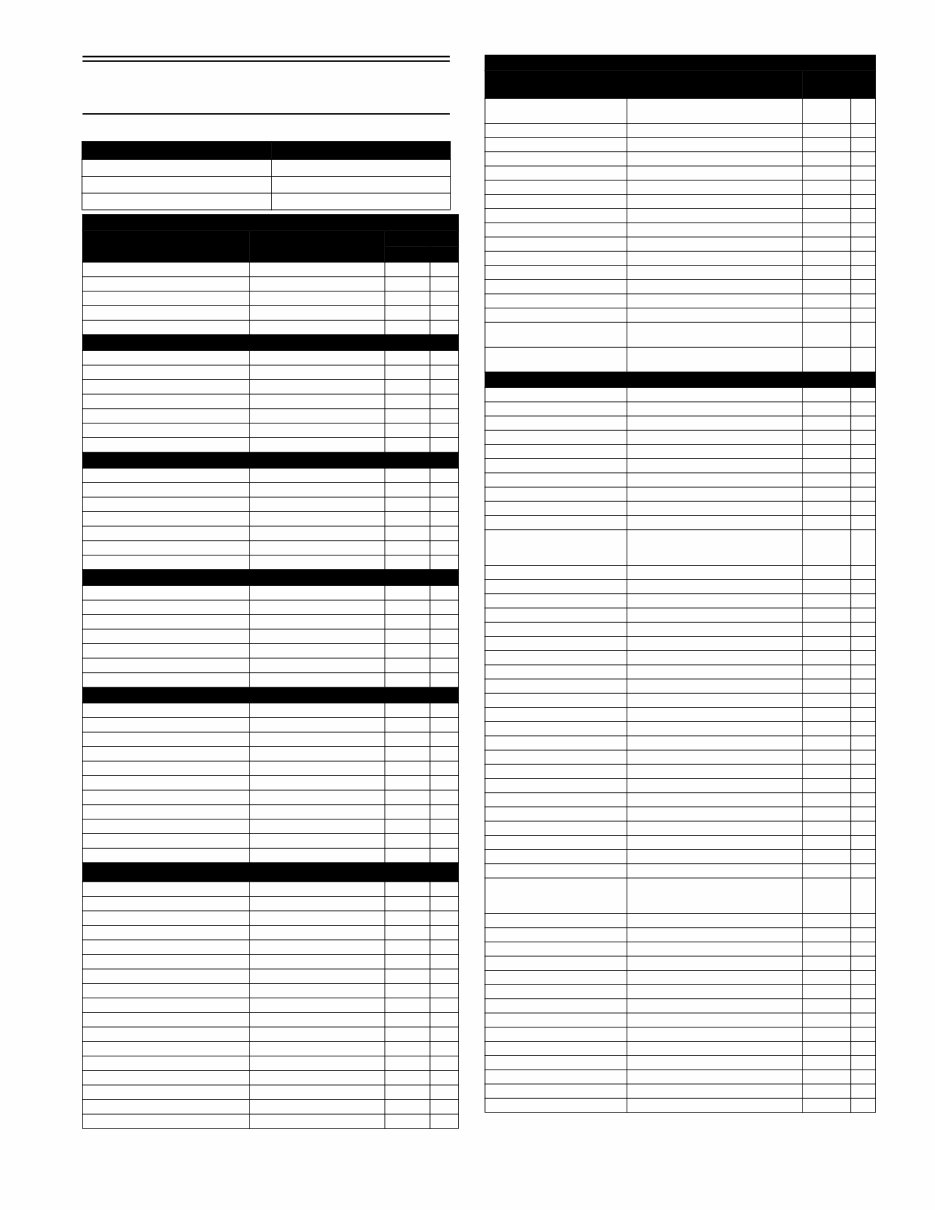
6 Periodic Maintenance/ Tune-Up This section has been organized into sub-sections showing common maintenance procedures. SPECIAL TOOLS A number of special tools must be available to the techni- cian when performing service procedures in this section. Refer to the current Special Tools Catalog for the appropri- ate tool description. NOTE: Special tools are available from the Arctic Cat Service Department. Periodic Maintenance Chart A = Adjust I = Inspect C = Clean L = Lubricate R = Replace T = Tighten * Service/Inspect more frequently when operating in adverse conditions. ** When using an API certified SM 0W-40 oil. *** When using Arctic Cat ACX All Weather synthetic oil, oil change and strainer inspection interval can be increased to every 1,000 miles or every year. Description p/n Compression Tester Kit 0444-213 Oil Filter Wrench 0644-389 Timing Light 0644-296 Item Initial Service After Break-In (First Month or 100 Miles) Daily Monthly (100 Miles) Every 3 Months (300 Miles) Every 6 Months (500 Miles) Annually (1500 Miles) As Needed Battery I I C Fuses I R Air Filter I I* R Valve/Tappet Clearance I I A Engine Compression I Spark Plugs I I I R (4000 Mi or 18 Mo) Muffler/Spark Arrester C R Gas Hoses I I R (2 Yrs) Throttle Cable Ends/Accelerator Pedal Pivot I I C-L A-R Engine Oil/Filter R R*/R**/R*** A/R Front Differential Lubricant R I R Transaxle Lubricant R I R (2000Mi) Tires/Air Pressure I I R Steering Components I I I R V-Belt I l R Suspension (Ball joint boots, drive axle boots front and rear, tie rods, differential and rear drive bellows) I I R Nuts/Bolts/Cap Screws T T A Ignition Timing I Headlight/Taillight-Brakelight I I R Switches I I R Shift Lever I A-L Gauge/Indicators I I R Frame/Welds I I l Electrical Connections l C Complete Brake System I I Brake Pads I I* R Brake Fluid I I R (2 Yrs) Brake Hoses I I R (4 Yrs) Coolant/Cooling System I I R (2 Yrs) Wheel Lug Nuts T T
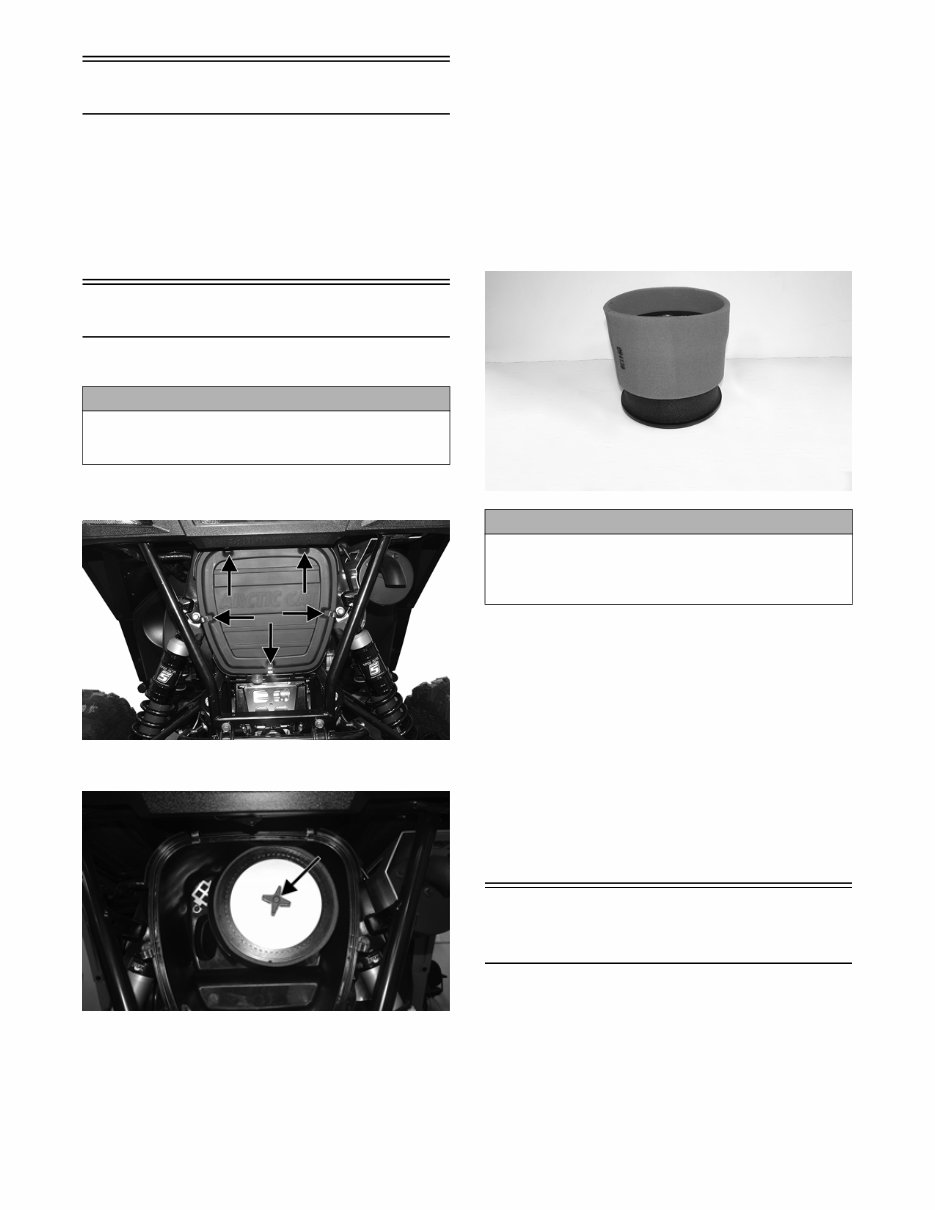
7 Lubrication Points It is advisable to lubricate certain components periodically to ensure free movement. Apply light oil to the compo- nents using the following list as reference. A. Accelerator Pedal Pivot/Cable Ends B. Brake Pedal Pivot C. Shift Cable Air Filter CLEANING AND INSPECTING FILTER 1. Unsnap the five fasteners securing the air filter hous- ing cover and remove the cover. WS025A 2. Remove the air filter knob; then remove the air filter. WT176A NOTE: Do not attempt to remove the inner foam from the wire mesh. It is part of the filter frame. 3. Fill a wash pan larger than the filter with a non-flam- mable cleaning solvent; then dip the inner filter and outer foam medium in the solvent and wash them. NOTE: Foam Filter Cleaner and Foam Filter Oil are available from Arctic Cat. 4. Dry both filter components. 5. Put the foam filter in a plastic bag; then pour in air fil- ter oil and work the filter. NOTE: Apply oil to the inner filter; then carefully squeeze excessive oil from the filter element. Do not twist foam to remove oil. 6. Attach the foam filter to the inner filter screen. WT179 7. Clean any dirt or debris from inside the air cleaner. Be sure no dirt enters the throttle body. 8. Place the foam filter onto the filter frame; then install the air filter on the filter rod and install the filter knob. Tighten securely. 9. Install the air filter housing cover and secure with the retaining clips. CHECKING AND CLEANING DRAINS 1. Inspect the drain beneath the main housing for debris or liquid. Remove and clean the drain bulb if contami- nated. 2. Wipe any accumulation of oil or gas from the filter housing and drain. Testing Engine Compression NOTE: The engine should be warm (operating tem- perature) and the battery fully charged for an accurate compression test. NOTE: The access panel must be removed for this procedure. CAUTION Failure to inspect the air filter frequently if the vehicle is used in dusty, wet, or muddy conditions can damage the engine. CAUTION A torn air filter can cause damage to the vehicle engine. Dirt and dust may get inside the engine if the element is torn. Carefully examine the element for tears before and after cleaning it. Replace the element with a new one if it is torn.
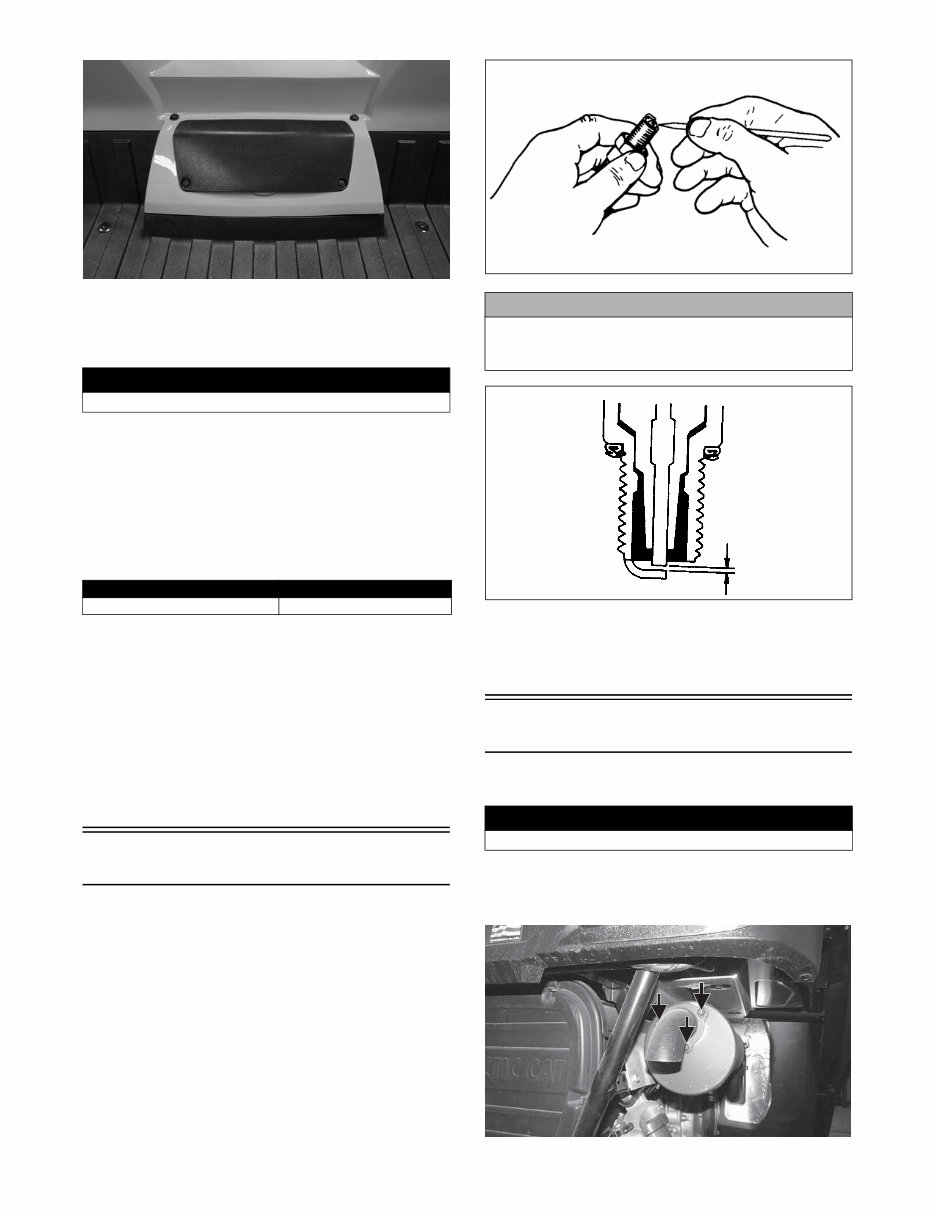
8 WT021 1. Remove the spark plug wires from the spark plugs. 2. Using compressed air, blow any debris from around the spark plugs. 3. Remove the spark plugs; then attach the spark plug wires to the plugs and ground the plugs on the cylinder heads well away from the spark plug holes. 4. Attach the Compression Tester Kit. 5. While holding the throttle in the full-open position, crank the engine over with the electric starter until the gauge stops climbing (five to 10 compression strokes). Compres- sion should be as shown in the chart. 6. If compression is abnormally low, verify the following: A. Starter cranks engine over (normal speed). B. Gauge is functioning properly. C. Throttle in the full-open position. D. Valve/tappet clearance correct. E. Engine warmed up. 7. If compression is still low, check for blown cylinder head gasket, valve leakage, or worn piston rings or cylinder (see Engine – Servicing Top-Side Components). Spark Plugs A light brown insulator indicates the plug is correct. A white or dark insulator indicates that the engine may need to be ser- viced. To maintain a hot, strong spark, keep the plug free of carbon. Adjust the gap to 0.6-0.8 mm (0.023-0.031 in.). ATV-0051 ATV-0052 When installing a spark plug, be sure to tighten it securely. A new spark plug should be tightened 1/2 turn once the washer contacts the cylinder head. A used spark plug should be tight- ened 1/8-1/4 turn once the washer contacts the cylinder head. Muffler/Spark Arrester Clean the spark arrester using the following procedure. 1. Remove the spark arrester screen; then using a suit- able brush, clean the carbon deposits from the screen taking care not to damage the screen. WS035A ! WARNING Always wear safety glasses when using compressed air. PSI (WOT) Cylinder #1/Cylinder #2 185 CAUTION Before removing a spark plug, be sure to clean the area around the spark plug. Dirt could enter engine when removing or installing the spark plug. ! WARNING Wait until the muffler cools to avoid burns.
Thank you for considering this comprehensive Service Repair Workshop Manual for the Arctic Cat Wildcat UTV Wildcat Trail. This manual is an invaluable resource for both professional mechanics and DIY enthusiasts.
DESCRIPTION:
This manual provides detailed instructions and illustrations for every Service & Repair Procedure, enabling you to save money by performing repairs yourself. The step-by-step guidance covers all areas of servicing and repairs, making any job easy to accomplish.
Once downloaded, this manual is yours to keep forever. You have the flexibility to print out specific pages, chapters, or the entire manual. Additionally, you can conveniently access it on your tablet or smartphone.
MODELS COVERED:
All Models/Engines/Trim/Transmissions Types Are Covered.
CONTENTS:
This high-quality Service Repair Workshop Manual encompasses all repair procedures from A to Z, ensuring that every repair and service procedure is comprehensively addressed.
COMPUTER REQUIREMENTS:
This downloadable Manual is compatible with all PC & MAC Computers, tablets, and mobile phones. The only software required is Adobe Reader, which is typically pre-installed on most computers or can be downloaded for free.
INSTANT DELIVERY:
Upon payment confirmation via Visa, MasterCard, or PayPal, the manual will be instantly emailed to the address provided during checkout.



 Lifetime Access