kohler engine motor manual kohler manuals kohler repair manu
What's Included?
Lifetime Access
Fast Download Speeds
Online & Offline Access
Access PDF Contents & Bookmarks
Full Search Facility
Print one or all pages of your manual
CONTENTS SECTION1. General Information . SECTION2. Special Tools . SECTION3. Periodic Maintenance . SECTION4. Troubleshooting . SECTION5. Air Cleaner And Air Intake System . SECTION6. Fuel System And Governor . SECTION7. Retractable Starters . SECTION8. Electrical Systems And Components . SECTION9. Automatic Compression Release . SECTION10. Disassembly I ••••••••••••••••••••••••••• SECTION11. Inspection and Repair . SECTION12. Reassembly . ., .
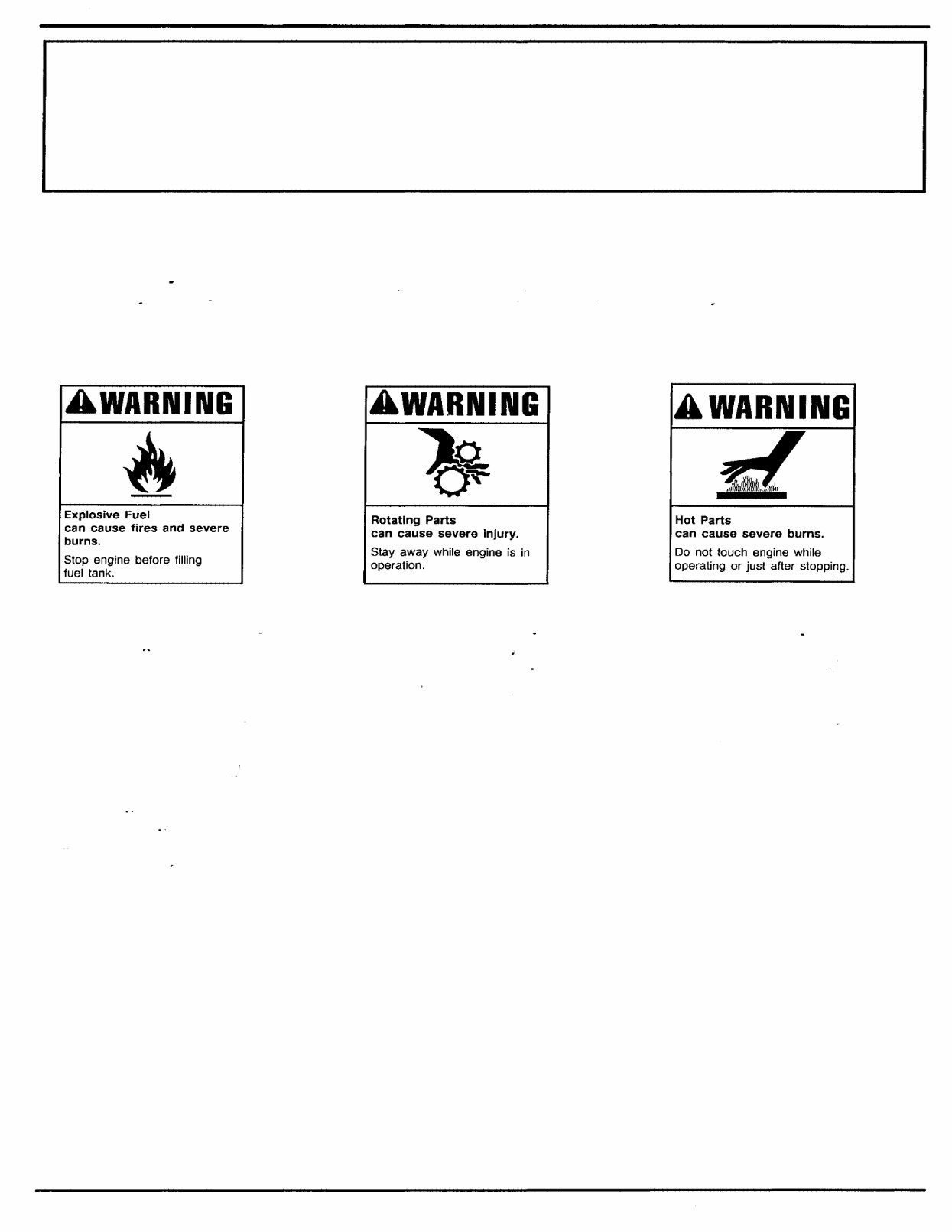
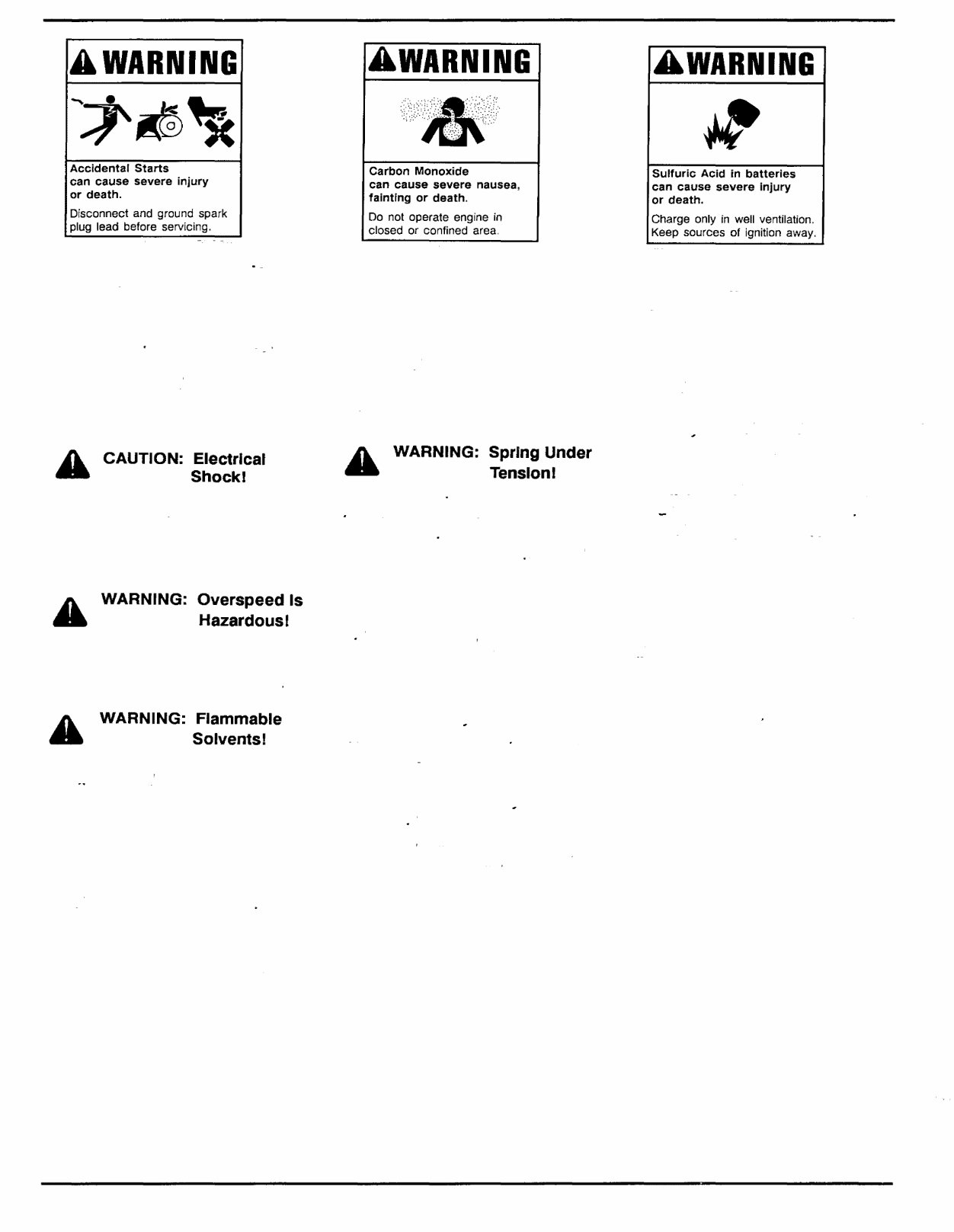
SECTION 1 GENERAL INFORMATION I SAFETY INFORMATION For Your Safetyl These safety precautions should be tottowea at all times. Failure to follow these safety precautions could result in serious injury to yourself and others. WARNING: Explosive Fuel! Gasoline is extremely flammable and its vapors can explode if ig- nited. Store gasoline only in ap- proved containers, in wett- ventilated, unoccupied buildings, away from sparks or flames. Do not fil/ the fuel tank while the engine is hot or running, since spilled fuel could ignite if it comes in contact with hot parts or sparks from igni- tion. Do not start the engine near spil/ed fuel. Never use gasoline as a cleaning agent. WARNING: Rotating Partsl Keep hands, feet, hair, and clothing away from all moving parts to pre- vent injury. Never operate the en- gine with covers, shrouds, or guards removed. WARNING: Hot Partsl Engine components can get ex- tremely hot from operation. To pre- vent severe burns, do not touch these areas while the engine is run- ning - or immediately after it is turned off. Never operate the engine with heat shields or guards removed. 1.1
WARNING: Accidental Starts! Before servicing the engine or equipment, always disconnect the spark plug lead to prevent the en- gine from starting accidentally. Ground the lead to prevent sparks that could cause fires. Make sure the equipment is in neutral. Never touch electrical wires or components while the engine is running. They can be sources of electrical shock. Do not tamper with the governor setting. Overspeed is hazardous and could cause personal injury. Carburetor cleaners and solvents are extremely flammable. Keep sparks, flames, and other sources of ignition away from the area. Fol- low the cleaner manufacturer's warnings and instructions on its proper and safe use. Never use gasoline as a cleaning agent. WARNING: Lethal Exhaust Gases! Engine exhaust gases contain poi- sonous carbon monoxide. Carbon monoxide is odorless, colorless, and can cause death if inhaled. Avoid inhaling exhaust fumes, and never run the engine in a closed building or confined area. Retractable starters contain a pow- erful, flat wire recoil spring that is under tension. Do not remove the center screw from the starter until the spring tension is released. Re- moving the center screw before re- leasing spring tension, or improper starter disassembly, can cause the sudden and potentially dangerous release of the spring. Always wear safety goggles when servicing retractable starters - full face protection is recommended. To ensure personal safety and proper starter disassembly and reassembly, follow the procedures in this section carefully. WARNING: Dangerous Acid, Explosive Gases! Batteries contain sulfuric acid. To prevent acid burns, avoid contact with skin, eyes, and clothing. Bat- teries produce explosive hydrogen gas while being charged. Topre- vent a fire or explosion charge bat- teries only in weI/-ventilated areas. Keep sparks, open flames, and other sources of ignition away from the battery at all times. Keep batter- ies out of the reach of children. Re- move aI/ jewelry when servicing batteries. Before disconnecting the negative (-) ground cable, make sure all switches are OFF.If ON, a spark will occur at the ground cable ter- minal which could cause an explo- sion if hydrogen gas or gasoline vapors are present. 1.2
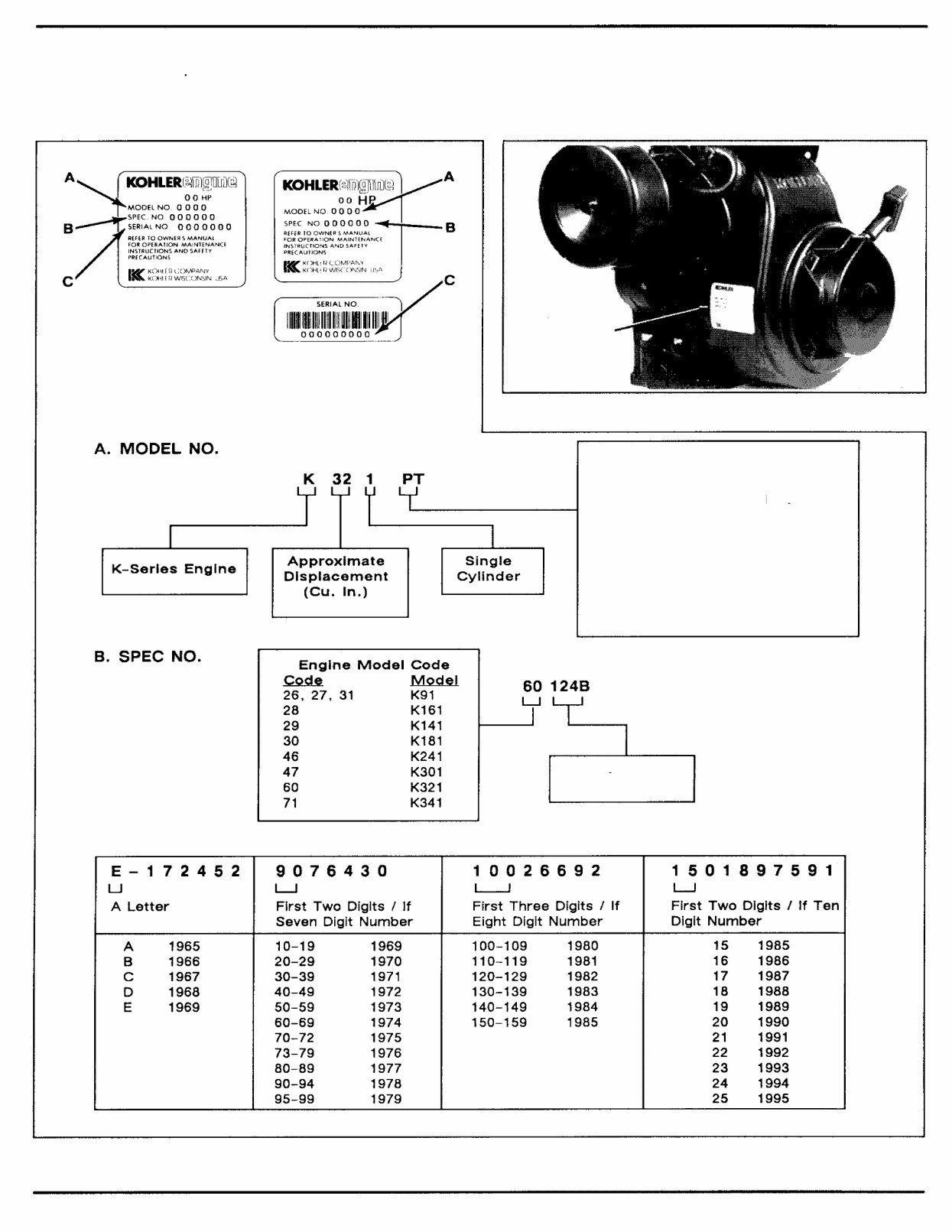
ENGINE IDENTIFICATION NUMBERS When ordering parts, or in any communications involving an engine, always give the model, speci- fication and serial number of the engine. The engine identification numbers appear on a de- cal (or decals) affixed to the engine blower hous- ing. Refer to Figure 1-1. The significance of these I numbers is shown below: Identification Decal Figure 1-1. Location of Engine Identification Decal. Version Code A - Special all Pan C - Clutch Model G - Generator Application P- Pump Model Q - Quiet Model R- Reduction Gear S- Electric Start T - Retractable Start ST - Electric Start And Retractable Start EP - Electric Plant Variation of Basic Engine C. SERIAL NO. Remaining digits are a factory code. Figure 1-2. Engine Identification Decals. 1.3
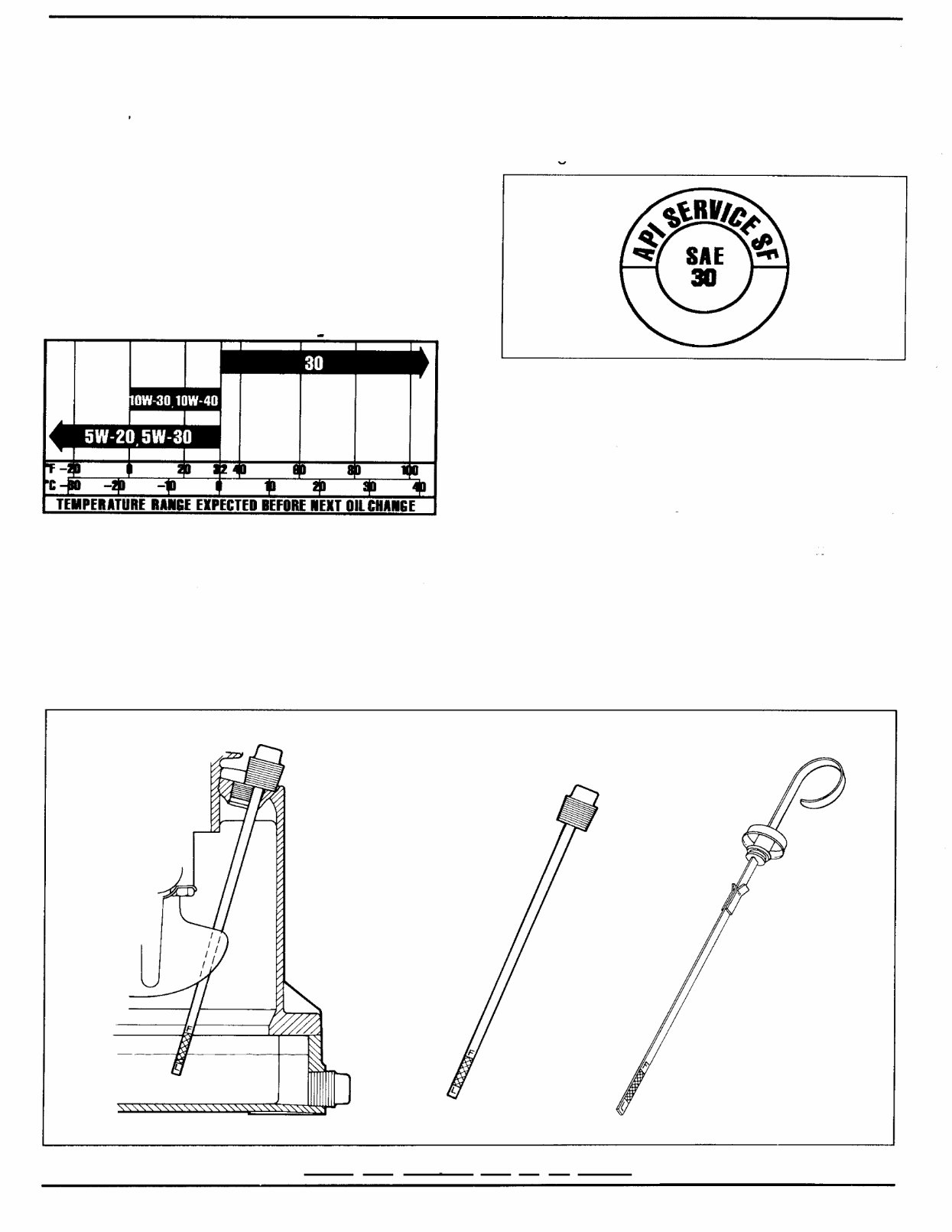
OIL RECOMMENDATIONS Using the proper type and weight of oil in the engine crankcase and in the gear reduction unit is extreme- ly important. as is checking oil daily and changing oil regularly. Failure to use the correct oil or using dirty oil causes premature engine wear and failure. Oil Type Use high-quality detergent oil of API (American Pe- troleum Institute) Service Class SF or SG. Select the viscosity based on the air temperature at the time of operation as shown in the table. Reclmmended ME Viscosity Grades Straight 3D-weight oil is preferred. SAE 1OW-3D and 1DW-4D are not recommended above 32 OF (DOC). Using these oils substantially increases oil consumption and combustion chamber deposits. Shoulder of flange Remove from block Place on shoulder Read level NOTE: Using other than Service Class SF or SG oil or extending oil change intervals longer than recommended could cause engine damage which is not covered by the engine warranty. A logo or symbol on oil containers identifies the API service class and SAE viscosity grade. Check Oil Level Check oil lever BEFORE EACH USE. Check gear reduction uniot oil level by removing the drain plug on the lower part of the cover. Oil level should be up to the bottom of the plug hole. If oil level is low, remove the vented plug at the top of the cover, add oil until it reaches the bottom of the drain plug hole, and replace drain plug and vented plug. NOTE: Do not operate the engine with the oil level below the "L" mark or over the "F" mark on the dipstick. Bayonet Push down on tube Read level Figure 1-3. Dipsticks And Oil Fill Tubes. 1.4
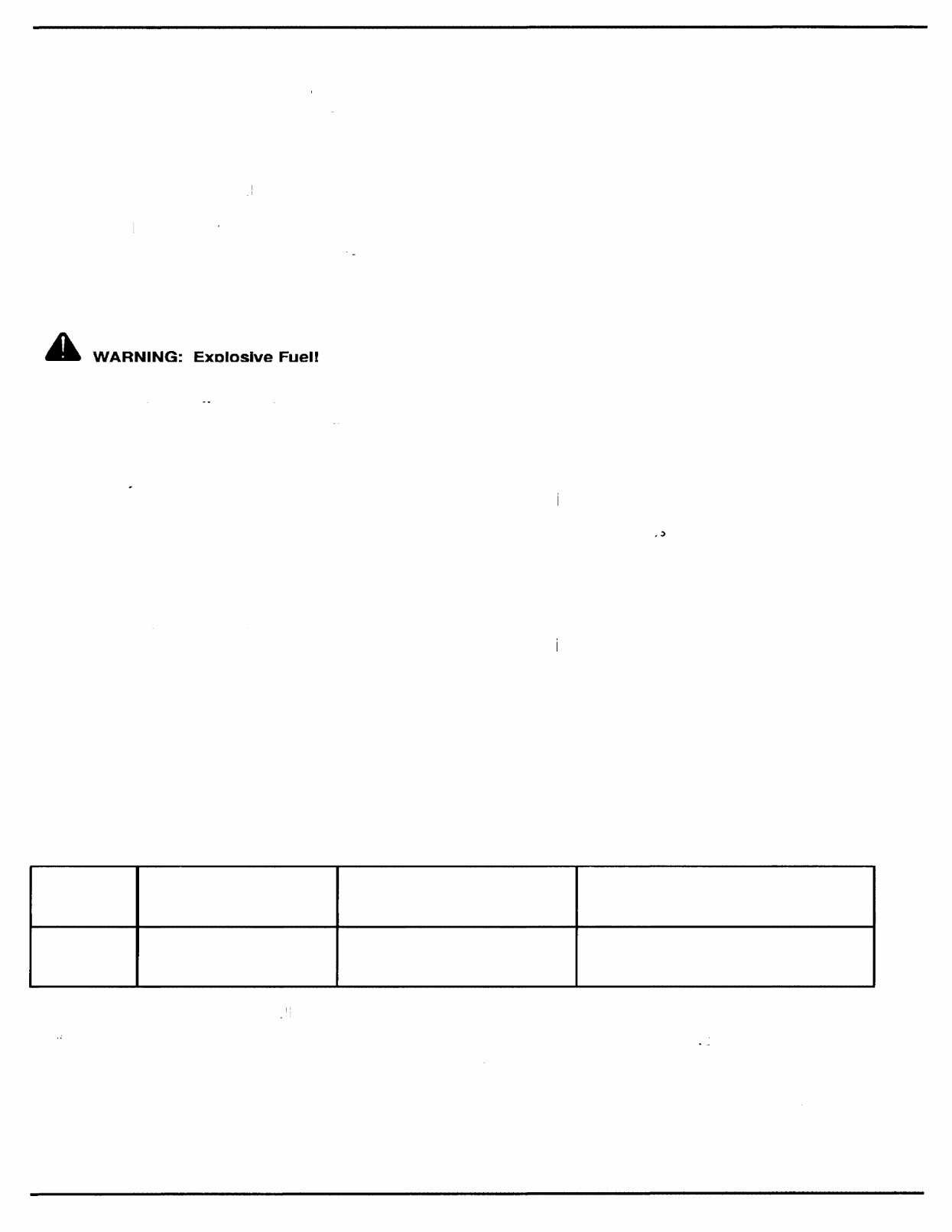
Change Oil For a new engine, change oil after the first 5 hours of operation. Change oil every 25 hours of operation thereafter. For an overhauled engine or one rebuilt with a new shortblock or miniblock, use straight 30-weight Service Class SF or SG oil for the first 5 hours of operation. Change the oil after this initial run-in period. Refill with Service Class SF or SG oil as specified in the table. Change oil every 25 operat- ing hours thereafter. FUEL RECOMMENDATIONS General Recommendations Purchase gasoline in small quantities and store in clean. approved containers. A container with a ca- pacity of 2 gallons or less with a pouring spout is recommended. Such a container is easier to handle and helps eliminate spoilage during refueling. Do not use gasoline left over frorn the previous sea- son I to minimize gum deposits in your fuel system and to insure easy starting. Do not add oil to the gasoline. Do not overfill the fuel tank. Leave room for the fuel to expand. I Fuel Type For best results. use only clean, fresh, unleaded gasoline with a pump sticker octane rating of 87 or higher. In countries using the Research method. it should be 90 octane minimum. Unleaded gasoline is recommended t as it leaves less combustion chamber deposits. Leaded gaso- line may be used in areas where unleaded is not available and exhaust emissions are not regulated. Be aware however I that the cylinder head will re- quire more frequent service. Gasoline!Alcohol blends Gasohol (up to 10°./0ethyl alcohol, 90% unleaded gasoline by volume) is approved as a fuel for Kohler engines. Other gasoline/alcohol blends are not ap- proved. Gasoline/Ether blends Methyl Tertiary Butyl Ether (MTBE) and unleaded gasoline blends (up to a maximum of 15% MTBE by volume) are approved as a fuel for Kohler engines. Other gasoline/ether blends are not approved. OIL REFILL QUANTITIES (U.S. STANDARD QUARTS) K91 K141, K161, K181 K241, K301, K321, K341 K241A, K301A, K321A, K341A 1/2 Quart 1 Quart 2 Quarts 1 Ouart" (After refilling, always check oil level -- DO NOT OVERFILL) .•.A-type oil pan capacity varies from 1 to 1-3/4 quarts. On these add 1 quart of oil, check level, then add oil as necessary to bring up to full level. Figure 1-4. 1.5 --- -------- --- ~--.------- - - ~--- Gasoline may be present in the carburetor and fuel system. Gasoline is extremely flammable and it can explode if ignited. Keep sparks, open flames, and other sources of ignition away from the engine. Dis- connect and ground the spark plug lead to prevent the possibility of sparks from the ignition system.
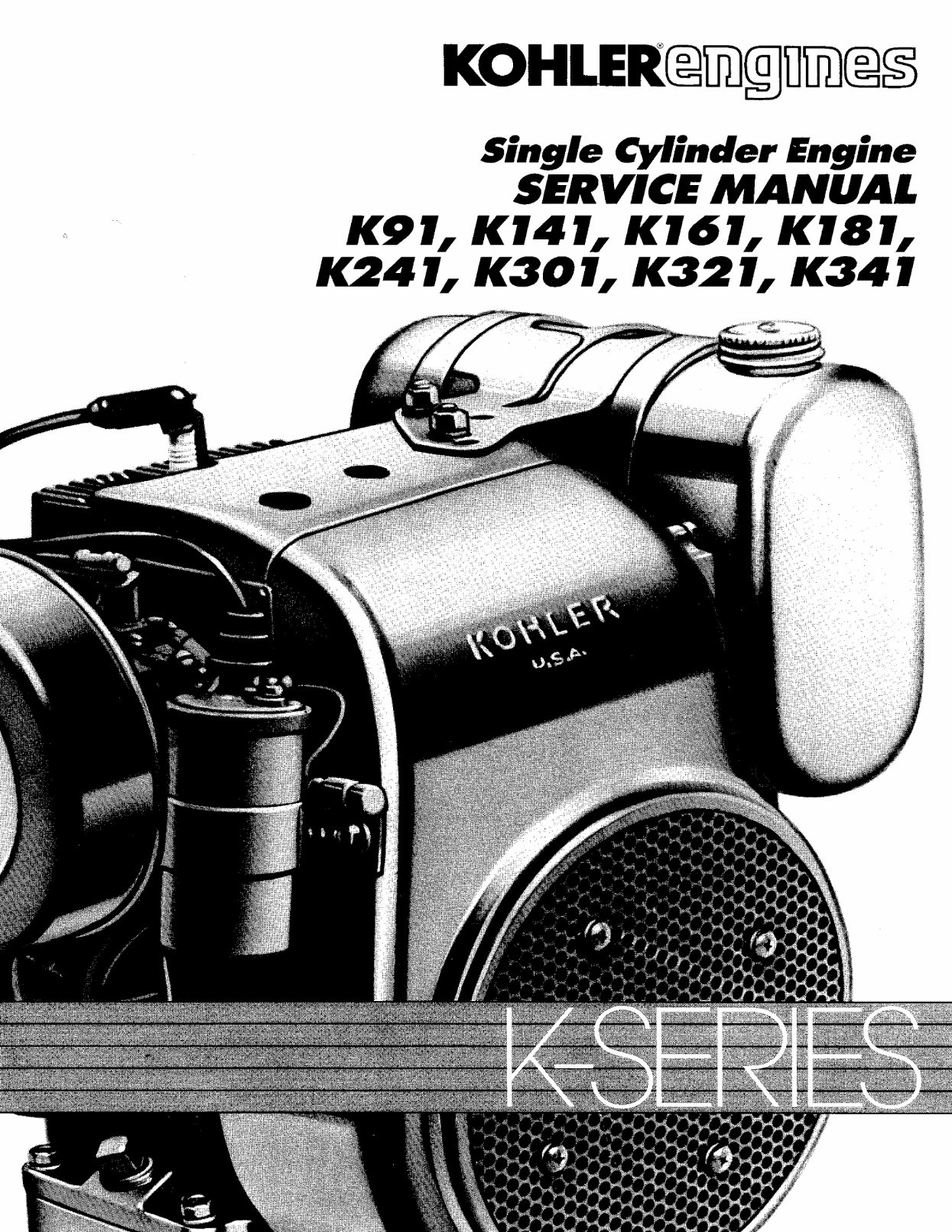
The Kohler Engine Service Manuals offer a comprehensive collection of manuals for various Kohler small engines. With over 2000 pages of repair information, this massive collection includes manuals for models such as K91, K141, K161, K181, K241, K301, K321, K341, K181, Courage Series SV470-600, twin cylinders K482, K532, K582, K662, Aegis LH630, LH685, LH750, LH760, Aegis 17HP, 20HP, 23HP vertical crank, Command Pro CS Series 4-12 HP, OHC horizontal shaft 16HP, 18HP, Command vertical shaft 17-25HP, Command horizontal shaft 18, 20, 22, 25 HP, Command vertical shaft CV11-16, CV460-465, CV490-495, Command 5, 6HP, Command horizontal shaft 11, 12.5, 14HP, Magnum Twin MV16, MV18, MV20, Magnum Twin M18, M20, Magnum Single M8, M10, M12, M14, M16, Command Twin KT17, KT19 Series II, KT17, KT19, KT21, and Kohler K361.
This 17-in-1 mega assembled pack provides clear and crisp repair information with searchable bookmarks, making it an invaluable resource for professional mechanics and DIY enthusiasts alike.
Recently Viewed
5,521,897Happy Clients
2,594,462eManuals
1,120,453Trusted Sellers
15Years in Business
Price:
Actual Price:
kohler engine motor manual kohler manuals kohler repair manu



 Lifetime Access