John Deere PowerTech 9.0L Diesel Engine OEM Service & Repair Manual
What's Included?
Lifetime Access
Fast Download Speeds
Online & Offline Access
Access PDF Contents & Bookmarks
Full Search Facility
Print one or all pages of your manual
PowerTech™ 9.0 L OEM Diesel Engines Base Engine Repair For complete service information also see: 9.0 L Diesel Engines — Level 14 Electronic Fuel System with Denso HPCR .......................... CTM385 OEM Engine Accessories ................................... CTM67 Application List.................................................... CTM106819 COMPONENT TECHNICAL MANUAL 9.0 L OEM Diesel Engines — Base Engine Repair CTM400 29AUG11 (ENGLISH) John Deere Power Systems LITHO IN U.S.A.
Introduction RE38635,00000D9 -19-03SEP09-1/1 Foreword This repair manual is valid for the engines. This manual is written for an experienced technician. Essential tools required in performing certain service work are identified in this manual. Live with safety: Read the safety messages in the introduction of this manual and the cautions presented throughout the text of the manual. This is the safety-alert symbol. When you see this symbol on the machine or in this manual, be alert to the potential for personal injury. Information in this manual is organized in sections and sub divided into groups. Section 01 covers the safety measures to follow while repairing the engine; engine identification features, engine emission & application details, and information about the fuels, lubricants & coolants. Section 02 covers the Repair and Adjustment procedures. Section 03 explains Systems Theory of Operation. Section 04 is the diagnostics section that provides troubleshooting procedures to find problems. Section 05 lists all applicable service equipment and tools, other materials needed to do the job. Section 06 details all specifications, wear tolerances, torque values and contains the wiring diagrams. This manual contains SI Metric units of measure followed immediately by the U.S. customary units of measure. Most hardware on these engines is metric sized. Read each block of material completely before performing service to check for differences in procedures or specifications. Follow only the procedures that apply to the component you are working on. Component Technical Manuals are concise service guides for specific components. Component technical manuals are written as stand-alone manuals covering multiple machine applications. Fundamental service information is available from other sources covering basic theory of operation, fundamentals of troubleshooting, general maintenance, and basic type of failures and their causes. CALIFORNIA PROPOSITION 65 WARNING Diesel engine exhaust and some of its constituents are known to the State of California to cause cancer, birth defects and other reproductive harm. CTM400 (29AUG11) 9.0 L Diesel Engines 090811 PN=2
Introduction DPSG,OUO1004,898 -19-19MAY99-1/1 RE38635,0000076 -19-03SEP09-1/1 John Deere Dealers Future changes to this manual will be documented below. For diagnostics and fuel system repair, and for electrical system repair, reference the following manuals. • CTM400 (English) — Base Engine • CTM385 (English) —Level 14 Electronic Fuel Systems • CTM77 (English) —Electrical (Starter and Alternator) Systems SECTION 01, GROUP 001 (Engine Identification) SECTION 01, GROUP 002 (Fuels, Lubricants, and Coolants) SECTION 02, GROUP 010 (Engine Rebuild) SECTION 02, GROUP 020 (Cylinder Head and Valves Repair and Adjustment Serial Number SECTION 02, GROUP 050 (Camshaft and Timing Gear Train Repair and Adjustment) SECTION 02, GROUP 060 (Lubrication System Repair and Adjustment) SECTION 02, GROUP 070 (Cooling System Repair and Adjustment) SECTION 02, GROUP 080 (Air Intake and Exhaust System Repair and Adjustments) SECTION 02, GROUP 081 (Air Intake and Exhaust System Repair and Adjustments — POWERTECH AND POWERTECH E) SECTION 03, GROUP 120 (Base Engine Operation) SECTION 03, GROUP 121 (Base Engine Operation — POWERTECH AND POWERTECH E) • Base engine theory of operation is covered in this new group. SECTION 04, GROUP 150 (Observable Diagnostics and Tests) • Base engine observable diagnostics and tests are covered in this new section/group. SECTION 05 (Tools and Other Materials) • All essential tools, service tools, dealer fabricated tools, and other materials listed throughout this manual are consolidated in this section for ease of reference. SECTION 06 (Specifications) • All repair, test, and diagnostic specifications listed throughout this manual are consolidated in this section for ease of reference. • Updated bolt and cap screw torque values. • Updated General OEM specifications. • Updated dynamometer specifications. About this Manual This component technical manual (CTM) covers the base engine for POWERTECH® 9.0 L diesel engines produced in Waterloo, Iowa. This manual's coverage includes repair and basic diagnostic information for 9.0 L engines Direction of engine crankshaft rotation in this manual is referenced as clockwise, as viewed from the rear of the engine. Front of engine is fan drive end. Read each procedure completely before performing any service. IMPORTANT: For repair, diagnostics, and testing procedures on the fuel system, refer to the companion manuals: • CTM385 — 9.0 L Diesel Engines—Level 14 Electronic Fuel Systems with Denso High Pressure Common Rail POWERTECH is a registered trademark of Deere & Company CTM400 (29AUG11) 9.0 L Diesel Engines 090811 PN=3
Introduction AS58880,0000007 -19-31JUL09-1/1 Identification Views - 6090 Tier 3 / Stage IIIA Emissions Certified Engines RG13848 —UN—24JAN05 9.0 L Diesel Engine Right Front View RG13847 —UN—24JAN05 9.0 L Diesel Engine Left Front View RG13850 —UN—17JAN05 9.0 L Diesel Engine Front View RG13849 —UN—24JAN05 9.0 L Diesel Engine Rear View CTM400 (29AUG11) 9.0 L Diesel Engines 090811 PN=4
Contents CTM400 (29AUG11) ii 9.0 L Diesel Engines 090811 PN=2
Section 01 General Contents Page Group 000—Safety Work In Ventilated Area ............................... 01-000-1 Recognize Safety Information ..................... 01-000-1 Work in Clean Area ..................................... 01-000-1 Dispose of Waste Properly .......................... 01-000-2 Avoid Harmful Asbestos Dust ...................... 01-000-2 Handle Fuel Safely—Avoid Fires................. 01-000-2 Prepare for Emergencies............................. 01-000-3 Handle Starting Fluid Safely ........................ 01-000-3 Handle Fluids Safely—Avoid Fires......................................................... 01-000-3 Avoid High-Pressure Fluids ......................... 01-000-4 Use Proper Lifting Equipment...................... 01-000-4 Illuminate Work Area Safely ........................ 01-000-4 Live With Safety........................................... 01-000-5 Service Machines Safely ............................. 01-000-5 Handle Chemical Products Safely................ 01-000-5 Protect Against Noise .................................. 01-000-6 Remove Paint Before Welding or Heating .................................................... 01-000-6 Stay Clear of Rotating Drivelines................. 01-000-7 Service Cooling System Safely ................... 01-000-7 Follow Safety Instructions............................ 01-000-8 Use Proper Tools ......................................... 01-000-8 Construct Dealer-Made Tools Safely....................................................... 01-000-8 Practice Safe Maintenance.......................... 01-000-9 Understand Signal Words............................ 01-000-9 Replace Safety Signs ................................ 01-000-10 Prevent Battery Explosions ....................... 01-000-10 Protect Against High Pressure Spray ..................................................... 01-000-10 Avoid Heating Near Pressurized Fluid Lines ............................................. 01-000-11 Wear Protective Clothing ........................... 01-000-11 Wait Before Opening High-Pressure Fuel System................... 01-000-11 Handle Agricultural Chemicals Safely..................................................... 01-000-12 Handling Batteries Safely .......................... 01-000-13 Install All Guards ....................................... 01-000-13 Avoid Hot Exhaust ..................................... 01-000-14 Group 001—Engine Identification Engine Model Designation........................... 01-001-1 Engine Serial Number Plate Information............................................... 01-001-2 OEM Engine Option Code Label ................. 01-001-2 Group 002—Fuels, Lubricants and Coolant Diesel Fuel................................................... 01-002-1 Biodiesel Fuel .............................................. 01-002-2 Minimizing the Effect of Cold Weather on Diesel Engines ..................... 01-002-3 Page Handling and Storing Diesel Fuel ................ 01-002-4 Lubricity of Diesel Fuel ................................ 01-002-4 Testing Diesel Fuel ...................................... 01-002-4 Engine Oil and Filter Service Intervals ................................................... 01-002-4 Diesel Engine Oil ......................................... 01-002-5 Diesel Engine Break-In Oil .......................... 01-002-6 Oil Filters ..................................................... 01-002-6 Grease ......................................................... 01-002-7 Alternative and Synthetic Lubricants ................................................ 01-002-7 Lubricant Storage ........................................ 01-002-7 Mixing of Lubricants..................................... 01-002-8 Heavy Duty Diesel Engine Coolant .................................................... 01-002-8 Supplemental Coolant Additives.................. 01-002-9 Operating in Warm Temperature Climates................................................... 01-002-9 Additional Information About Diesel Engine Coolants and John Deere LIQUID COOLANT CONDITIONER ..................................... 01-002-10 Diesel Engine Coolant ............................... 01-002-11 Testing Diesel Engine Coolant................... 01-002-11 Drain Intervals for Diesel Engine Coolant .................................................. 01-002-12 CTM400 (29AUG11) 01-1 9.0 L Diesel Engines 090811 PN=1
Contents CTM400 (29AUG11) 01-2 9.0 L Diesel Engines 090811 PN=2
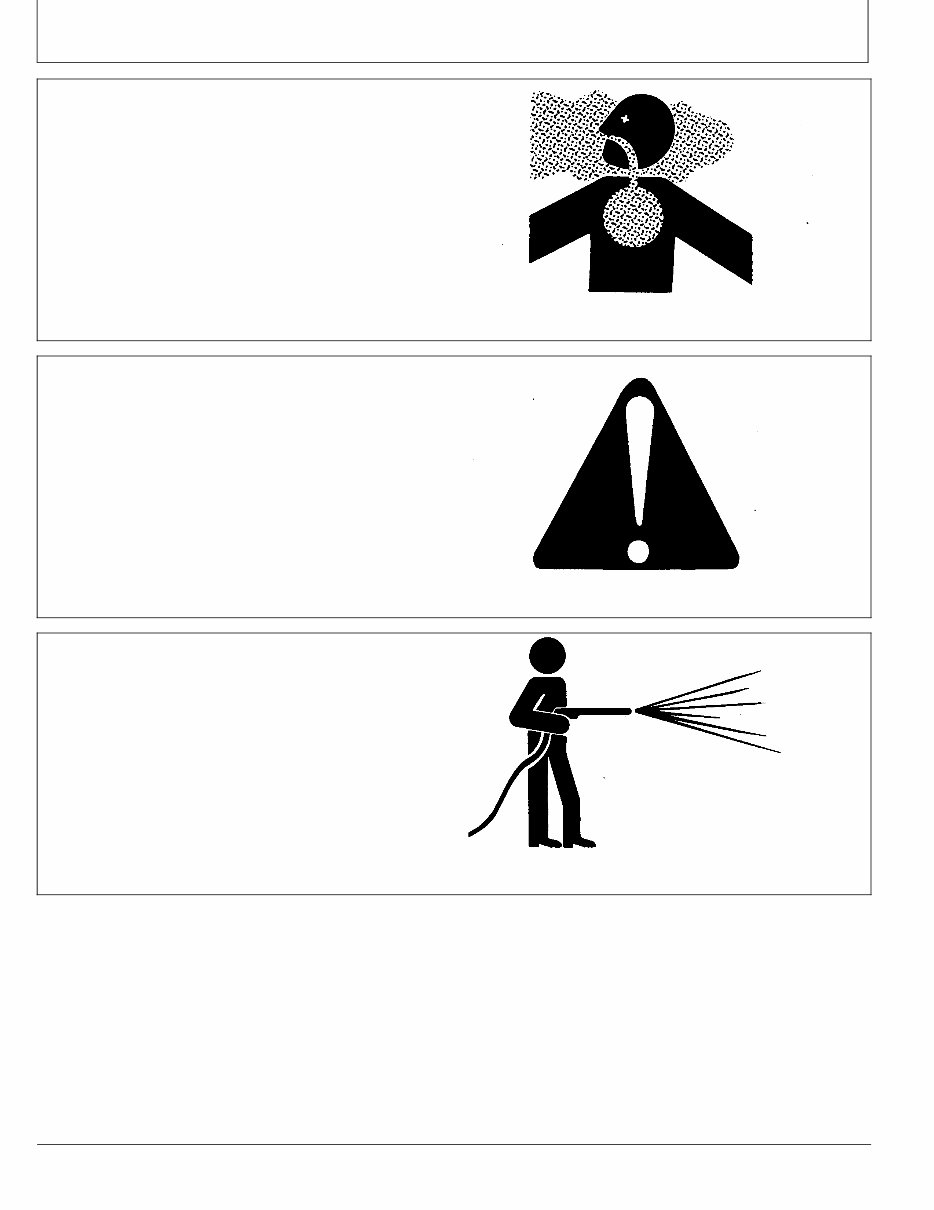
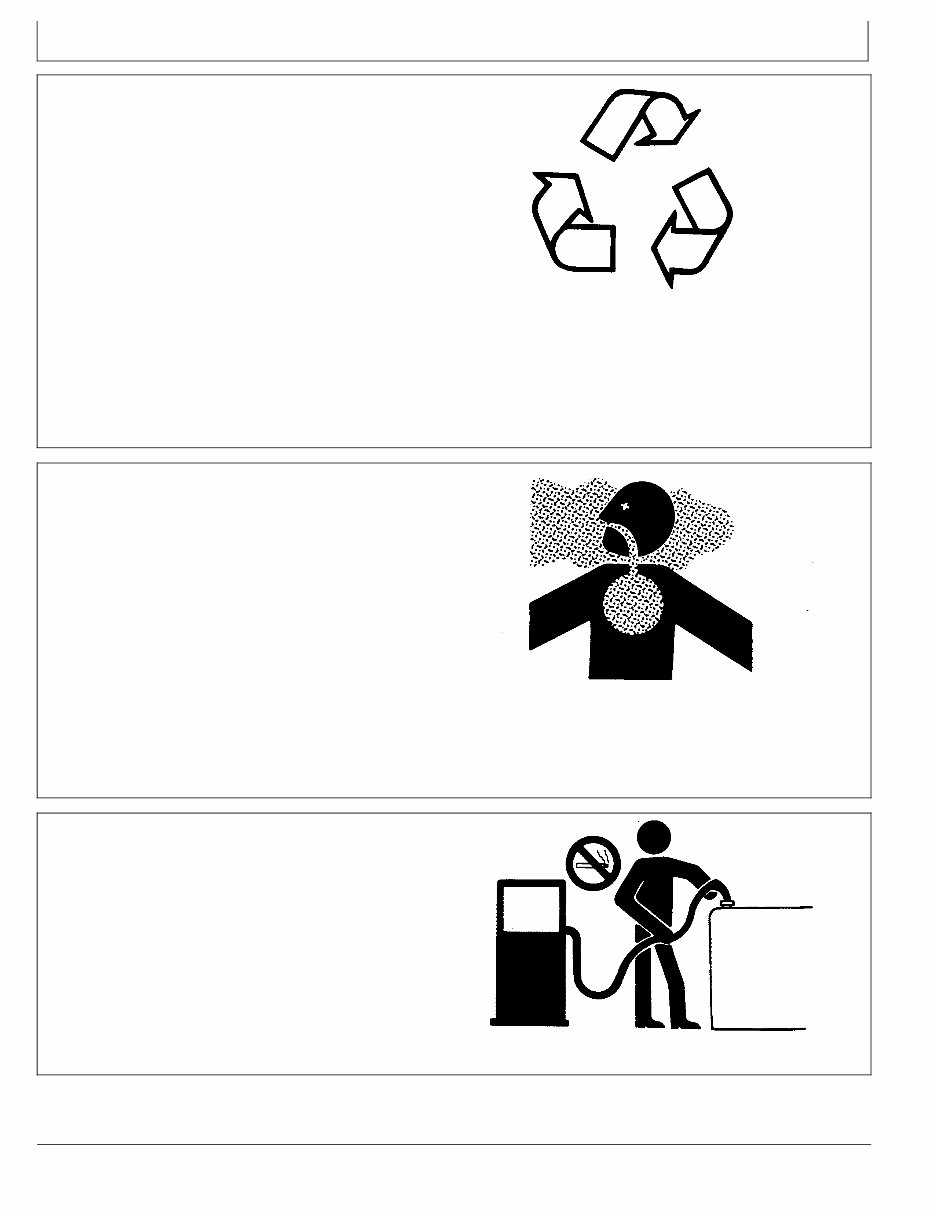
Group 000 Safety DX,AIR -19-17FEB99-1/1 DX,ALERT -19-29SEP98-1/1 DX,CLEAN -19-04JUN90-1/1 Work In Ventilated Area Engine exhaust fumes can cause sickness or death. If it is necessary to run an engine in an enclosed area, remove the exhaust fumes from the area with an exhaust pipe extension. If you do not have an exhaust pipe extension, open the doors and get outside air into the area. TS220 —UN—23AUG88 Recognize Safety Information This is a safety-alert symbol. When you see this symbol on your machine or in this manual, be alert to the potential for personal injury. Follow recommended precautions and safe operating practices. T81389 —UN—07DEC88 Work in Clean Area Before starting a job: • Clean work area and machine. • Make sure you have all necessary tools to do your job. • Have the right parts on hand. • Read all instructions thoroughly; do not attempt shortcuts. T6642EJ —UN—18OCT88 CTM400 (29AUG11) 01-000-1 9.0 L Diesel Engines 090811 PN=9
Safety DX,DRAIN -19-03MAR93-1/1 DX,DUST -19-15MAR91-1/1 DX,FIRE1 -19-03MAR93-1/1 Dispose of Waste Properly Improperly disposing of waste can threaten the environment and ecology. Potentially harmful waste used with John Deere equipment include such items as oil, fuel, coolant, brake fluid, filters, and batteries. Use leakproof containers when draining fluids. Do not use food or beverage containers that may mislead someone into drinking from them. Do not pour waste onto the ground, down a drain, or into any water source. Air conditioning refrigerants escaping into the air can damage the Earth’s atmosphere. Government regulations may require a certified air conditioning service center to recover and recycle used air conditioning refrigerants. Inquire on the proper way to recycle or dispose of waste from your local environmental or recycling center, or from your John Deere dealer. TS1133 —UN—26NOV90 Avoid Harmful Asbestos Dust Avoid breathing dust that may be generated when handling components containing asbestos fibers. Inhaled asbestos fibers may cause lung cancer. Components in products that may contain asbestos fibers are brake pads, brake band and lining assemblies, clutch plates, and some gaskets. The asbestos used in these components is usually found in a resin or sealed in some way. Normal handling is not hazardous as long as airborne dust containing asbestos is not generated. Avoid creating dust. Never use compressed air for cleaning. Avoid brushing or grinding material containing asbestos. When servicing, wear an approved respirator. A special vacuum cleaner is recommended to clean asbestos. If not available, apply a mist of oil or water on the material containing asbestos. TS220 —UN—23AUG88 Keep bystanders away from the area. Handle Fuel Safely—Avoid Fires Handle fuel with care: it is highly flammable. Do not refuel the machine while smoking or when near open flame or sparks. Always stop engine before refueling machine. Fill fuel tank outdoors. Prevent fires by keeping machine clean of accumulated trash, grease, and debris. Always clean up spilled fuel. TS202 —UN—23AUG88 CTM400 (29AUG11) 01-000-2 9.0 L Diesel Engines 090811 PN=10
John Deere PowerTech 9.0L Diesel Engine Service & Repair Manual
Engines covered:
John Deere 6090 Series
6090HF485
6090HFC95
Other PowerTech and PowerTech E variants
Serial numbers covered:
RG6090H000000 and up
The John Deere PowerTech 9.0L Diesel Engine Service & Repair Manual is the official factory-issued Component Technical Manual (CTM400) for maintaining and servicing the 6090 series 9.0L PowerTech diesel engines used in OEM applications. This manual delivers detailed instructions and factory specifications for a wide range of mechanical procedures, including complete disassembly, adjustment, and overhaul steps tailored for off-highway, industrial, construction, and agricultural engine integrations.
Whether you're rebuilding a worn powerhead, diagnosing performance issues, or adjusting internal components to spec, this manual provides dealership-level accuracy across PowerTech and PowerTech E engine variants. It includes critical data for Tier III / Stage IIIA emissions-certified configurations and supports full-service diagnostics, tooling, and repair workflows.
Contents Overview:
Section 01 – General
Safety practices, emissions compliance, engine identification, and label decoding
Approved fuels, lubricants, and cooling system requirements, including biodiesel guidelines
Section 02 – Repair and Adjustments
Teardown and rebuild procedures for head, block, crankshaft, camshaft, pistons, valves, and geartrain
Cooling, lubrication, intake, exhaust, starting, and charging system adjustments
Section 03 – Theory of Operation
Explanation of base engine design, flow paths, and combustion processes for PowerTech and PowerTech E variants
Section 04 – Diagnostics
Symptom-based troubleshooting with detailed test procedures for mechanical faults
Section 05 – Tools and Other Materials
List of essential dealer tools, shop equipment, and fabricated tools required for service
Section 06 – Specifications
Critical tolerances, torque values, wear limits, and performance baselines for all systems
Cap screw torque charts and standard service specs
This manual is the same technical guide used by authorized John Deere service technicians. It’s an indispensable resource for any shop or technician working on 9.0L PowerTech engines across multiple OEM platforms.
Printable: Yes Compatibility: Works on all PCs, Macs, smartphones, and tablets Requirements: PDF reader (e.g., Adobe Reader)
Recently Viewed
5,521,897Happy Clients
2,594,462eManuals
1,120,453Trusted Sellers
15Years in Business
Price:
Actual Price:
John Deere PowerTech 9.0L Diesel Engine OEM Service & Repair Manual



 Lifetime Access