How to use this manual 0-1 How to use this manual A Few Words About Safety SERVICE INFORMATION The service and repair information contained in this manual is intended for use by qualified, professional technicians. Attempting service or repairs without the proper training, tools, and equipment could cause injury to you and/or others. It could also damage this Honda product or create an unsafe condition. This manual describes the proper methods and procedures for performing service, maintenance, and repairs. Some procedures require the use special tools. Any person who intends to use a replacement part, service procedure or a tool that is not recommended by Honda, must determine the risks to their personal safety and the safe operation of this product. If you need to replace a part, use Honda Genuine parts with the correct part number or an equivalent part. We strongly recommend that you do not use replacement parts of inferior quality. For Your Customer’s Safety Proper service and maintenance are essential to the customer’s safety and the reliability of this product. Any error or oversight while servicing this product can result in faulty operation, damage to the product, or injury to others. For Your Safety Because this manual is intended for the professional service technician, we do not provide warnings about many basic shop safety practices (e.g., Hot parts-wear gloves). If you have not received shop safety training or do not feel confident about your knowledge of safe servicing practice, we recommend that you do not attempt to perform the procedures described in this manual. Some of the most important general service safety precautions are given below. However, we cannot warn you of every conceivable hazard that can arise in performing service and repair procedures. Only you can decide whether or not you should perform a given task. Important Safety Precautions Make sure you have a clear understanding of all basic shop safety practices and that you are wearing appropriate clothing and using safety equipment. When performing any service task, be especially careful of the following: • Read all of the instructions before you begin, and make sure you have the tools, the replacement or repair parts, and the skills required to perform the tasks safely and completely. • Protect your eyes by using proper safety glasses, goggles, or face shields anytime you hammer, drill, grind, or work around pressurized air, pressurized liquids, springs or other stored-energy components. If there is any doubt, put on eye protection. • Use other protective wear when necessary, for example gloves or safety shoes. Handling hot or sharp parts can cause severe burns or cuts. Before you grab something that looks like it can hurt you, stop and put on gloves. • Protect yourself and others whenever you have engine-power equipment up in the air. Anytime you lift this product with a hoist, make sure that the hoist hook is securely attached to the product. Make sure the engine is off before you begin any servicing procedures, unless the instruction tells you to do otherwise. This will help eliminate several potential hazards: • Carbon monoxide poisoning from engine exhaust. Be sure there is adequate ventilation whenever you run the engine. • Burns from hot parts. Let the engine and exhaust system cool before working in those areas. • Injury from moving parts. If the instruction tells you to run the engine, be sure your hands, fingers and clothing are out of the way. Gasoline vapors and hydrogen gasses from battery are explosive. To reduce the possibility of a fire or explosion, be careful when working around gasoline or batteries. • Use only a nonflammable solvent, not gasoline, to clean parts. • Never store gasoline in an open container. • Keep all cigarettes, sparks, and flames away from the battery and all fuel-related parts. Improper service or repairs can create an unsafe condition that can cause your customer or others to be seriously hurt or killed. Follow the procedures and precautions in this man- ual and other service materials carefully. Failure to properly follow instructions and precau- tions can cause you to be seriously hurt or killed. Follow the procedures and precautions in this man- ual carefully. 62Z6N000.book 1 ページ 2009年6月16日 火曜日 午後6時17分
CONTENTS SPECIFICATIONS 1 SERVICE INFORMATION 2 MAINTENANCE 3 TROUBLESHOOTING 4 COVER 5 FUEL SYSTEM 6 GOVERNOR SYSTEM 7 CHARGING SYSTEM 8 IGNITION SYSTEM 9 STARTING SYSTEM 10 OTHER ELECTRICAL 11 MUFFLER 12 LUBRICATION SYSTEM 13 CYLINDER 14 CRANKCASE 15 TECHNICAL FEATURES 16 WIRING DIAGRAMS 17 INDEX 62Z6N000.book 2 ページ 2009年6月16日 火曜日 午後6時17分
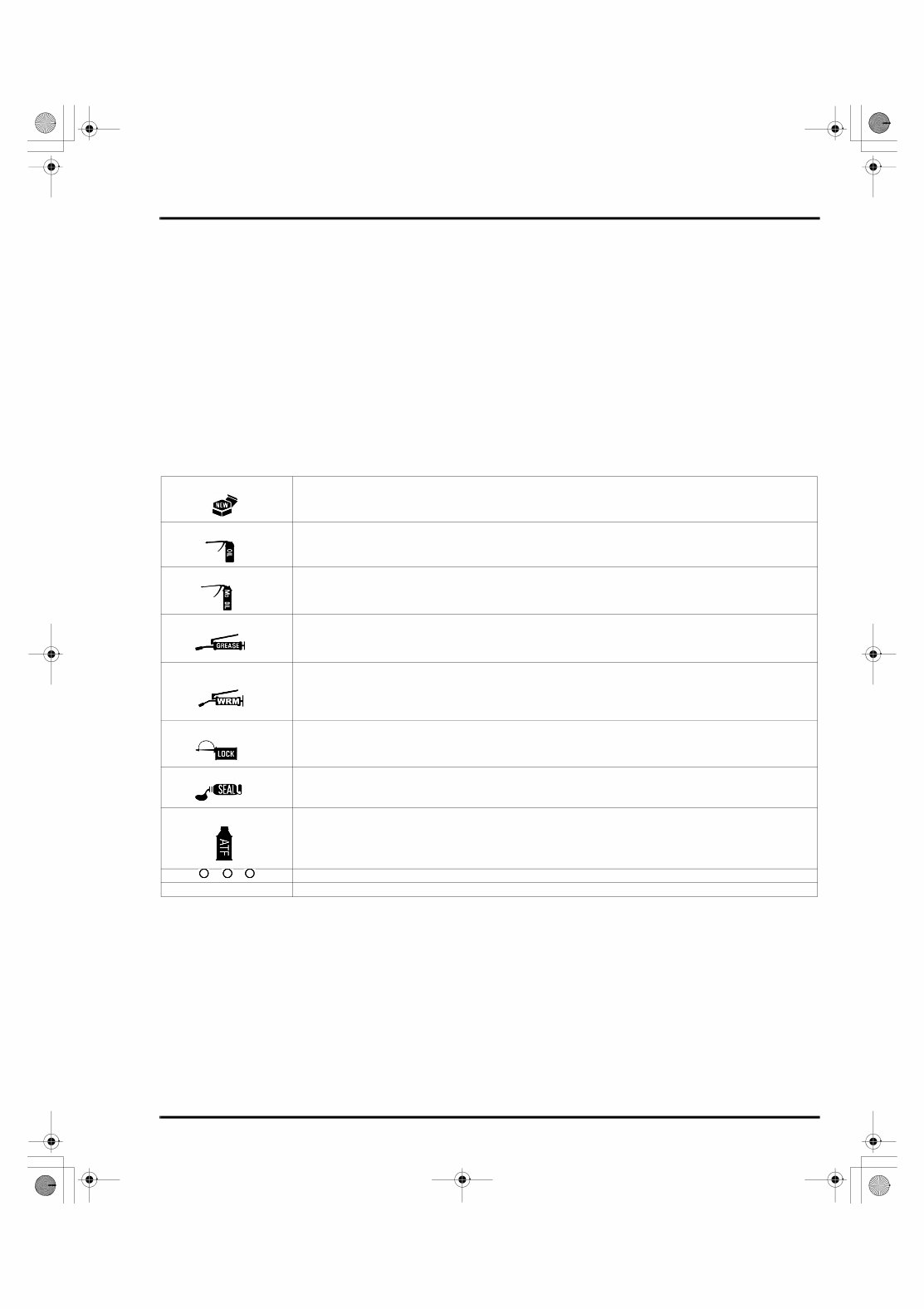
How to use this manual 0-4 SERVICE RULES • Use genuine Honda or Honda-recommended parts and lubricants or their equivalents. Parts that do not meet Honda’s design specifications may damage the unit. • Use the special tools designed for the product. • Install new gaskets, O-rings, etc. when reassembling. • When torquing bolts or nuts, begin with larger-diameter or inner bolts first and tighten to the specified torque diagonally, unless a particular sequence is specified. • Clean parts in cleaning solvent upon disassembly. Lubricate any sliding surfaces before reassembly. • After reassembly, check all parts for proper installation and operation. • Many screws used in this machine are self-tapping. Be aware that cross-threading or overtightening these screws will strip the threads and ruin the hole. Use only metric tools when servicing this unit. Metric bolts, nuts and screws are not interchangeable with non-metric fasteners. The use of incorrect tools and fasteners will damage the unit. SYMBOLS The symbols used throughout this manual show specific service procedures. If supplementary information is required pertaining to these symbols, it would be explained specifically in the text without the use of the symbols. Replace the part(s) with new one(s) before assembly. Use the recommend engine oil, unless otherwise specified. Use molybdenum oil solution (mixture of the engine oil and molybdenum grease in a ratio of 1:1). Use multi-purpose grease (lithium based multi-purpose grease NLGI #2 or equivalent). Use water resistant molybdenum disulfide grease (containing more than 3% molybdenum disulfide, NLGI #2 or equivalent). Example: UNILITE M No.2 manufactured by KYODO YUSHI, Japan Apply a locking agent. Use a medium strength locking agent unless otherwise specified. Apply sealant. Use automatic transmission fluid. ( x ) ( ) Indicates the diameter, length, and quantity of metric bolts used. page 1-1 Indicates the reference page. 62Z6N000.book 4 ページ 2009年6月16日 火曜日 午後6時17分
How to use this manual 0-5 ABBREVIATIONS Throughout this manual, the following abbreviations are used to identify the respective parts or systems Abbrev. term Full term ACG Alternator API American Petroleum institute Approx. Approximately Assy. Assembly ATDC After Top Dead Center ATF Automatic Transmission Fluid ATT Attachment BAT Battery BDC Bottom Dead Center BTDC Before Top Dead Center BARO Barometric Pressure CKP Crankshaft Position Comp. Complete CMP Camshaft Position CYL Cylinder DLC Data Link Connector EBT Engine Block Temperature ECT Engine Coolant Temperature ECM Engine Control Module EMT Exhaust Manifold Temperature EOP Engine Oil Pressure EX Exhaust F Front or Forward GND Ground HO2S Heated Oxygen sensor IAC Idle Air Control IAT Intake Air Temperature I.D. Inside diameter IG or IGN Ignition IN Intake INJ Injection L. Left MAP Manifold Absolute Pressure MIL Malfunction Indicator Lamp O.D. Outside Diameter OP Optional Part PGM-FI Programmed-Fuel Injection P/N Part Number Qty Quantity R. Right SAE Society of Automotive Engineers SCS Service Check Signal STD Standard SW Switch TDC Top Dead Center TP Throttle Position VTEC Variable Valve Timing & Valve Lift Electronic Control BI Black G Green Br Brown Lg Light green Y Yellow R Red O Orange P Pink BU Blue W White Lb Light blue Gr Gray 62Z6N000.book 5 ページ 2009年6月16日 火曜日 午後6時17分
The Honda GX630, GX630R, GX660, GX660R, GX690, and GX690R Engines OEM Service & Repair Manual is the go-to reference when these big-block twins need more than basic upkeep. It’s the factory playbook that lays out how each system comes apart, gets serviced, and goes back together again.
Inside, you’ll find routine maintenance procedures along with the deeper work—fuel system adjustments, governor calibration, ignition and charging checks, and starting system troubleshooting. The manual also breaks down muffler and lubrication servicing, cylinder and crankcase procedures, and step-by-step guidance for cover removals and reassembly. Troubleshooting charts help narrow down running issues before you even reach for a wrench.
Content overview:
Engine specifications and technical data
General service information and guidelines
Routine maintenance procedures
Engine troubleshooting steps and diagnostic support
Engine cover removal and inspection
Fuel system servicing and adjustments
Governor system checks and calibration
Charging system testing and repair
Ignition system inspection and service
Starting system troubleshooting and repair
Electrical components and wiring service
Muffler inspection and replacement procedures
Lubrication system maintenance
Cylinder service and specifications
Crankcase servicing procedures
Overview of technical engine features
Detailed wiring diagrams for electrical diagnostics
Complete indexed reference for fast lookups
Whether you’re in the shop rebuilding one of these engines or just keeping it sharp in the field, this manual gives both professional mechanics and DIYers the structured, factory-level detail they need to do the job right.
Printable: Yes Language: English Compatibility: Pretty much any electronic device, incl. PC & Mac computers, Android and Apple smartphones & tablet, etc. Requirements: Adobe Reader (free)



 Lifetime Access