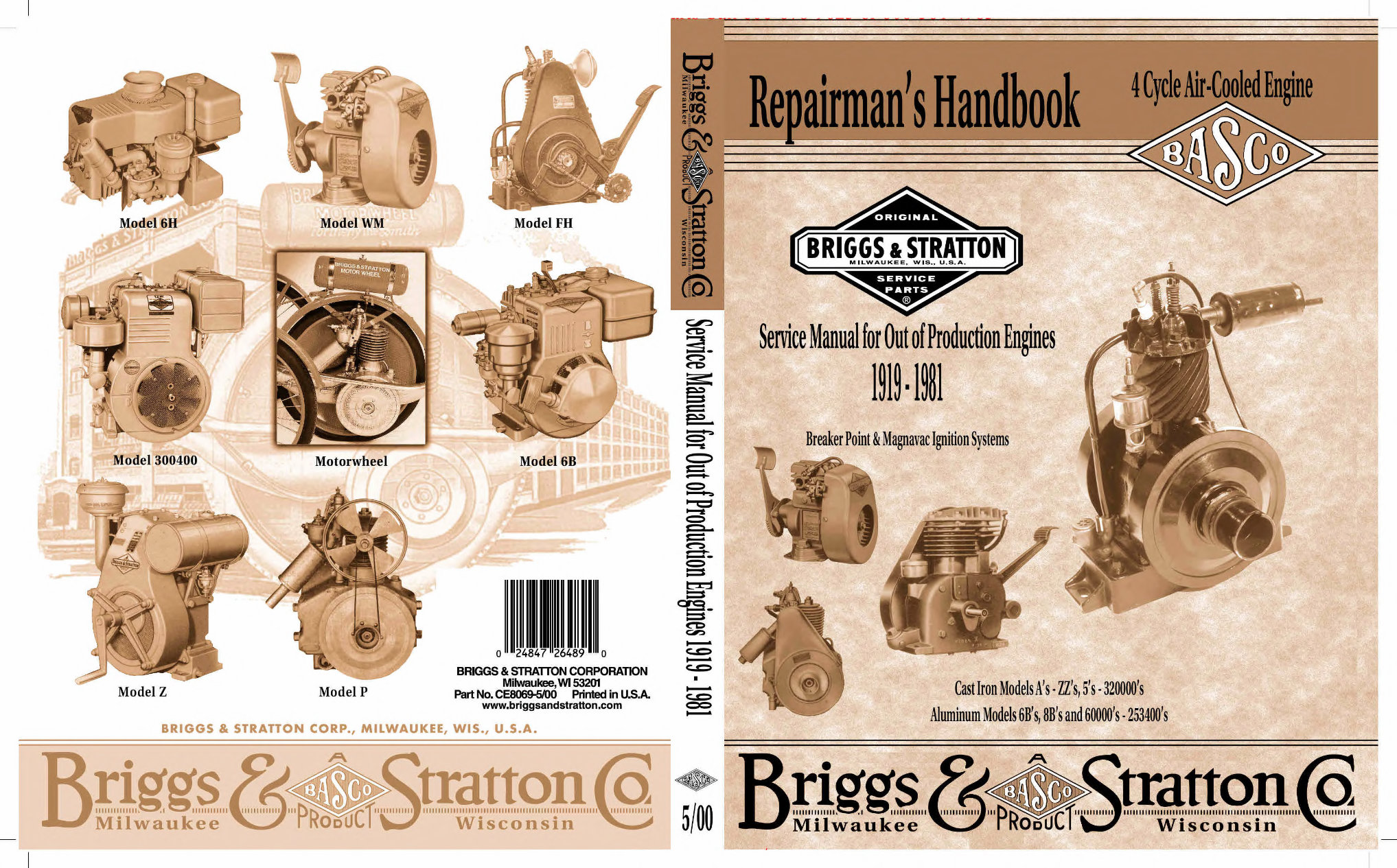
1919 to 1981 Briggs & Stratton 4 Cycle Air-Cooled Engines Workshop Service Repair Manual
What's Included?
Lifetime Access
Fast Download Speeds
Online & Offline Access
Access PDF Contents & Bookmarks
Full Search Facility
Print one or all pages of your manual
1 - I )g- , -- 4. .-.) pilMal■ II 1 _ .., k - Model 300400 f Motorwheel Model Z Model P lairman's Handbook I NAL ■ °111G BRIGGS & STRATTO M ILWAUKEE, WIS., U.S.A. SERVI:00.0000. PARTS 0 Service _Manual for Out of Production Engines 5 "I Re f,.0Q e* Nr ■ Model FH 1919•19 81 - '447 (771:' ) Cast Iron Models A's - ZZ's, 5's - 320000's Aluminum Models 6B's, 8B's and 60000's - 253400's • 9 ....4 . 4t1j 4 ,441 : 71- T:gr - _ c 11 11 o 24847 26489 o BRIGGS & STRATTON CORPORATION Milwaukee, VVI 53201 Part No. CE8069-5100 Printed in U.S.A. www.briggsandstratton.com Cycle Air-Cooled Engine <S .1. Breaker Point & Magnavac Ignition Systems Model 6B BRIGGS & STRATTON CORP., MILWAUKEE, WIS., U.b.A. ri gs 0 ,.............. .1 111111111111 1111111111111 p r., B Milwaukee fck ii . , 1114:1111, trattori, OA AL I ), '"- 41 ,,.... Inninnin IIIIIIIIIIIIIIIIIIIIIIIIIIIIIIIIIIIIIIIIIIIIIIIIIIIIIIIIII IIIIIIIIIIIII1 KODUL Wisconsin 4,'c. 5100 ri gs 11111111111111. .1 111111111111 1111111111111 1 Milwaukee ick 00 1 , 1 , ivort, H .ouirigi10 11 1 ,161 10110' PR 4..,„,.., °put- r r. 1111111111111 11111111111111111111 WI turn@ 11111 11111111 liii 11111 IltIllIllIllI „„.......... sconsin
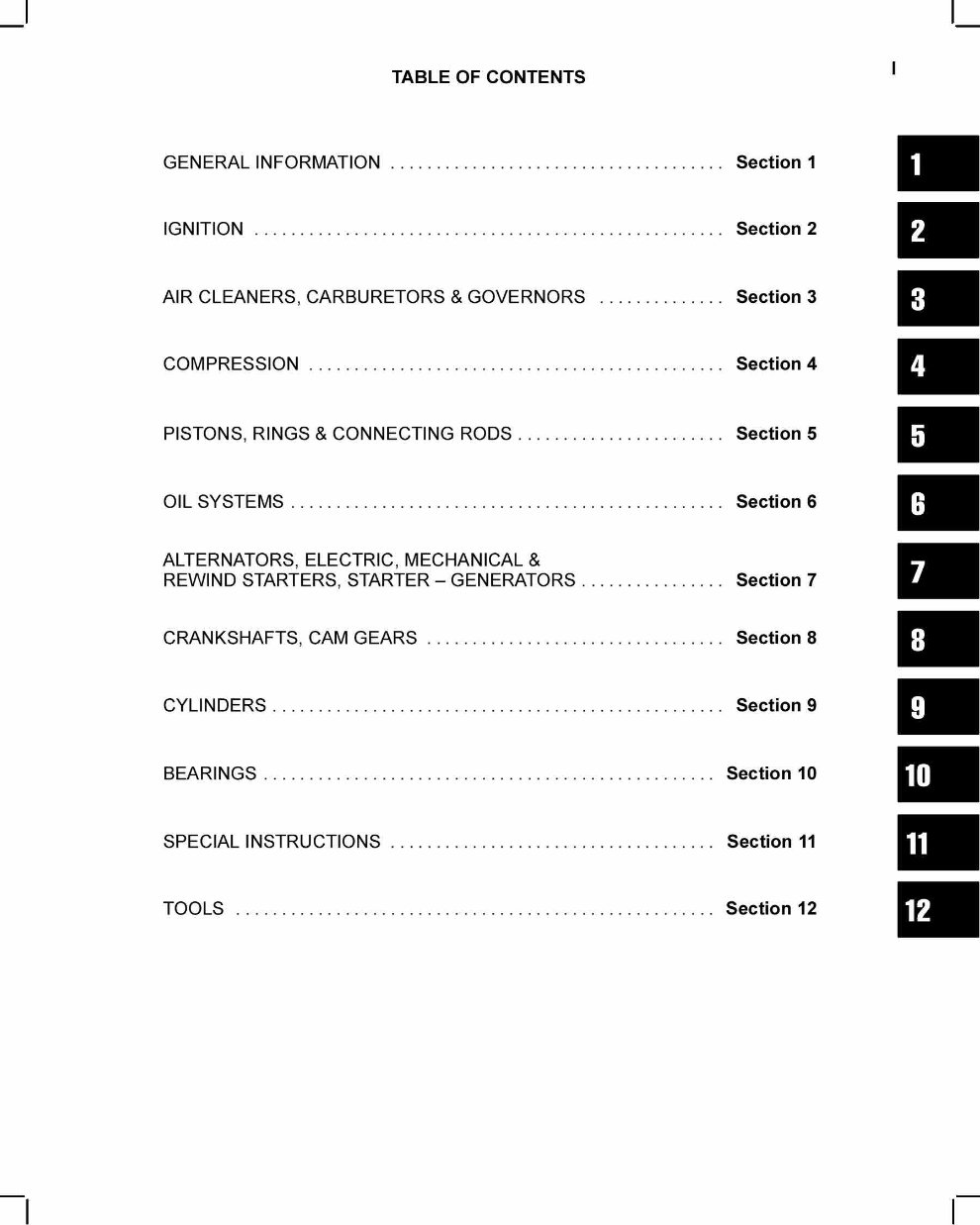
TABLE OF CONTENTS GENERAL INFORMATION Section 1 IGNITION Section 2 AIR CLEANERS, CARBURETORS & GOVERNORS Section 3 COMPRESSION Section 4 PISTONS, RINGS & CONNECTING RODS Section 5 OIL SYSTEMS Section 6 ALTERNATORS, ELECTRIC, MECHANICAL & REWIND STARTERS, STARTER — GENERATORS Section 7 CRANKSHAFTS, CAM GEARS Section 8 CYLINDERS Section 9 BEARINGS Section 10 SPECIAL INSTRUCTIONS Section 11 TOOLS Section 12
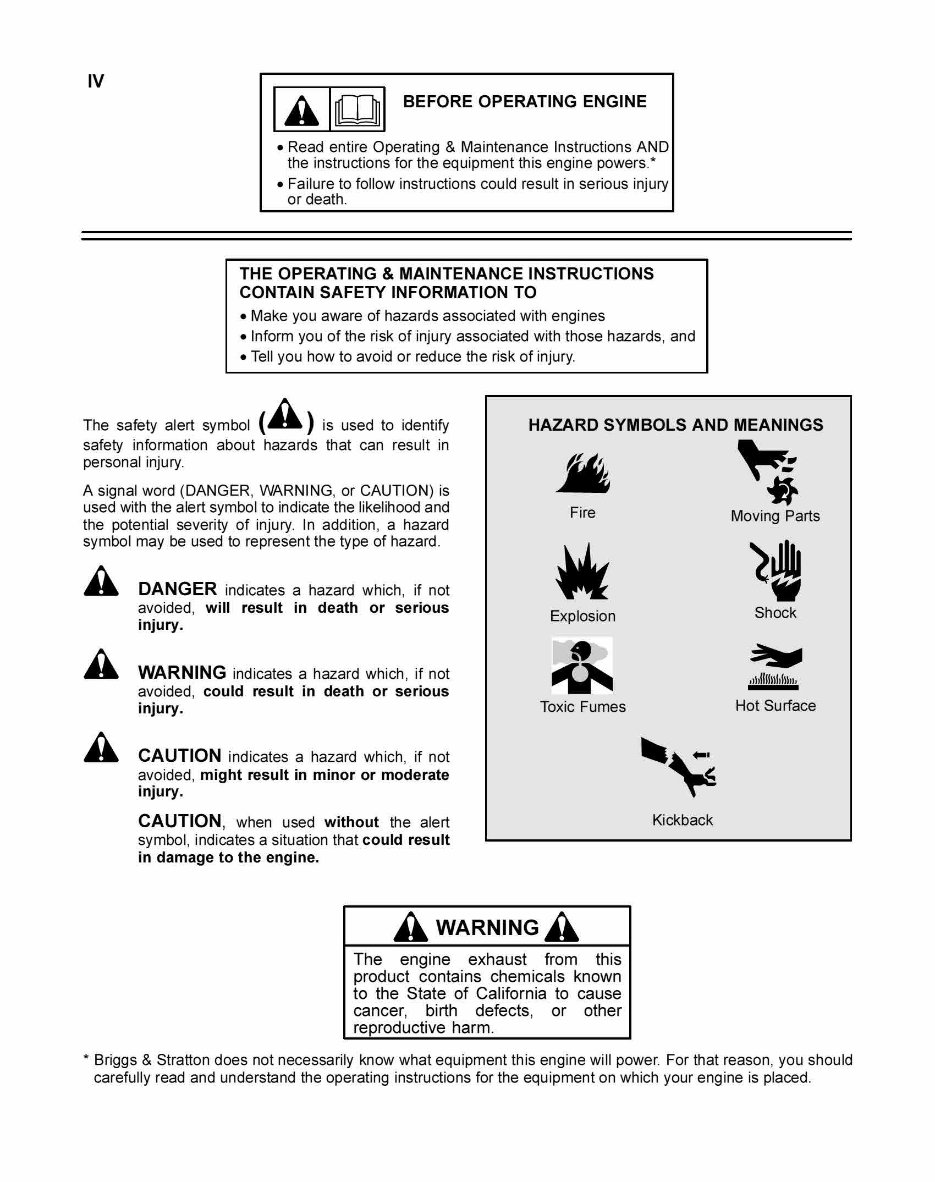
Iv ca BEFORE OPERATING ENGINE • Read entire Operating & Maintenance Instructions AND the instructions for the equipment this engine powers.* • Failure to follow instructions could result in serious injury or death. THE OPERATING & MAINTENANCE INSTRUCTIONS CONTAIN SAFETY INFORMATION TO • Make you aware of hazards associated with engines • Inform you of the risk of injury associated with those hazards, and • Tell you how to avoid or reduce the risk of injury. The safety alert symbol (41 ) is used to identify safety information about hazards that can result in personal injury. A signal word (DANGER, WARNING, or CAUTION) is used with the alert symbol to indicate the likelihood and the potential severity of injury. In addition, a hazard symbol may be used to represent the type of hazard. A DANGER indicates a hazard which, if not avoided, will result in death or serious injury. A WARNING indicates a hazard which, if not avoided, could result in death or serious injury. A CAUTION indicates a hazard which, if not avoided, might result in minor or moderate injury. CAUTION, when used without the alert symbol, indicates a situation that could result in damage to the engine. HAZARD SYMBOLS AND MEANINGS IR!" Fire Moving Parts 1114 Explosion Shock • 2/0 KIN Toxic Fumes Hot Surface 11114 1 Kickback A WARNING The engine exhaust from this product contains chemicals known to the State of California to cause cancer, birth defects, or other reproductive harm. " Briggs & Stratton does not necessarily know what equipment this engine will power. For that reason, you should carefully read and understand the operating instructions for the equipment on which your engine is placed.
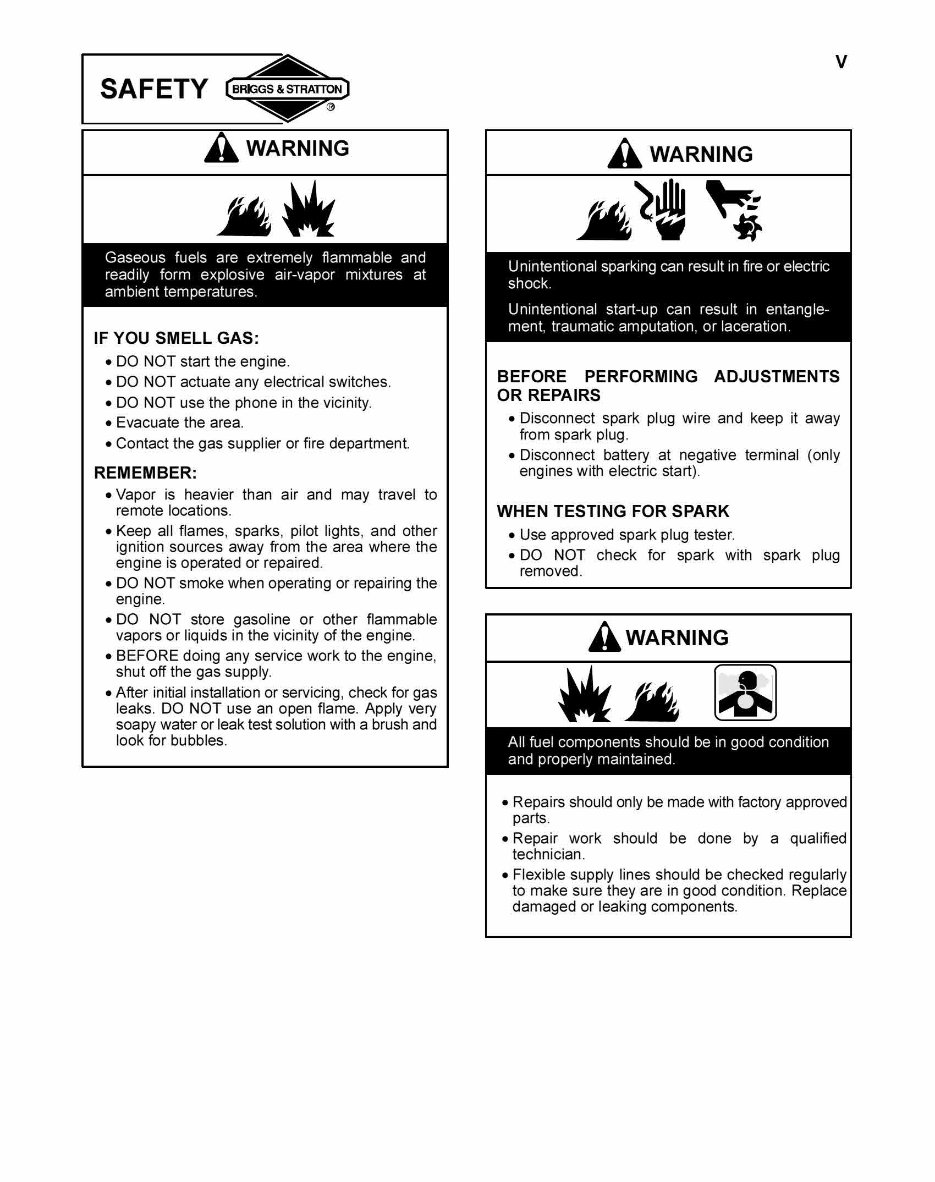
/ ■\_ V SAFETY (BRIGGS & STRATTON) ® WARNING IF YOU SMELL GAS: • DO NOT start the engine. • DO NOT actuate any electrical switches. • DO NOT use the phone in the vicinity. • Evacuate the area. • Contact the gas supplier or fire department. REMEMBER: • Vapor is heavier than air and may travel to remote locations. • Keep all flames, sparks, pilot lights, and other ignition sources away from the area where the engine is operated or repaired. • DO NOT smoke when operating or repairing the engine. • DO NOT store gasoline or other flammable vapors or liquids in the vicinity of the engine. • BEFORE doing any service work to the engine, shut off the gas supply. • After initial installation or servicing, check for gas leaks. DO NOT use an open flame. Apply very soapy water or leak test solution with a brush and look for bubbles. A WARNING 1/10 , t ip 4Fi k Unintentional sparking can result in fire or electric shock. Unintentional start-up can result in entangle- ment, traumatic amputation, or laceration. BEFORE PERFORMING ADJUSTMENTS OR REPAIRS • Disconnect spark plug wire and keep it away from spark plug. • Disconnect battery at negative terminal (only engines with electric start). WHEN TESTING FOR SPARK • Use approved spark plug tester. • DO NOT check for spark with spark plug removed. A WARNING (r OtA All fuel components should be in good condition and properly maintained. • Repairs should only be made with factory approved parts. • Repair work should be done by a qualified technician. • Flexible supply lines should be checked regularly to make sure they are in good condition. Replace damaged or leaking components.
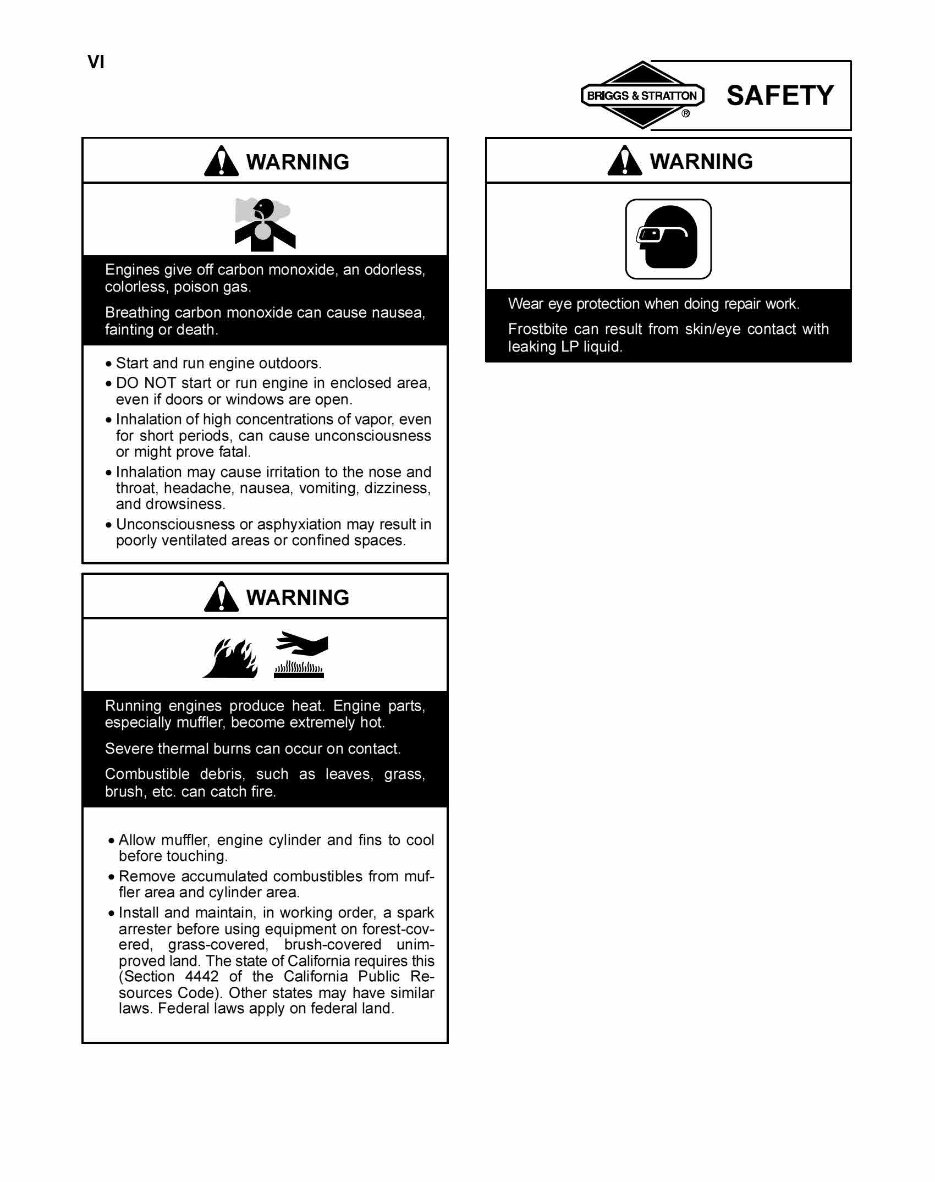
VI „../A1111 ■ \ .. (BRIGGS & STRATTON) SAFETY •We - a A WARNING A WARNING 42% • Start and run engine outdoors. • DO NOT start or run engine in enclosed area, even if doors or windows are open. • Inhalation of high concentrations of vapor, even for short periods, can cause unconsciousness or might prove fatal. • Inhalation may cause irritation to the nose and throat, headache, nausea, vomiting, dizziness, and drowsiness. • Unconsciousness or asphyxiation may result in poorly ventilated areas or confined spaces. A WARNING Running engines produce heat Engine parts, especially muffler, become extremely hot. Severe thermal burns can occur on contact Combustible debris, such as leaves, grass, brush, etc can catch fire. • Allow muffler, engine cylinder and fins to cool before touching. • Remove accumulated combustibles from muf- fler area and cylinder area. • Install and maintain, in working order, a spark arrester before using equipment on forest-cov- ered, grass-covered, brush-covered unim- proved land. The state of California requires this (Section 4442 of the California Public Re- sources Code). Other states may have similar laws. Federal laws apply on federal land.
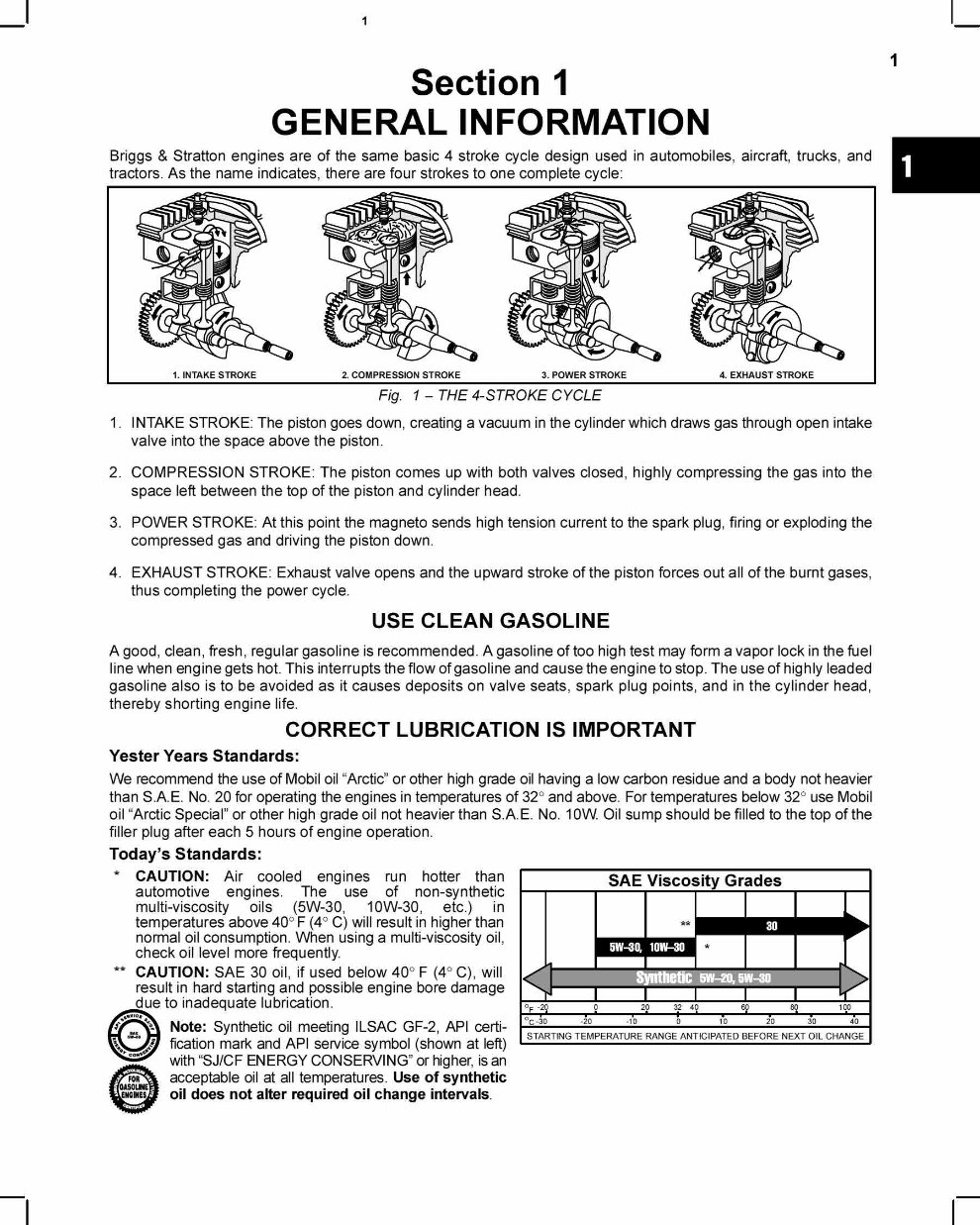
Section 1 GENERAL INFORMATION Briggs & Stratton engines are of the same basic 4 stroke cycle design used in automobiles, aircraft, trucks, and tractors. As the name indicates, there are four strokes to one complete cycle: Fig. - I - THE 4-STROKE CYCLE 1. INTAKE STROKE: The piston goes down, creating a vacuum in the cylinder which draws gas through open intake valve into the space above the piston. 2. COMPRESSION STROKE: The piston comes up with both valves closed, highly compressing the gas into the space left between the top of the piston and cylinder head. 3. POWER STROKE: At this point the magneto sends high tension current to the spark plug, firing or exploding the compressed gas and driving the piston down. 4. EXHAUST STROKE: Exhaust valve opens and the upward stroke of the piston forces out all of the burnt gases, thus completing the power cycle. USE CLEAN GASOLINE A good, clean, fresh, regular gasoline is recommended. A gasoline of too high test may form a vapor lock in the fuel line when engine gets hot. This interrupts the flow of gasoline and cause the engine to stop. The use of highly leaded gasoline also is to be avoided as it causes deposits on valve seats, spark plug points, and in the cylinder head, thereby shorting engine life. CORRECT LUBRICATION IS IMPORTANT Yester Years Standards: We recommend the use of Mobil oil "Arctic" or other high grade oil having a low carbon residue and a body not heavier than S.A.E. No. 20 for operating the engines in temperatures of 32c and above. For temperatures below 32 use Mobil oil "Arctic Special" or other high grade oil not heavier than S.A.E. No. 10VV. Oil sump should be filled to the top of the filler plug after each 5 hours of engine operation. Today's Standards: " CAUTION: Air cooled engines run hotter than automotive engines. The use of non-synthetic multi-viscosity oils (5W-30, 10VV-30, etc.) in temperatures above 40 F (4 ' C) will result in higher than normal oil consumption. When using a multi-viscosity oil, check oil level more frequently. — CAUTION: SAE 30 oil, if used below 40''' F (4 C), will result in hard starting and possible engine bore damage due to inadequate lubrication. fiat Note: Synthetic oil meeting ILSAC GF-2, API certi- fication mark and API service symbol (shown at left) with "SJ/CF ENERGY CONSERVING" or higher, is an 6 -1 FOR acceptable oil at all temperatures. Use of synthetic 5, 2:0 oil does not alter required oil change intervals. Qa.m. SAE Viscosity Grades 5W-30, 10W-80 so • • ' 16W-20, oF -20 9 22 32 40 62 89 , 10.0 I Oc -30 -20 -1 .0 0 1.0 20 20 4. 0 STARTING TEMPERATURE RANGE ANTICIPATED BEFORE NEXT OIL CHANGE
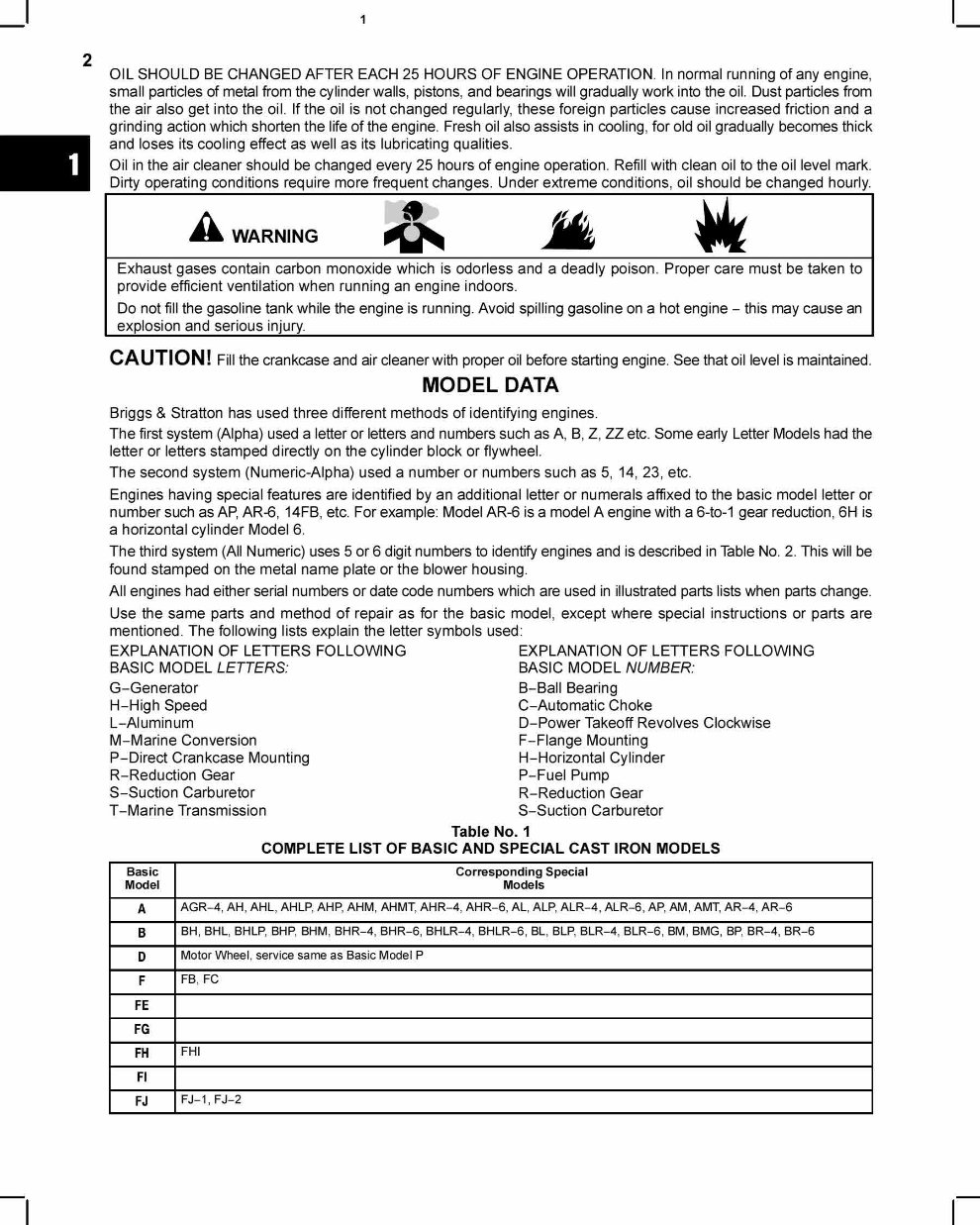
OIL SHOULD BE CHANGED AFTER EACH 25 HOURS OF ENGINE OPERATION. In normal running of any engine, small particles of metal from the cylinder walls, pistons, and bearings will gradually work into the oil. Dust particles from the air also get into the oil. If the oil is not changed regularly, these foreign particles cause increased friction and a grinding action which shorten the life of the engine. Fresh oil also assists in cooling, for old oil gradually becomes thick and loses its cooling effect as well as its lubricating qualities. Oil in the air cleaner should be changed every 25 hours of engine operation. Refill with clean oil to the oil level mark. Dirty operating conditions require more frequent changes. Under extreme conditions, oil should be changed hourly. • A WARNING 42% 41 If Exhaust gases contain carbon monoxide which is odorless and a deadly poison. Proper care must be taken to provide efficient ventilation when running an engine indoors. Do not fill the gasoline tank while the engine is running. Avoid spilling gasoline on a hot engine - this may cause an explosion and serious injury. CAUTION! Fill the crankcase and air cleaner with proper oil before starting engine. See that oil level is maintained. MODEL DATA Briggs & Stratton has used three different methods of identifying engines. The first system (Alpha) used a letter or letters and numbers such as A, B, Z, ZZ etc. Some early Letter Models had the letter or letters stamped directly on the cylinder block or flywheel. The second system (Numeric-Alpha) used a number or numbers such as 5, 14, 23, etc. Engines having special features are identified by an additional letter or numerals affixed to the basic model letter or number such as AP, AR-6, 14FB, etc. For example: Model AR-6 is a model A engine with a 6-to-1 gear reduction, 6H is a horizontal cylinder Model 6. The third system (All Numeric) uses 5 or 6 digit numbers to identify engines and is described in Table No. 2. This will be found stamped on the metal name plate or the blower housing. All engines had either serial numbers or date code numbers which are used in illustrated parts lists when parts change. Use the same parts and method of repair as for the basic model, except where special instructions or parts are mentioned. The following lists explain the letter symbols used: EXPLANATION OF LETTERS FOLLOWING EXPLANATION OF LETTERS FOLLOWING BASIC MODEL LETTERS: BASIC MODEL NUMBER: G-Generator H-High Speed L-Aluminum M-Marine Conversion P-Direct Crankcase Mounting R-Reduction Gear S-Suction Carburetor 1-Marine Transmission B-Ball Bearing C-Automatic Choke D-Power Takeoff Revolves Clockwise F-Flange Mounting H-Horizontal Cylinder P-Fuel Pump R-Reduction Gear S-Suction Carburetor Table No. 1 COMPLETE LIST OF BASIC AND SPECIAL CAST IRON MODELS Basic Model Corresponding Special Models A AGR-4, AH, AHL, AHLP, AHP, AHM, AHMT, AHR-4, AHR-6, AL, ALP, ALR-4, ALR-6, AP, AM, AMT, AR-4, AR-6 B BH, BHL, BHLP, BHP, BHM, BHR-4, BHR-6, BHLR-4, BHLR-6, BL, BLP, BLR-4, BLR-6, BM, BMG, BP, BR-4, BR-6 D Motor Wheel, service same as Basic Model P F FB, FC FE FG FH FI-11 Fl FJ FJ-1, FJ-2 2
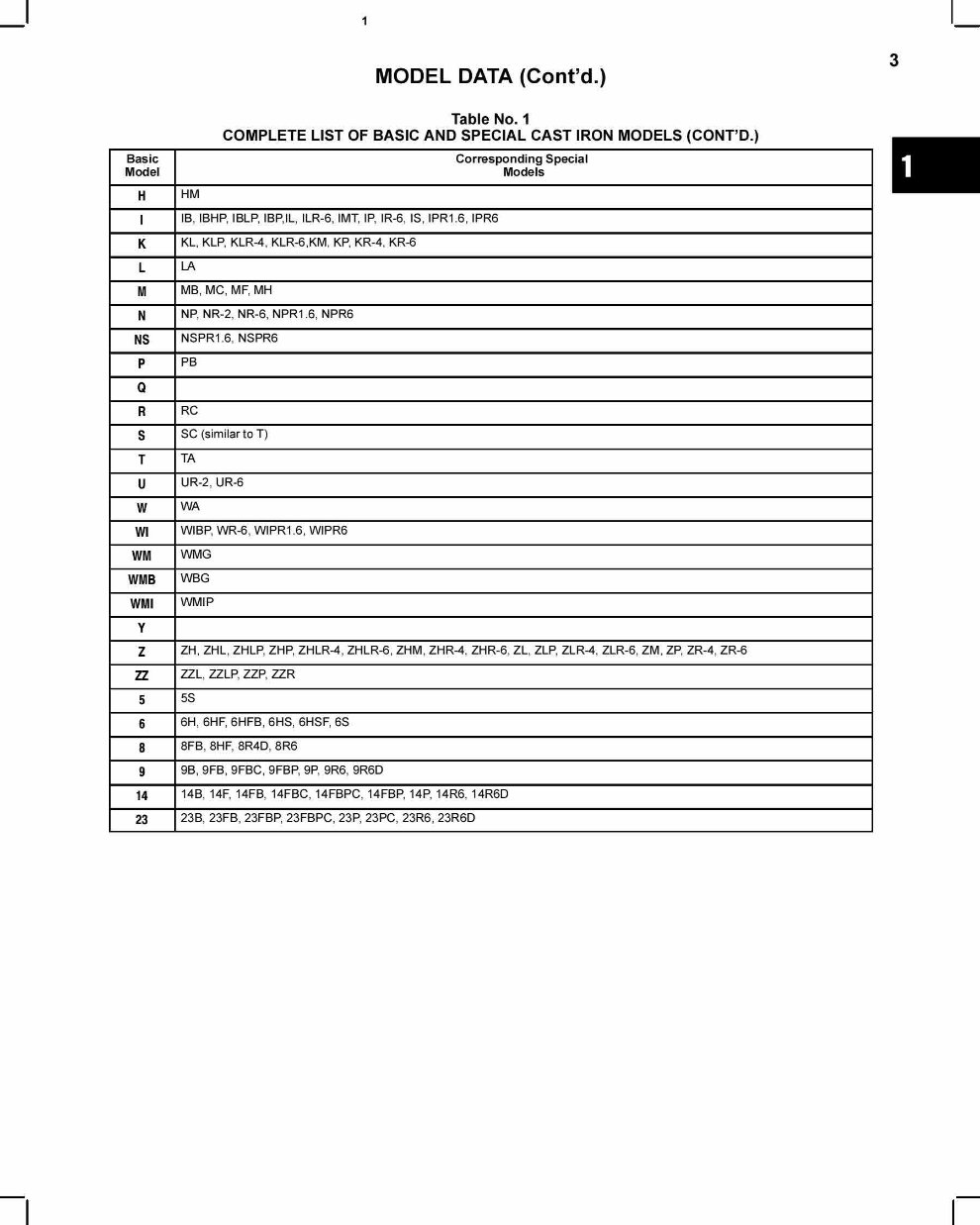
MODEL DATA (Cont'd.) Table No. 1 COMPLETE LIST OF BASIC AND SPECIAL CAST IRON MODELS (CONT'D.) Basic Model Corresponding Special Models H HM I IB, IBHP. IBLP, IBP,IL, ILR-6, IMT, IP, IR-6, IS, IPR1.6, IPR6 K KL. KLP. KLR-4, KLR-6,KM, KR KR-4, KR-6 L LA M MB, MC, MR MH N NP, NR-2, NR-6, NPR1.6, NPR6 NS NSPR1.6, NSPR6 P PB 0 Fi RC S SC (similar to T) T TA U UR-2. UR-6 W WA WI WIBP. VVR-6, VVIPR1.6, VVIPR6 WM WMG WMB WBG WMI VVMIP Y Z ZH, ZHL, ZHLR ZHP, ZHLR-4, ZHLR-6, ZHM, ZHR-4. ZHR-6, ZL. ZLP, ZLR-4. ZLR-6, ZM. ZP, ZR-4, ZR-6 ZZ =L. =LP. ZZP. =R 5 5S 6 6H. 6HF, 6HFB, 6HS. 6HSF. 6S 8 8FB, 8HF, 8R4D, 8R6 9 9B, 9F3, 9FBC, 9FBP. 9P. 9R6, 9R6D 14 143, 14F, 14F13, 14FBC. 14FBPC. 14FBP, 14P, 14R6, 14R6D 23 233, 23FB, 23FBP. 23FBPC. 23P, 23PC, 23R6. 23R6D
This workshop service repair manual is an essential resource for anyone working with 1919 to 1981 Briggs & Stratton 4 Cycle Air-Cooled Engines. It is packed with high-quality diagrams and instructions for servicing and repairing your Briggs & Stratton engine, making it invaluable for both professional mechanics and DIY enthusiasts.
The manual covers a range of models and serial numbers, including Briggs & Stratton 6H, WM, FH, 300400, Motorwheel, 6B, Z, and P. It includes comprehensive information on general maintenance, ignition, air cleaners, carburetors, governors, compression, pistons, rings, connecting rods, oil systems, alternators, electric and mechanical starters, crankshafts, cam gears, cylinders, bearings, special instructions, and tools.
With instant access upon payment, there are no shipping costs or waiting for a CD. The manual is compatible with all versions of Windows and Mac, as well as various devices such as APP ISO, iPhone, iPod, and Android. It is presented in English and requires Adobe Reader for viewing. All pages are printable, providing a convenient and cost-effective solution for maintaining and understanding your Briggs & Stratton engine.
Don't miss out on this valuable resource – get your hands on the manual today and empower yourself with the knowledge to effectively service and repair your Briggs & Stratton engine.
Recently Viewed
5,521,897Happy Clients
2,594,462eManuals
1,120,453Trusted Sellers
15Years in Business
Price:
Actual Price:
1919 to 1981 Briggs & Stratton 4 Cycle Air-Cooled Engines Workshop Service Repair Manual



 Lifetime Access