


Volvo EC240BLC Excavator Service & Repair Manual
What's Included?
 Lifetime Access
Fast Download Speeds
Offline Viewing
Access Contents & Bookmarks
Full Search Facility
Print one or all pages of your manual
Service Information
Document Title: Function Group: Information Type: Date:
Electrical system,
description
Service Information 2014/8/7 0
Profile:
EXC, EC240B NLC [GB]
Electrical system, description
This section of the service manual describes the design and construction of the electrical system and all included
components. This section also contains functional description, troubleshooting and method instructions for servicing.
The electrical system consists, in part, of electrical and electro-mechanical components such as batteries, switches, solenoid
valves, fuses and relays. The electrical system also consists of a computer-based control system that monitors and controls
machine functions.
In order to access certain settings in the information system, special service instruments are required; VCADS Pro and
Contronic service display unit. User instructions for VCADS Pro are available in a separate user’s manual while instructions for
the Contronic service display unit are included in the section dealing with the information system.
WARNING
For all servicing of the electrical system, the general instructions must be strictly followed.
Service Information
Document Title: Function Group: Information Type: Date:
Electrical system, special
instructions for servicing,
general
Service Information 2014/8/7 0
Profile:
EXC, EC240B NLC [GB]
Electrical system, special instructions for servicing, general
WARNING
No changes may be made to the electrical system without prior approval from Volvo. Changes may affect machine
functions and can result in risks for personal injury or machine damage.
WARNING
Carelessness when working with the electrical system may result in risks of serious personal injuries as well as
machine damage.
When working on the electrical system, the following instructions as well as instructions in respective section must
be followed carefully.
Also read instructions in Section Safety and in the Operator's Manual.
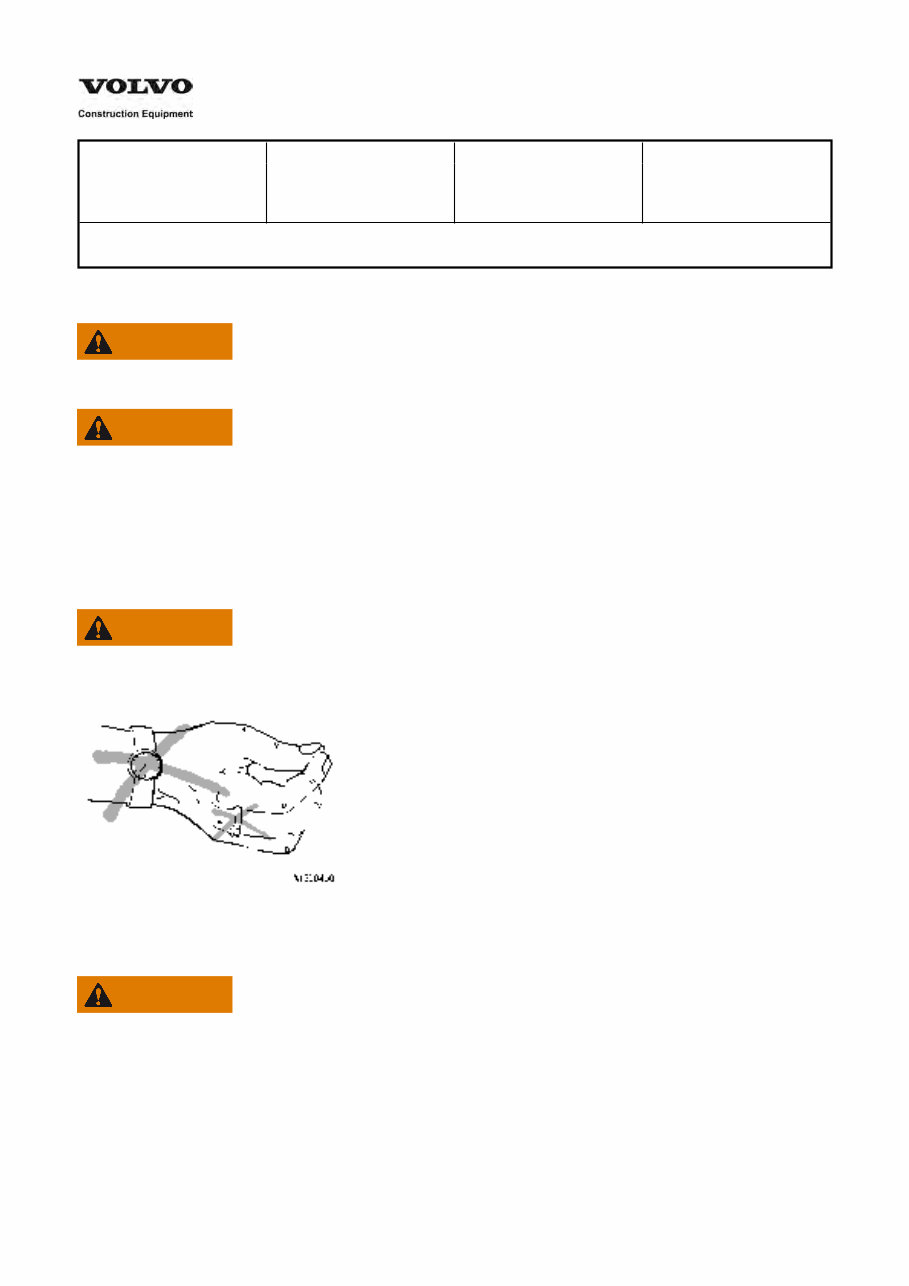
WARNING
Always remove watches, rings, bracelets and other metallic objects from the body before starting to work on the
electrical system.
Figure 1
WARNING
Never boost-start the machine by connecting directly to the starter motor. This may result in uncontrolled machine
movements. When using another machine to boost-start, it must not touch the machine that is being started.
Never test if a cable/connection is supplied with electric power by producing "spark". This may permanently damaged
electrical/electronic components.
Service Information
Document Title: Function Group: Information Type: Date:
Electrical system, special
instructions for servicing,
electrical components,
batteries
Service Information 2014/8/7 0
Profile:
EXC, EC240B NLC [GB]
Electrical system, special instructions for servicing, electrical
components, batteries
WARNING
During rapid charging of batteries, always remove the cell caps. During charging, an explosive mixture of oxygen
and hydrogen is formed. A short-circuit, open flame or spark near the battery can cause a powerful explosion.
Always turn off the charging current before disconnecting the charging clamps. Ventilate well, especially if the
battery is being charged in a confined area.
The battery electrolyte contains corrosive sulphuric acid. Remove spilled electrolyte from the skin immediately.
Wash with soap and plenty of water. If electrolyte has splashed into the eyes or on any other sensitive body part,
rinse immediately with plenty of water and contact a physician immediately.
WARNING
The batteries could explode due to the current surge if a fully charged battery is connected to a completely
discharged battery. Since the batteries contain sulphuric acid, this could result in personal injuries.
WARNING
Never charge a frozen battery. Explosion hazard!
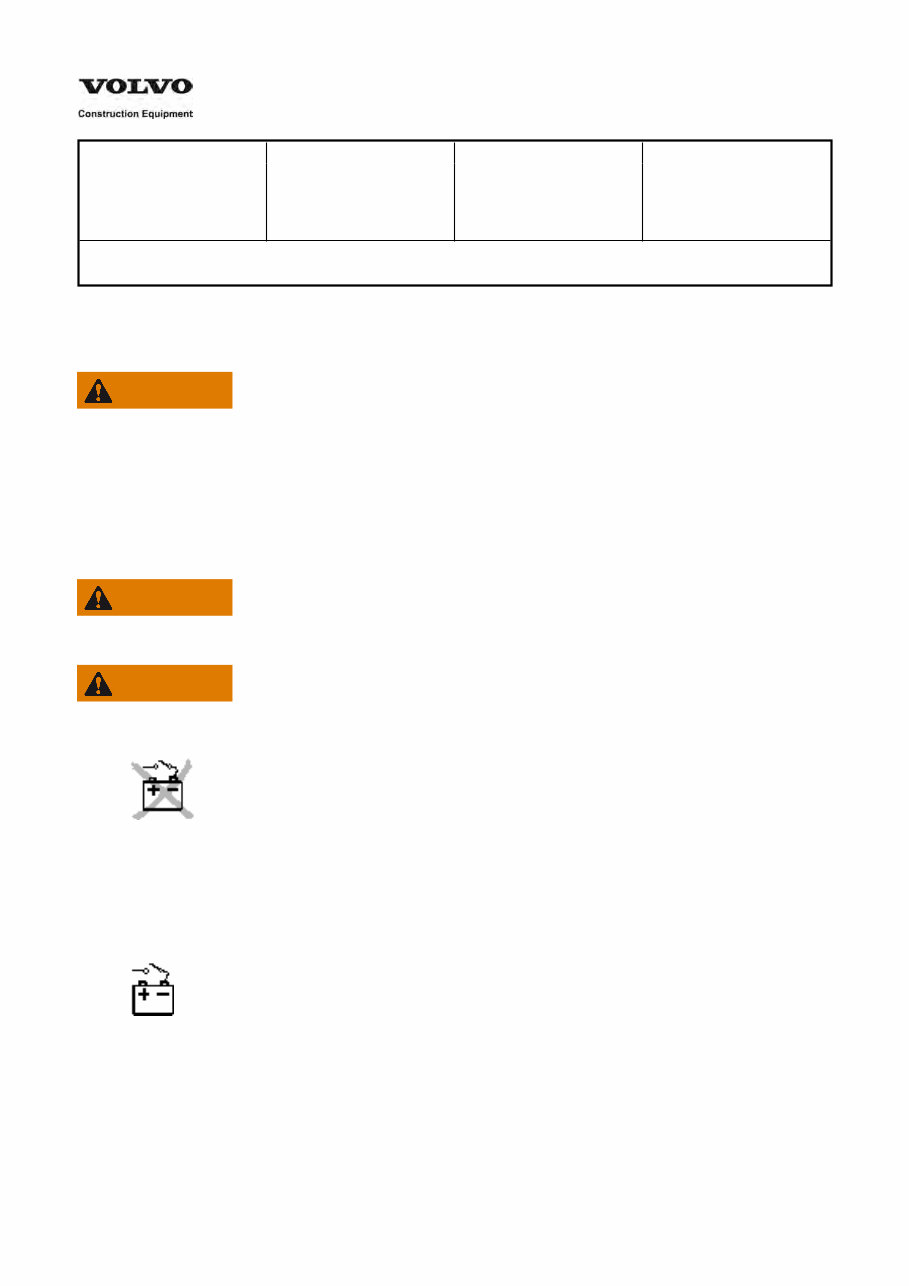
Never disconnect the main electric current or disconnect battery cables when the engine is running.
Figure 1
The battery's minus connection must always be disconnected before removing or installing components and
connections in the electrical system.
NOTE!
Incorrect handling may cause damage to, for example, control unit/ECU which results in downtime.
Figure 2
Fully charged batteries must be used when checking the electrical system. If the batteries are not fully charged,
charge them or replace with new batteries.
During battery charging, the battery terminal cables must always be disconnected from the battery.
When changing batteries connected in series, the batteries should have the same capacity (for example, 150 Ah).
The batteries should be of the same age (equally good).
The reason for this is that the charging current required to give the battery a certain charge varies with the age of
the battery.

Only batteries may be used as assistant starting devices.
An auxiliary starter unit and/or batteries connected in series to assist when starting may result in high (excess)
voltage and can seriously damage electronic/electric components.
Service Information
Document Title: Function Group: Information Type: Date:
Electrical system, special
instructions for servicing,
electrical components,
alternator and charging
regulator
Service Information 2014/8/7 0
Profile:
EXC, EC240B NLC [GB]
Electrical system, special instructions for servicing, electrical
components, alternator and charging regulator
Before any alternator or regulator tests are performed, the batteries and electrical cabling must be checked for
insulation, loose connections and corrosion. Check the alternator belts. All eventual defects according to the above
must be corrected before starting any electrical testing.
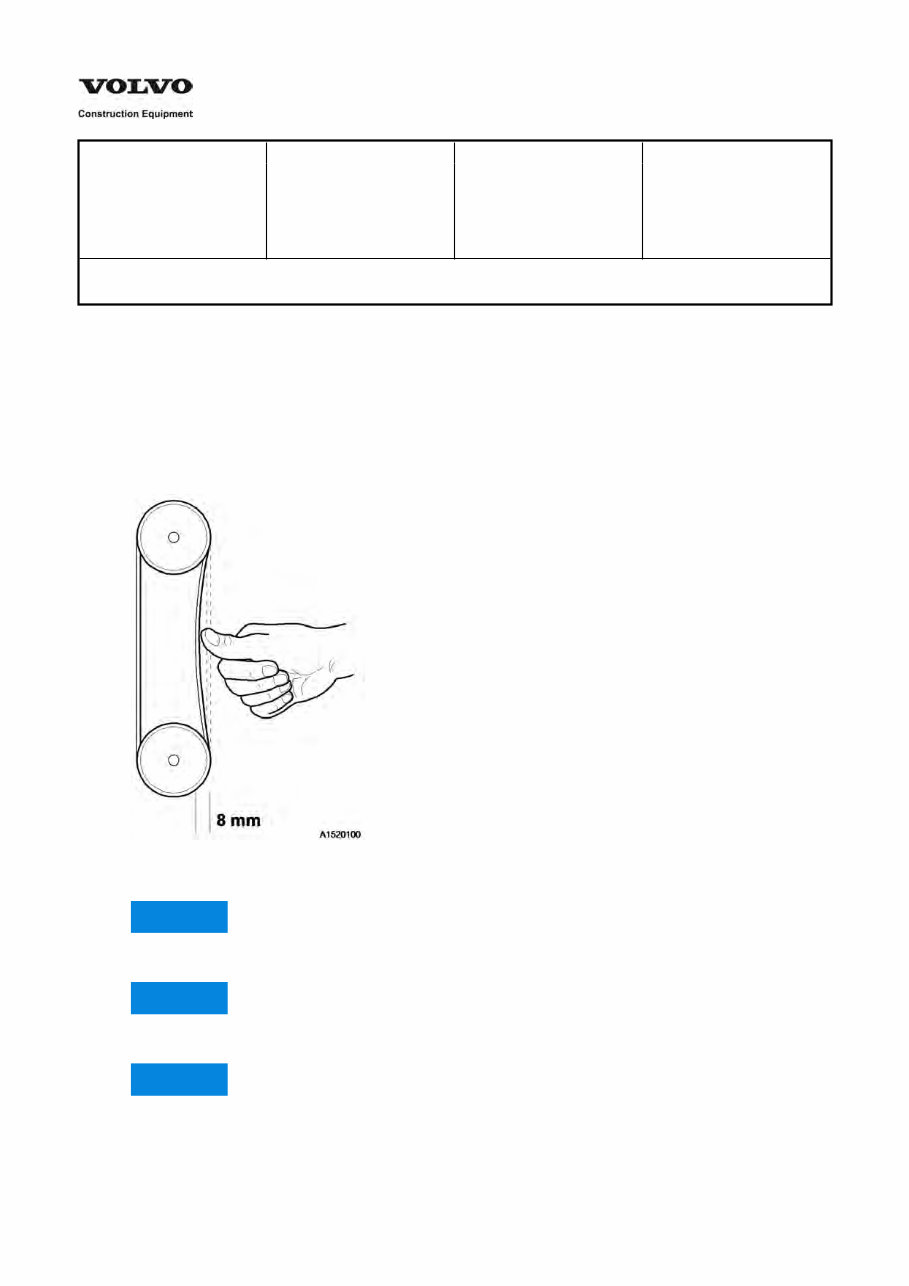
Check the alternator belt and, if needed, make any necessary adjustment/repairs before troubleshooting. At correct
belt tension, the belt should "give" when pressure is applied to it, measurement according to figure.
Figure 1
NOTICE
Always connect cabling in a safe manner and make sure that cables are free from rust/dirt. A disconnected
cable may cause damage to both alternator and charging regulator.
NOTICE
Never disconnect the alternator connections when the engine is running. This may damage both alternator
and charging regulator.
NOTICE
Make sure that the alternator plus connection is not connected to the frame. This will damage the
alternator, and may also damage the regulator.
You're Reading a Preview
What's Included?
Lifetime Access
Fast Download Speeds
Offline Viewing
Access Contents & Bookmarks
Full Search Facility
Print one or all pages of your manual
$39.99
Viewed 93 Times Today


Secure transaction
What's Included?
Lifetime Access
Fast Download Speeds
Offline Viewing
Access Contents & Bookmarks
Full Search Facility
Print one or all pages of your manual
$39.99
Get the Volvo EC240BLC Excavator Service & Repair Manual for in-depth factory service, repair, and workshop guidance. This professional manual is designed for both expert mechanics and DIY enthusiasts, detailing all repair, servicing, and troubleshooting procedures with precise photos and diagrams. Compatible with Windows and MAC computers, this extensive manual allows you to easily print individual pages or the entire guide and use it on multiple systems without any limitations or expiry dates.
- Comprehensive service and repair instructions for the Volvo EC240BLC Excavator
- Detailed troubleshooting procedures with clear, high-quality images and diagrams
- Optimized for use by professional mechanics and DIY enthusiasts alike
- Electronic format supporting multiple computer compatibility without restrictions
- Instant access with no renewal or extra fees required


