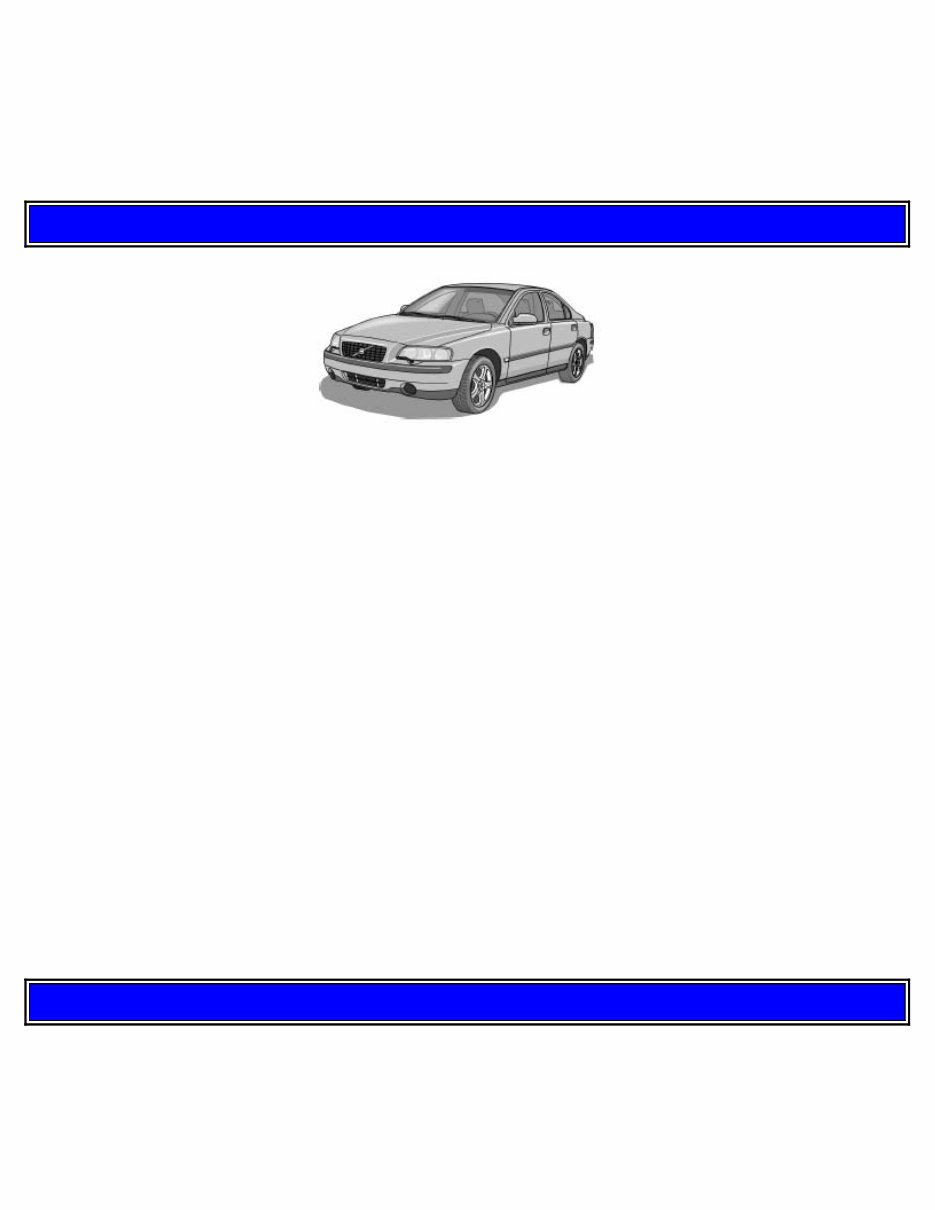
2 0 0 1 VOLVO S60 Introduction Welcome to the world-wide family of Volvo owners. We trust that you will enjoy many years of safe driving in your Volvo, an automobile designed with your safety and comfort in mind. To help ensure your satisfaction with this vehicle, we encourage you to familiarize yourself with the equipment descriptions, operating instructions and maintenance require- ments/ recommendations in this manual. We also urge you and your passengers to wear seat belts at all times in this (or any other) automobile. And, of course, please do not operate a vehicle if you may be affected by alcohol, medication or any impairment that could hinder your ability to drive. Your Volvo is designed to meet all applicable safety and emission standards, as evidenced by the certification labels attached to the driver's door opening and on the left wheel housing in the engine compartment. For further information please contact your retailer, or: In the USA: Volvo Cars of North America Customer Relations P.O. Box 914 Rockleigh, New Jersey 07647-0914 800-458-1552 In Canada: Volvo Canada Ltd. 175 Gordon Baker Road Willowdale, Ontario M2H 2N7 800-663-8255 General Information Shiftlock (automatic transmission) When your car is parked, the gear selector is locked in the (P) ark position. To release the selector from this position, turn the ignition key to position II (or start the engine), depress the brake pedal, press the button on the front side of the gear selector and move the selector from (P) ark.
Keylock (automatic transmission) When you switch off the ignition, the gear selector must be in the (P) ark position before the key can be removed from the ignition switch. Anti-lock Brake System (ABS) The ABS system in your car performs a self- diagnostic test when the vehicle first reaches the speed of approximately 12 mph (20 km/h). The brake pedal will pulsate several times and a sound may be audible from the ABS control module. This is normal. Fuel filler door The fuel filler door, located on the right rear fender, is connected to your car's central locking system. The driver's door must be unlocked before the fuel filler door can be opened. When you lock your car using the central locking button on the driver's door or remote control, the fuel filler door also locks after a 10-minute delay. If you lock your car with the fuel filler door open, you will need to unlock the car to allow the fuel filler door to be closed again. Fuel filler cap After refueling, close the fuel filler cap by turning it clockwise until it clicks into place. If this cap is not closed tightly or if the engine is running when the car is refueled, the Malfunction Indicator Lamp (" Check Engine" light) will illuminate. Important information Before you operate your car for the first time, please familiarize yourself with the new- engine oil consumption information on page 126. You should also be familiar with the information in chapters one, two and four of this manual. Information contained in the balance of the manual is extremely useful and should be read after operating the vehicle for the first time. The manual is structured so that it can be used for reference. For this reason, it should be kept in the car for ready access. Do not export your Volvo to another country before investigating that country's applicable safety and exhaust emission requirements. In some cases it may be difficult or impossible to comply with these requirements. Modifications to the emission control system( s) may render your Volvo not certifiable for legal operation in the U. S., Canada and other countries. All information, illustrations and specifications contained in this manual are based on the latest product information available at the time of publication. Please note that some vehicles may be equipped differently, depending on special legal requirements. Optional equipment described in this manual may not be available in all markets. Volvo reserves the right to make model changes at any time, or to change specifications or design without notice and without incurring obligation. Volvo and the environment Volvo is committed to the well being of its customers. As a natural part of this commitment, we care about the environment in which we all live. Caring for the environment means an everyday involvement in reducing our environmental impact. Volvo's environmental activities are based on a holistic view, which means we consider the overall environmental impact of a product throughout its complete life cycle. In this context, design, production, product use, and recycling are all important considerations. In production, Volvo has partly or completely phased out several chemicals including freons, lead chromates, naphtanates, asbestos, mercury and cadmium; and reduced the amount of chemicals used in our plants 50% since 1991. Volvo was the first in the world to introduce into production a three- way catalytic converter with a Lambda sond, now called oxygen sensor, in 1976. The current version of this highly efficient system reduces emissions of harmful substances (CO, HC, NOx) from the exhaust pipe by approximately 95% and the search to eliminate the remaining emissions continues. Volvo is the only automobile manufacturer to offer CFC- free retrofit kits for the air conditioning system of all models as far back as the 1975 model 240. Advanced electronic engine controls, refined purification systems and cleaner fuels are bringing us closer to our goal. After Volvo cars and parts have fulfilled their use, recycling is the next critical step in completing the life cycle. The metal content is about 75% of the total weight of a car, which makes the car among the most recycled industrial products. In order to have efficient and well controlled recycling, many Volvo variants have printed dismantling manuals, indicating the weight and material of individual components.
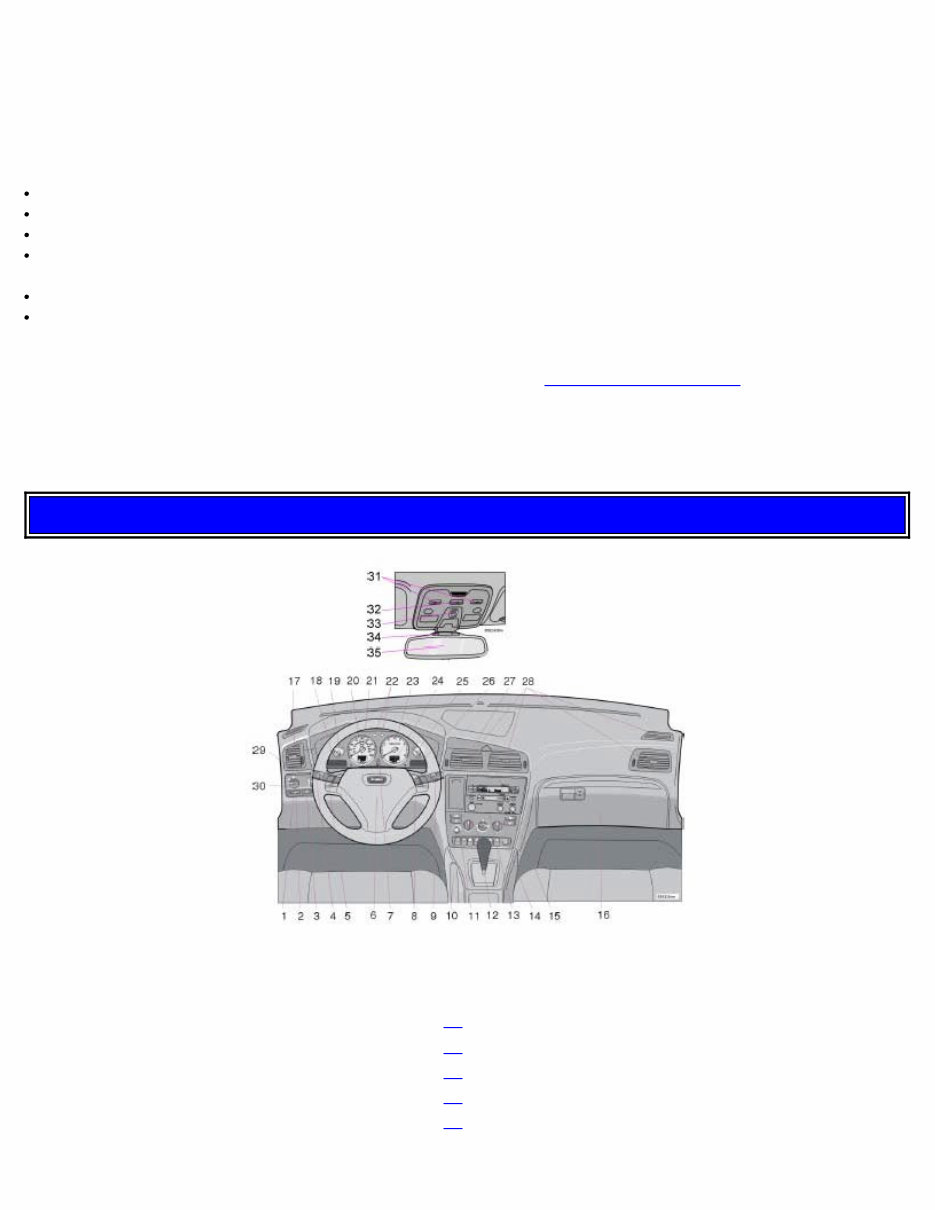
For Volvo, all homogeneous plastic parts weighing more than 1.7 oz. (50 grams) are marked with international symbols that indicate how the component is to be sorted for recycling. In addition to continuous environmental refinement of conventional gasoline- powered internal combustion engines, Volvo is actively looking at advanced technology alternative- fuel vehicles. When you drive a Volvo, you become our partner in the work to lessen the car's impact on the environment. To reduce your vehicle's environmental impact, you can: Maintain proper air pressure in your tires. Tests have shown decreased fuel economy with improperly inflated tires. Follow the recommended maintenance schedule. Drive at a constant speed. See an authorized Volvo retailer as soon as possible for inspection if the check engine (malfunction indicator) lamp illuminates, or stays on after the vehicle has started. Properly dispose of any vehicle- related waste such as used motor oil, used batteries, brake pads, etc. When cleaning your car, use Volvo's own car care products, all of which have systematically been adapted to the environment. For additional information regarding the environmental activities in which Volvo Cars of North America, Inc. and Volvo Car Corporation are involved, visit our Internet Home Page at: http://www.volvocars.com Prem-Air On the surface of the radiator in the engine compartment, there is a special coating called Prem- Air. Prem- Air works as a catalytic converter, converting most of the ground level ozone passing through the radiator into oxygen, thereby reducing harmful ground-level ozone. Instruments, switches and controls Page 1. Front fog lights 39 2. Headlights/ Parking lights 39 3. Rear fog light 39 4. Turn signals/ High/ low beams 40 5. Cruise control 44
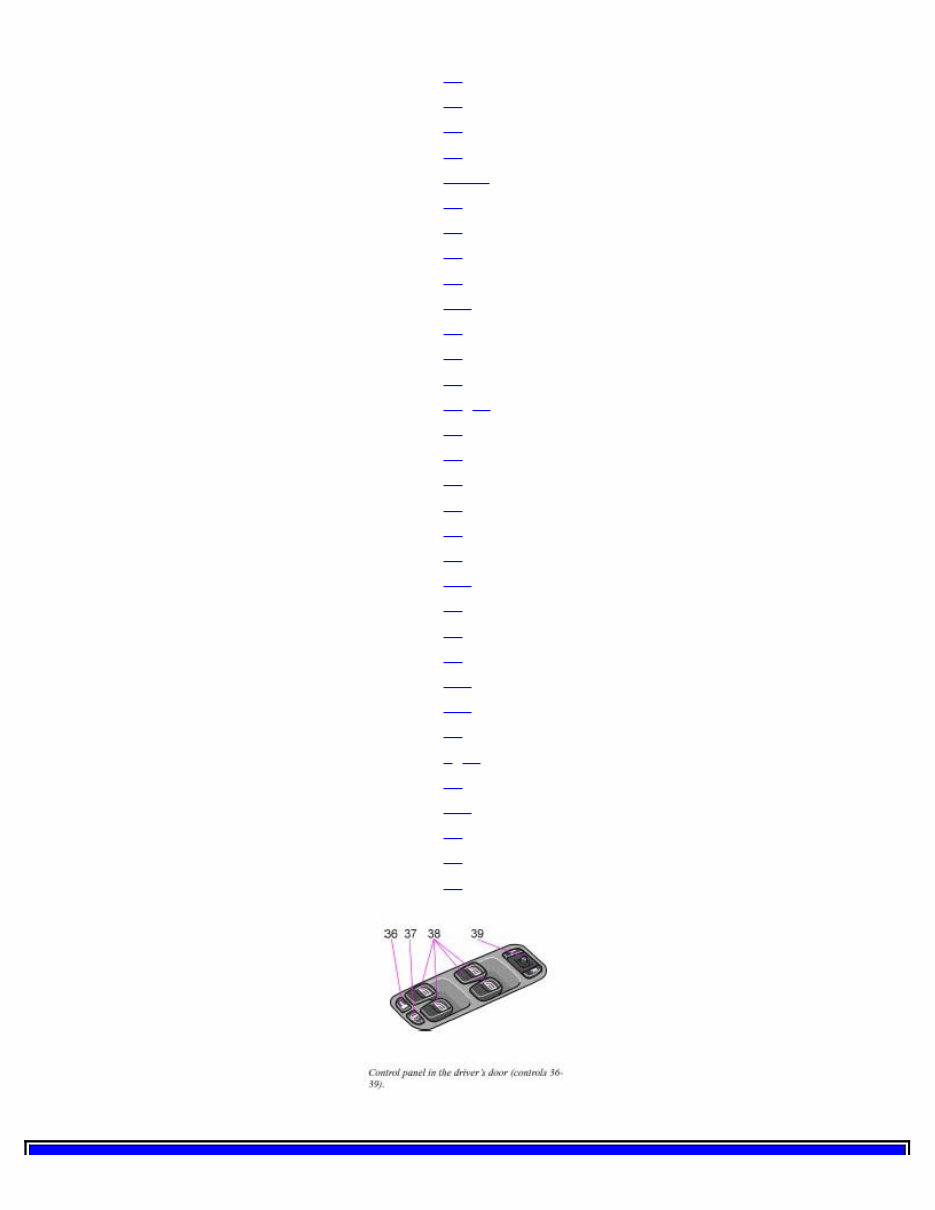
6. Horn 4 7. Instrument panel 30 8. Audio controls 67 9. Windshield wipers 41 10. Parking brake (hand brake) 45 11. Center console switches 37, 38 12. Climate control 51 13. Audio system 61 14. 12 V socket 45 15. Hazard warning flashers 42 16. Glove compartment 108 17. Panel vents 53 18. Text window 30 19. Temperature gauge 30 20. Odometer/ Trip odometer/Cruise control indicator 30 / 44 21. Speedometer 30 22. Turn signal indicators 30 23. Tachometer 30 24. Ambient temperature/ Clock/Selected gear indicator 30 25. Fuel gauge 30 26. Indicator and warning symbols 31 27. Cup holder (option) 108 28. Panel vents 53 29. Instrument lighting 39 30. Lighting panel 39 31. Reading lights 104 32. Interior lighting 104 33. Sun roof control 49 34. Seat belt reminder 4 , 10 35. Rearview mirror 48 36. Lock button, for all doors 119 37. Blocking rear seat power windows 46 38. Controls, power windows 46 39. Controls, sideview mirrors 48
Contents Contents Safety Instruments and controls Climate control Audiio Interior Locks and alarm Starting and driving Wheels and tires Car care Maintenance and service Specifications Index Contents | Top of Page
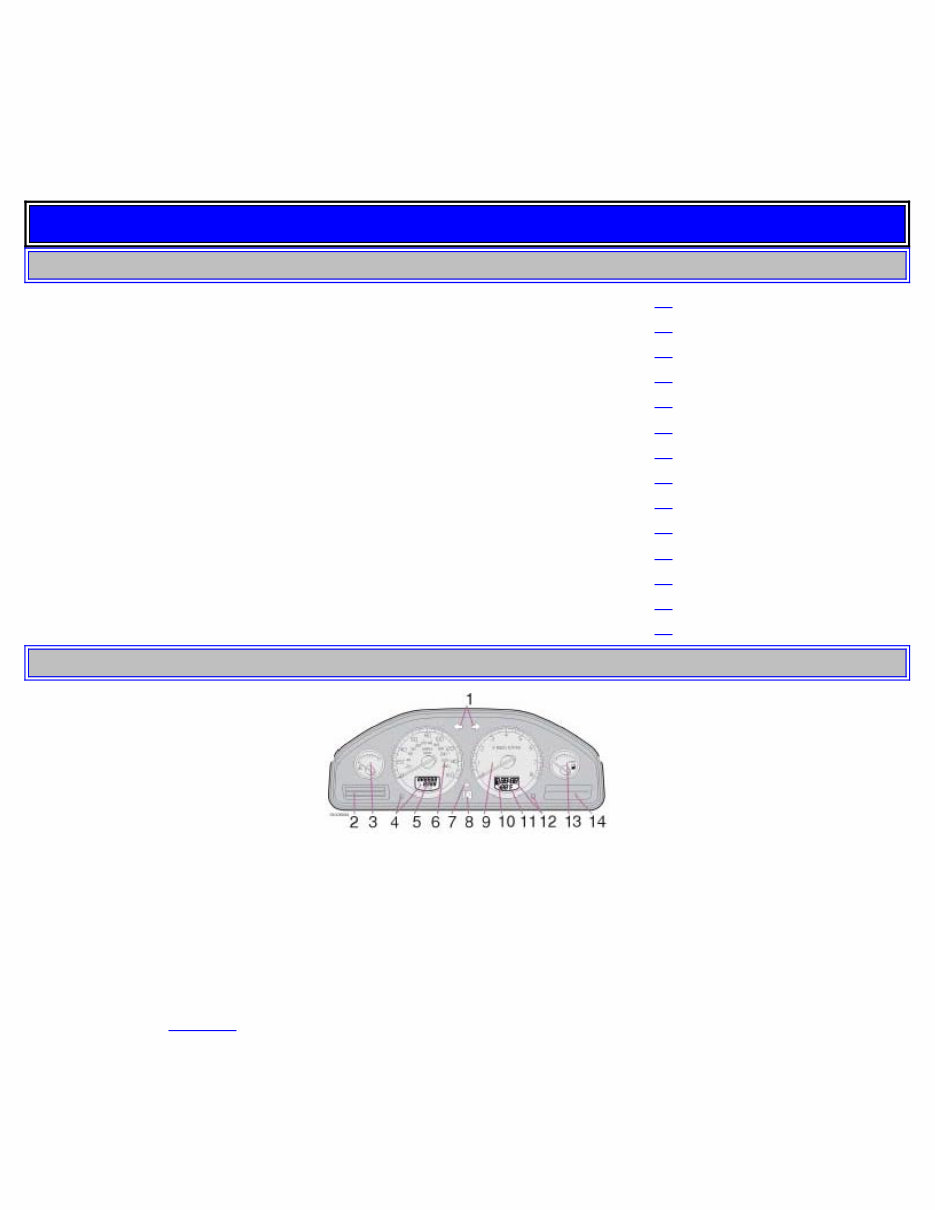
2 0 0 1 VOLVO S60 Instruments and controls pg. 29 Instruments and controls Instrument panel 30 Indicator and warning symbols 31 Steering wheel adjustment 36 Switches in the center console 37 Lighting panel 39 Turn signals 40 Windshield wipers/ washer 41 Hazard warning flashers, rear window/ sideview mirror defroster, heated front seats 42 Trip computer (option) 43 Cruise control 44 Parking brake, electric socket/ cigarette lighter 45 Electrically operated windows 46 Rearview mirror/ sideview mirrors 48 Electrically operated sun roof 49 pg. 30 Instrument panel 1. Turn signal indicators - right - left 2. Text window The text window displays information and warning messages. 3. Temperature gauge The pointer should be approximately midway on the gauge when driving. Do not drive the car if the warning light is on. The text window will provide you with additional information. If the engine temperature remains high, check coolant level - see page 169 . 4. Trip odometer The trip odometers are used for measuring shorter distances. The right- hand digit gives tenth of a mile/ kilometer. Press the button for more than 2 seconds to reset. Change between trip odometers 1 and 2 using one short press on the button.
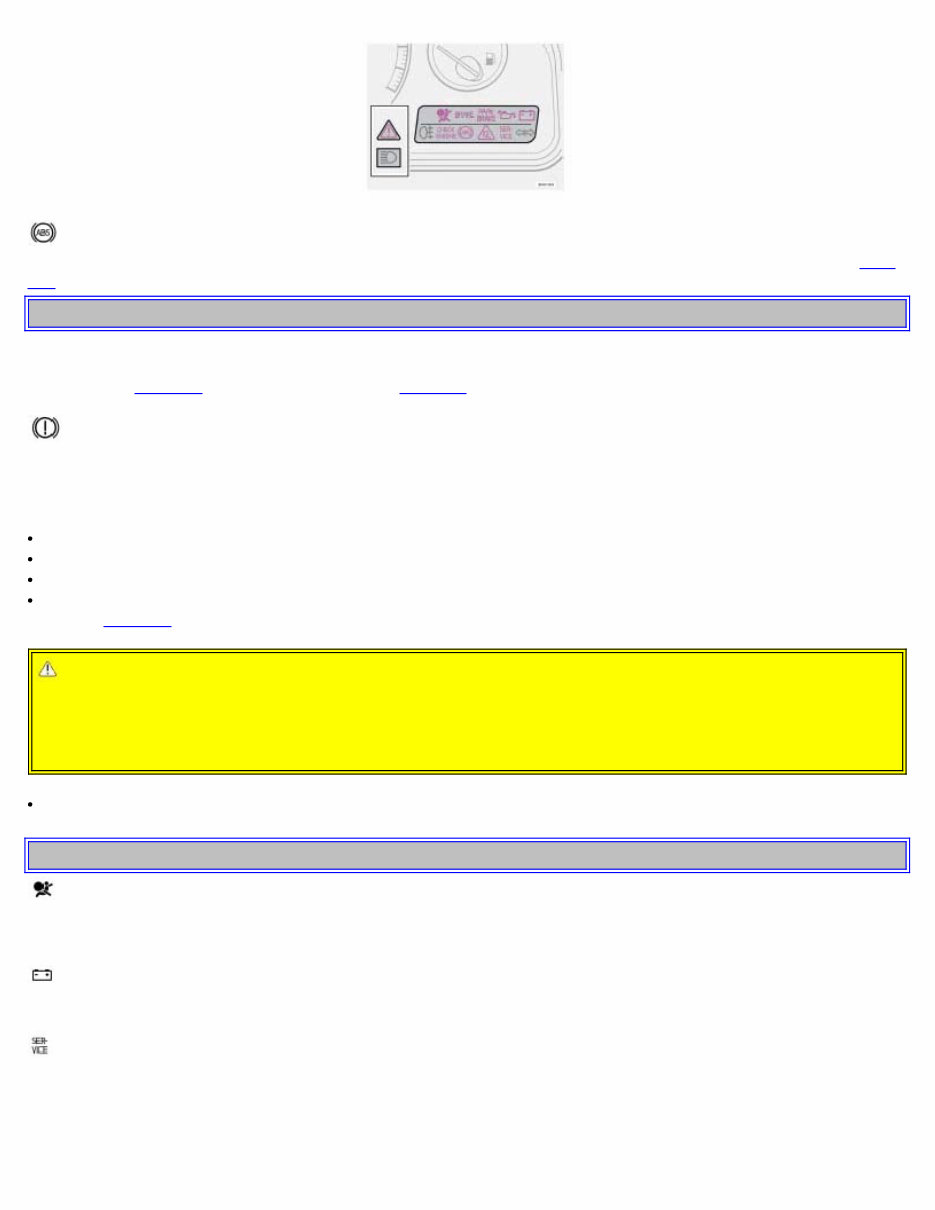
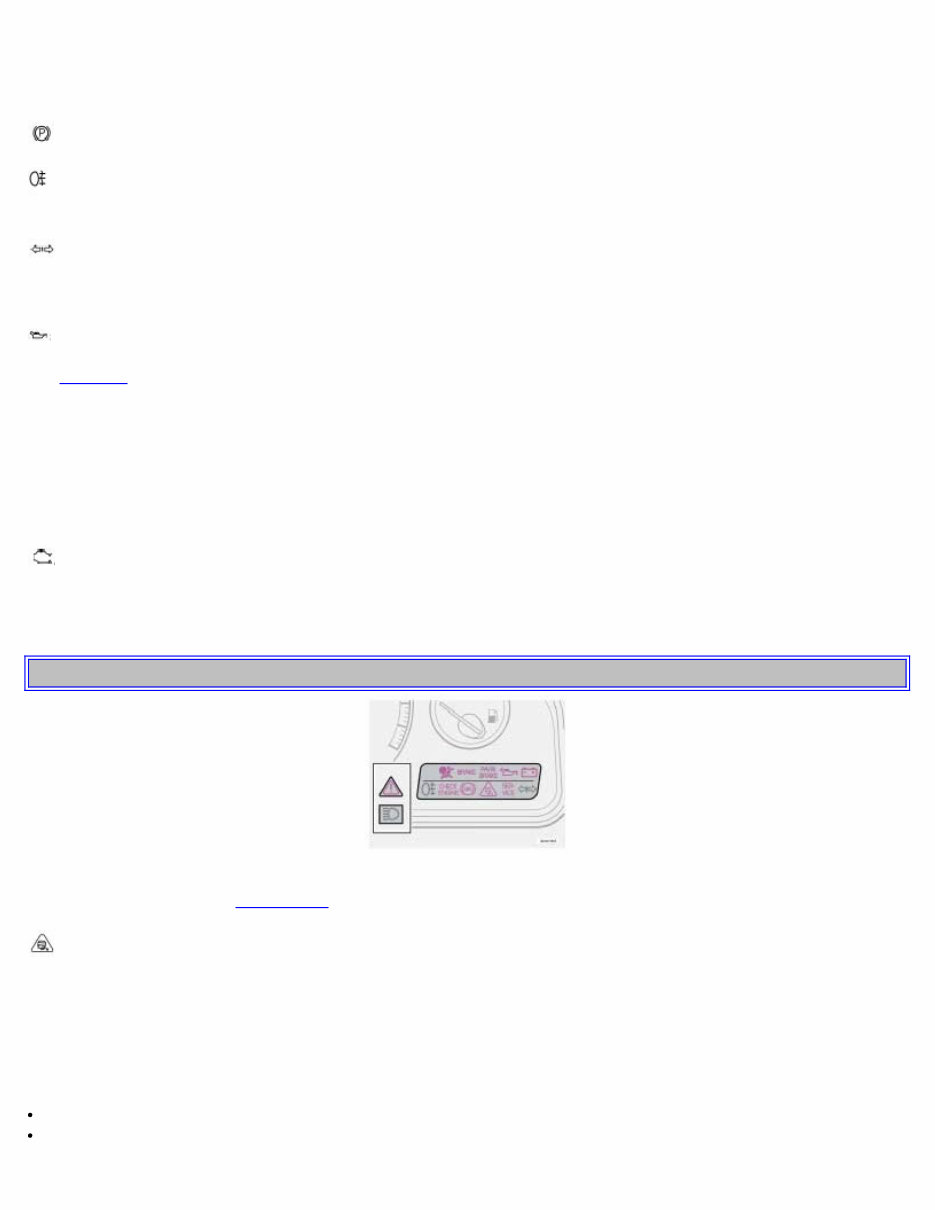
5. Odometer 6. Speedometer 7. Warning symbol 8. High beam indicator 9. Tachometer Indicates engine speed in thousands of revolutions per minute (rpm). Do not drive for long with the needle in the red section. The engine has an built-in function preventing excessively high engine speeds. When this function operates, you may discern some pulsation, which in that case is quite normal. 10. Gear and driving mode indicator The currently selected driving mode is displayed here. If you use the optional Geartronic function on the automatic trans- mission, the currently selected gear will be displayed. 11. Ambient temperature gauge This display indicates the air temperature outside your car. A "snowflake" symbol in the text window is displayed when the temperature is in the range of 23 - 36° F (- 5 - +2° C). Please note that this symbol does not indicate a fault with your car. At low speeds or when the car is not moving, the temperature readings may be slightly higher than the actual ambient temperature. 12. Clock/ set button Turn the button to set the clock. 13. Fuel gauge The fuel tank holds approximately 18.5 US gals (70 liters) or 21.1 US gals (80 liters) on turbo models. When a warning light in the gauge comes on, there are approximately 1.8 US gal. (8 liters) of fuel remaining in the tank. 14. Indicator and warning symbols pg. 31 Indicator and warning symbols The indicator and warning symbols light up when you turn the ignition key to the driving position (position II) before starting. This shows that the symbols are functioning. When the engine starts, all symbols go out. If the engine is not started within 5 seconds, all symbols except CHECK ENGINE and go out. Certain symbols may not have their functions illustrated, depending on the car's equipment. The symbol for the parking brake goes out when the parking brake is released. Warning symbol in center of dashboard This symbol shines as a red or orange light depending on the severity of the discovered fault. Red symbol - Stop the car as soon as possible in a suitable location and read the message shown in the text window. Orange symbol - Follow the instructions shown in the text window.
Anti-lock brake system ABS If the warning light comes on, there is a malfunction of the ABS system (the standard braking system will still function). The vehicle should be driven to a Volvo retailer for inspection. See page 138 for additional information. pg. 32 Indicator and warning symbols BRAKE Brake failure warning light If the light comes on while driving or braking, stop immediately, open the hood and check the brake fluid level in the reservoir. See page 170 for reservoir position and page 174 for instructions. Canadian models are equipped with this warning light: If the BRAKE and ABS warning lights come on at the same time, this could indicate a fault in the brake system. Stop the car in a suitable place and switch off the engine. Restart the engine. If both warning lights go off, no further action is required. If both lights are still on after the engine has been restarted, switch off the engine again and check the brake fluid level (see page 170 for the location of the brake fluid reservoir). WARNING! If the fluid level is below the MIN mark in the reservoir or if a "Brake failure - Service urgent" message is displayed in the text window: DO NOT DRIVE. Have the car towed to an authorized Volvo retailer and have the brake system inspected. If the brake fluid level is above the MIN mark, drive carefully to an authorized Volvo retailer and have the brake system inspected. pg. 33 Indicator and warning symbols Supplemental Restraint System SRS If the light comes on (or stays on after the vehicle has started), the SRS diagnostic system has detected a fault. Drive to an authorized Volvo retailer for an inspection of the system. See the SRS section for more information. Generator warning light If the light comes on while the engine is running, have the charging system checked. Service reminder indicator This light will come on at 7,500 mile (12,000 km) intervals, after 750 hours of driving or after 12 months, whichever occurs first, to remind the driver that the service interval has been exceeded. The light will stay on for 2 minutes after start until reset by the servicing retailer.
PARK BRAKE Parking brake applied This light will be on when the parking brake (hand brake) is applied. The parking brake lever is situated between the front seats. Canadian models are equipped with this symbol. Rear fog light This light indicates that the fog light is on. Turn signal indicator - trailer (certain models) If you are towing a trailer, this light will flash simultaneously with the turn signals on the trailer. If the light does not flash when signaling, neither the trailer's turn signals nor the car's turn signals are functioning. Oil pressure warning light If the light comes on while driving, stop the car and then stop the engine immediately and check the engine oil level. See page 172 . If the light stays on after restart, have the car towed to the nearest authorized Volvo retailer. After hard driving, the light may come on occasionally when the engine is idling. This is normal, provided it goes off when the engine speed is increased. CHECK ENGINE Malfunction indicator light If the light comes on (or stays on after the vehicle has started), the engine diagnostic system has detected a possible fault in the emission control system. Although driveability may not be affected, see an authorized Volvo retailer as soon as possible for inspection. Canadian models are equipped with this warning light: NOTE: If the fuel filler cap is not closed tightly or if the engine is running when the car is refueled, the Malfunction Indicator Lamp may indicate a fault. However, your vehicle's performance will not be affected. Use only Volvo original or approved fuel filler caps. pg. 34 Indicator and warning symbols Cars equipped with STC or DSTC (option) Cars equipped with STC or DSTC have a switch in the center console marked STC or DSTC. See pages 37, 38 . If the indicator light flashes, it indicates that the STC or DSTC system is working. The indicator light stays on when the STC or DSTC system has been switched off with the appropriate button in the center console. Fault in the STC or DSTC system If the indicator light remains on, there is a fault in one of the systems. Stop the car in a safe place and switch off the engine. Restart the engine. If the indicator light goes off, no further action is necessary.
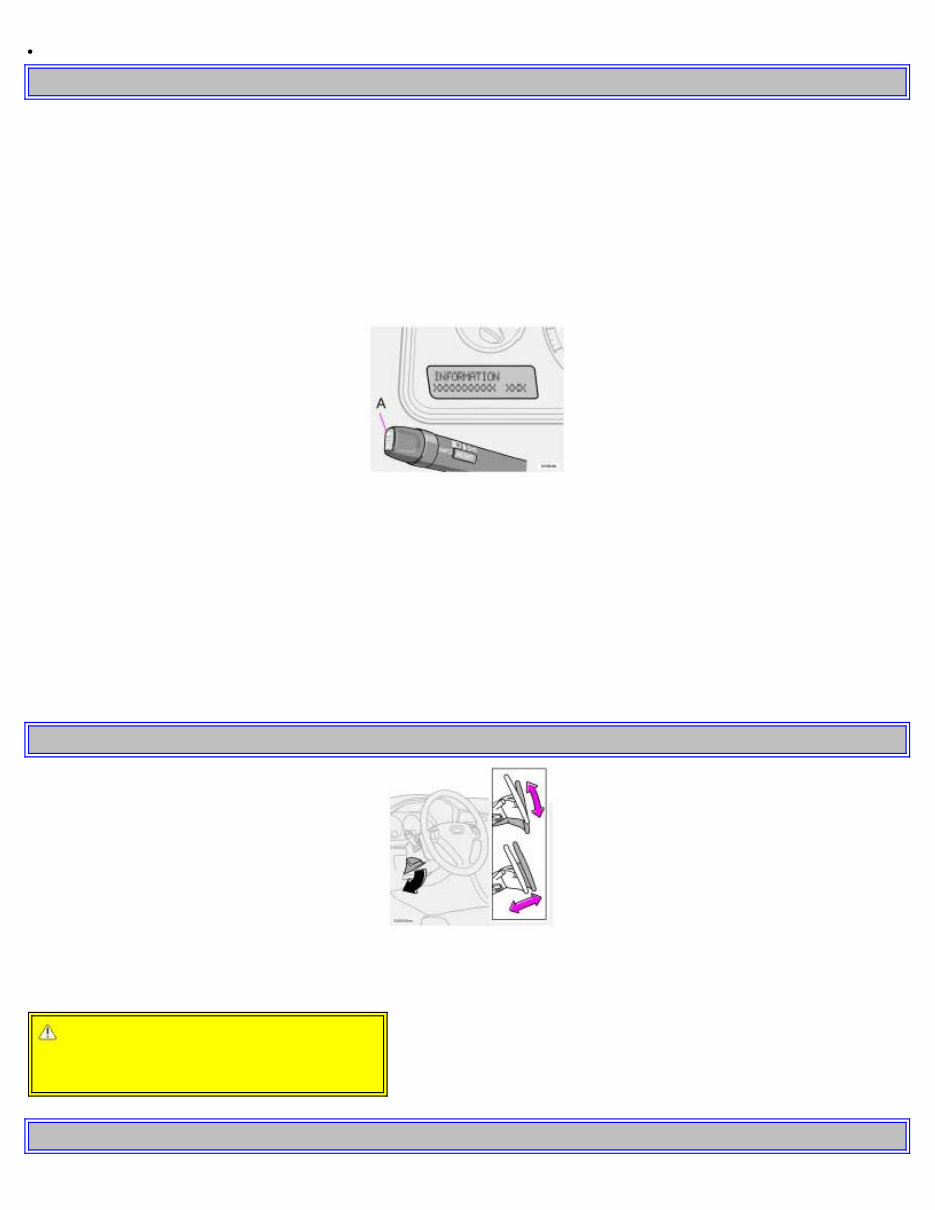
If the indicator light remains on, drive to an authorized Volvo retailer to have the system inspected. pg. 35 Indicator and warning symbols Messages in the text window When a warning light in the instrument panel comes on, a message is also displayed in the text window. After you have read the message, you can erase it by pressing button A (see illus- tration). NOTE: Certain messages cannot be erased until the condition has been corrected. If a warning message is displayed when e. g. you are using the trip computer or would like to use the telephone, this message must be erased before you can access the function of your choice. Press button A to erase the warning message. You can scroll through the stored messages by pressing button A (see illustration). The text window can be cleared (the message will be returned to memory) by pressing button A again. Message Meaning: REDUCE SPEED This message may be displayed when STC or DSTC are not switched on. STOP SAFELY ASAP Stop and switch off the engine. Serious risk of damage. STOP ENGINE Stop and switch off the engine. Serious risk of damage. SERVICE URGENT Take your car in for service immediately. SEE MANUAL Consult your owner's manual. SERVICE REQUIRED Take your car in for service as soon as possible. FIX NEXT SERVICE Have your car checked at the next service interval. pg. 36 Steering wheel adjustment Both the height and the reach of the steering wheel can be adjusted to a comfortable position for the driver. Pull down the lever on the left of the steering column. Adjust the steering wheel to a suitable position and press the lever back into place to lock the steering wheel in the new position. Check that the steering wheel is locked in the new position. WARNING! Never adjust the steering wheel while driving. pg. 37 Switches in the center console
This product is an owner's manual for the 2001 Volvo S60. It provides essential information and guidance for owners of this specific model. With this manual, you can learn about the various features and functions of your Volvo S60 and understand how to properly operate and maintain it. Whether you need assistance with routine maintenance tasks, troubleshooting common issues, or understanding the vehicle's controls, this owner's manual is your comprehensive guide.
The 2001 Volvo S60 owner's manual covers a range of topics, including but not limited to:
Introduction to the vehicle
Vehicle safety information
Instruments and controls
Comfort and driving support systems
Starting and driving
In case of emergency
Maintenance and service
Technical specifications
By referring to this manual, you can enhance your ownership experience and ensure that your Volvo S60 operates at its best. It serves as a valuable resource for both new and experienced owners, providing clear instructions and helpful insights into the vehicle's operation and maintenance. Invest in this owner's manual to maximize your Volvo S60 ownership and drive with confidence.



 Lifetime Access