


2006 Toyota Tundra Service & Repair Manual
What's Included?
 Lifetime Access
Fast Download Speeds
Offline Viewing
Access Contents & Bookmarks
Full Search Facility
Print one or all pages of your manual
CH0N5-01
A01259
A01260
- CHARGING (1GR-FE) CHARGING SYSTEM
CH-1
3825 Author: Date:
CHARGING SYSTEM
ON-VEHICLE INSPECTION
CAUTION:
z Check that the battery cables are connected to the
correct terminals.
z Disconnect the battery cables when the battery is giv-
en a quick charge.
z Do not perform tests with a high voltage insulation re-
sistance tester.
z Never disconnect the battery while the engine is run-
ning.
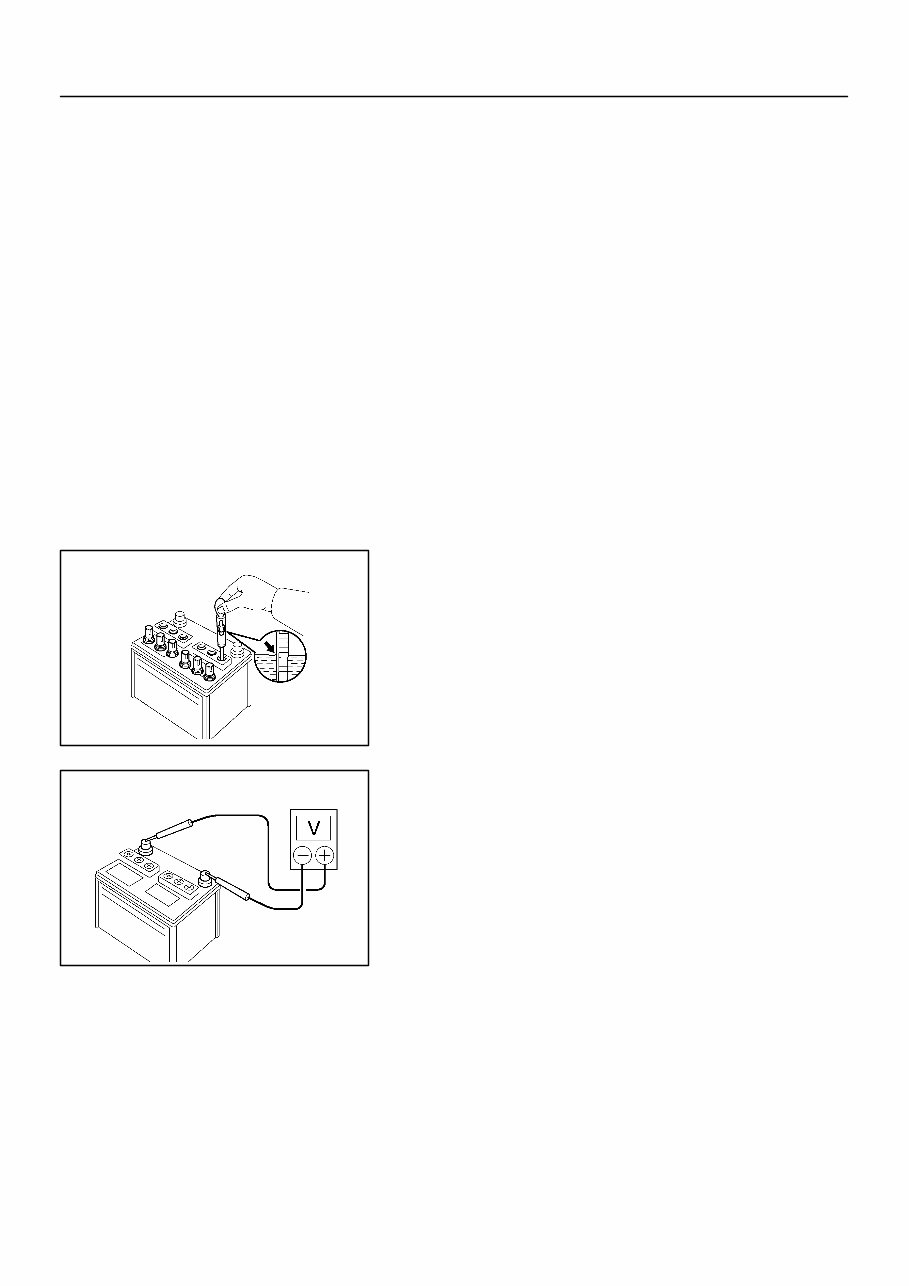
1. CHECK BATTERY ELECTROLYTE LEVEL
(a) Check the electrolyte quantity of each cell (Maintenance-
Free Battery).
If under the lower level, replace the battery (or add distilled wa-
ter if possible) and check the charging system.
(b) Check the electrolyte quantity of each cell (Except Main-
tenance-Free Battery).
If under the lower level, add distilled water.
2. CHECK BATTERY SPECIFIC GRAVITY
(Except Maintenance-Free Battery)
(a) Check the specific gravity of each cell.
Standard specific gravity: 1.25 to 1.29 at 20_C (68_F)
HINT:
If the specific gravity is less than specification, charge the bat-
tery.
3. CHECK BATTERY VOLTAGE
(a) After having driven the vehicle and in the case that 20
minutes have not passed after having stopped the en-
gine, turn the ignition switch ON and turn on the electrical
system (headlight, blower motor, rear defogger etc.) for
60 seconds to remove the surface charge.
(b) Turn the ignition switch OFF and turn off the electrical sys-
tems.
(c) Measure the battery voltage between the negative (-)
and positive (+) terminals of the battery.
Standard voltage: 12.5 to 12.9 V at 20_C (68_F)
HINT:
If the voltage is less than specification, charge the battery.
Z11580
B00543
B00540
CH-2
- CHARGING (1GR-FE) CHARGING SYSTEM
3826 Author: Date:
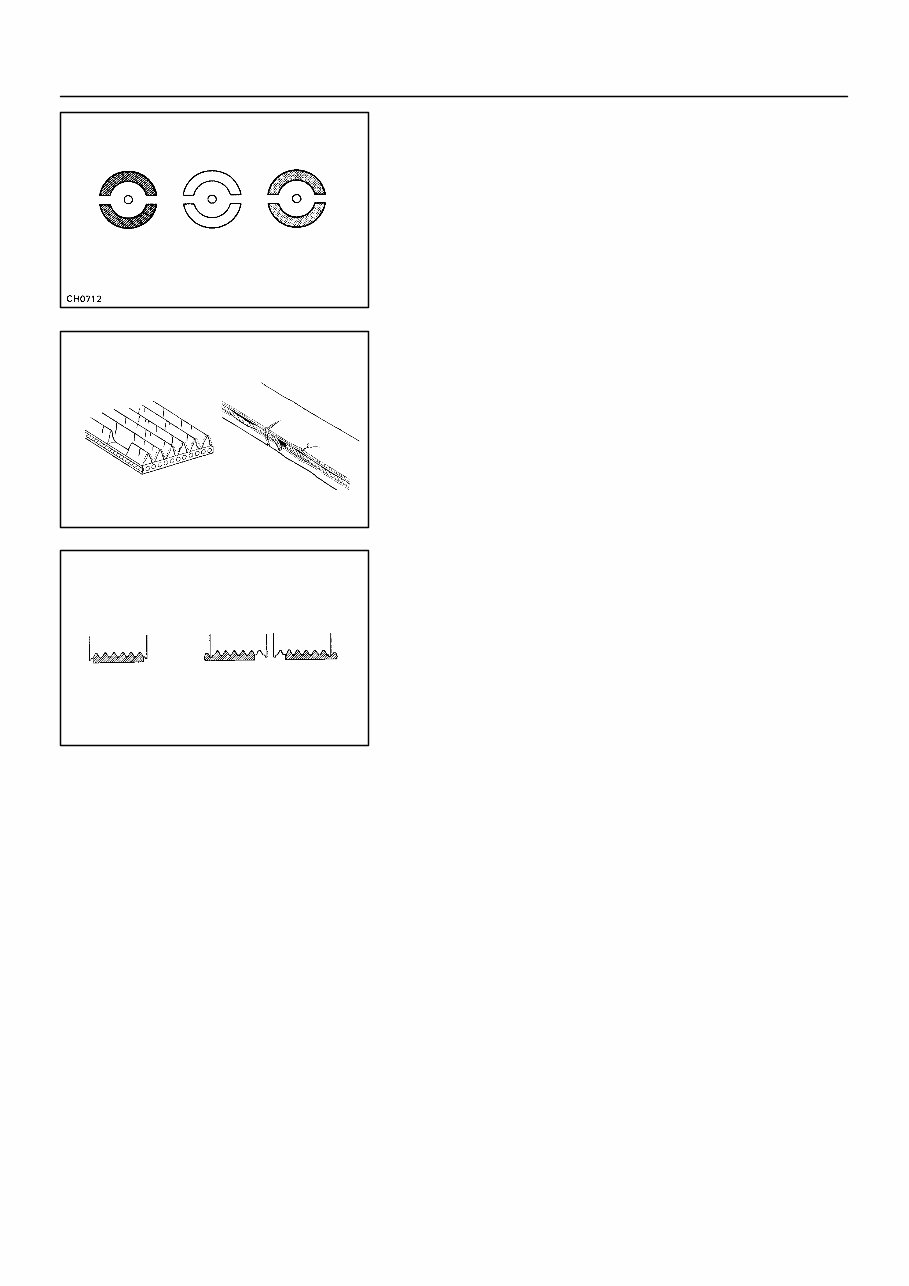
(d) Check the indicator as shown in the illustration.
HINT:
z Blue: OK
z White: Charging Necessary
z Red: Insufficient Water
4. CHECK BATTERY TERMINALS, FUSIBLE LINK AND
FUSES
(a) Check that the battery terminals are not loose or cor-
roded.
(b) Check the fusible link, H-fuses and fuses for continuity.
5. INSPECT DRIVE BELT
(a) Visually check the belt for excessive wear, frayed cords
etc.
HINT:
z If any defect has been found, replace the drive belt.
z Cracks on the rib side of a belt are considered acceptable.
If the belt has chunks missing from the ribs, it should be
replaced.
(b) Check that it fits properly in the ribbed grooves.
HINT:
Check with your hand to confirm that the belt has not slipped out
of the groove on the bottom of the pulley.
6. VISUALLY CHECK GENERATOR WIRING
(a) Check that the wiring is in good condition.
7. LISTEN FOR ABNORMAL NOISES FROM GENERA-
TOR
(a) Check that there is no abnormal noise from the generator
while the engine is running.
8. INSPECT CHARGE WARNING LIGHT CIRCUIT
(a) Turn the ignition switch ON. Check that the charge warn-
ing light comes on.
(b) Start the engine. Check that the light goes off.
HINT:
If the light does not operate as specified, troubleshoot the
charge warning light circuit.
9. INSPECT CHARGING CIRCUIT WITHOUT LOAD
(a) If a battery/generator tester is available, connect the tes-
ter to the charging circuit as per manufacturer’s instruc-
tions.
Z10324
Battery
Ammeter
Voltmeter
Generator
Disconnect Wire
from Terminal B
B
- CHARGING (1GR-FE) CHARGING SYSTEM
CH-3
3827 Author: Date:
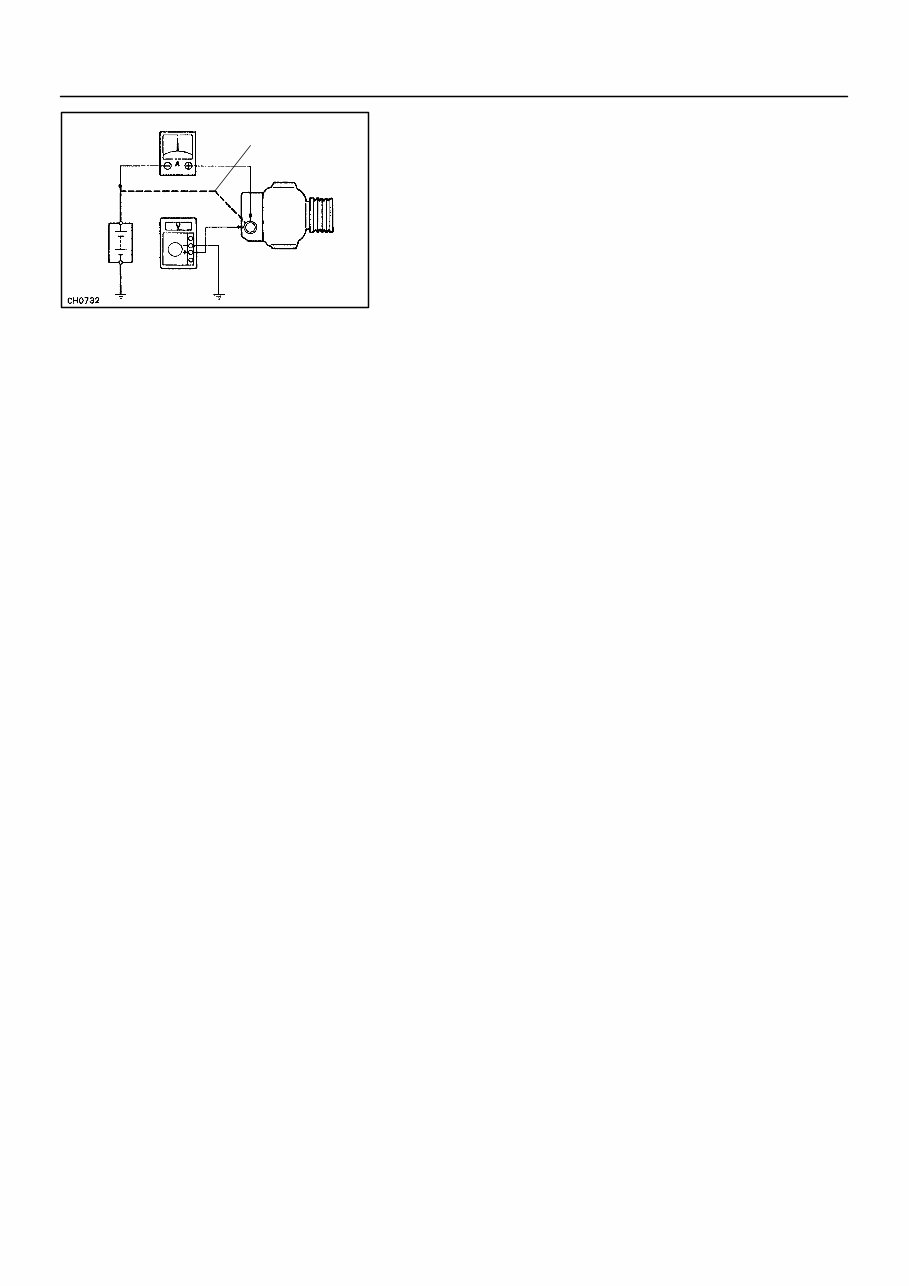
(b) If a tester is not available, connect a voltmeter to the
charging circuit as follows.
(1) Disconnect to the wire from terminal B of the gener-
ator and connect it to the negative (-) lead of the
ammeter.
(2) Connect the positive (+) lead of the ammeter to ter-
minal B of the generator.
(3) Connect the positive (+) lead of the voltmeter to ter-
minal B of the generator.
(4) Ground the negative (-) lead of the voltmeter.
(c) Check the charging circuit.
(1) With the engine running from idle to 2,000 rpm,
check the reading on the ammeter and voltmeter.
Standard amperage: 10 A or less
Standard voltage: 13.2 to 14.8 V
HINT:
z If the voltmeter reading is more than standard voltage, re-
place the voltage regulator.
z If the voltmeter reading is less than the standard voltage,
check the voltage regulator and generator as follows:
10. INSPECT CHARGING CIRCUIT WITH LOAD
(a) With the engine running at 2,000 rpm, turn on the high
beam headlights and place the heater blower switch at
”HI”.
(b) Check the reading on the ammeter.
Standard amperage: 30 A or more
HINT:
z If the ammeter reading is less than standard amperage,
repair the generator.
z If the battery is fully charged, the indication will sometimes
be less than standard amperage.
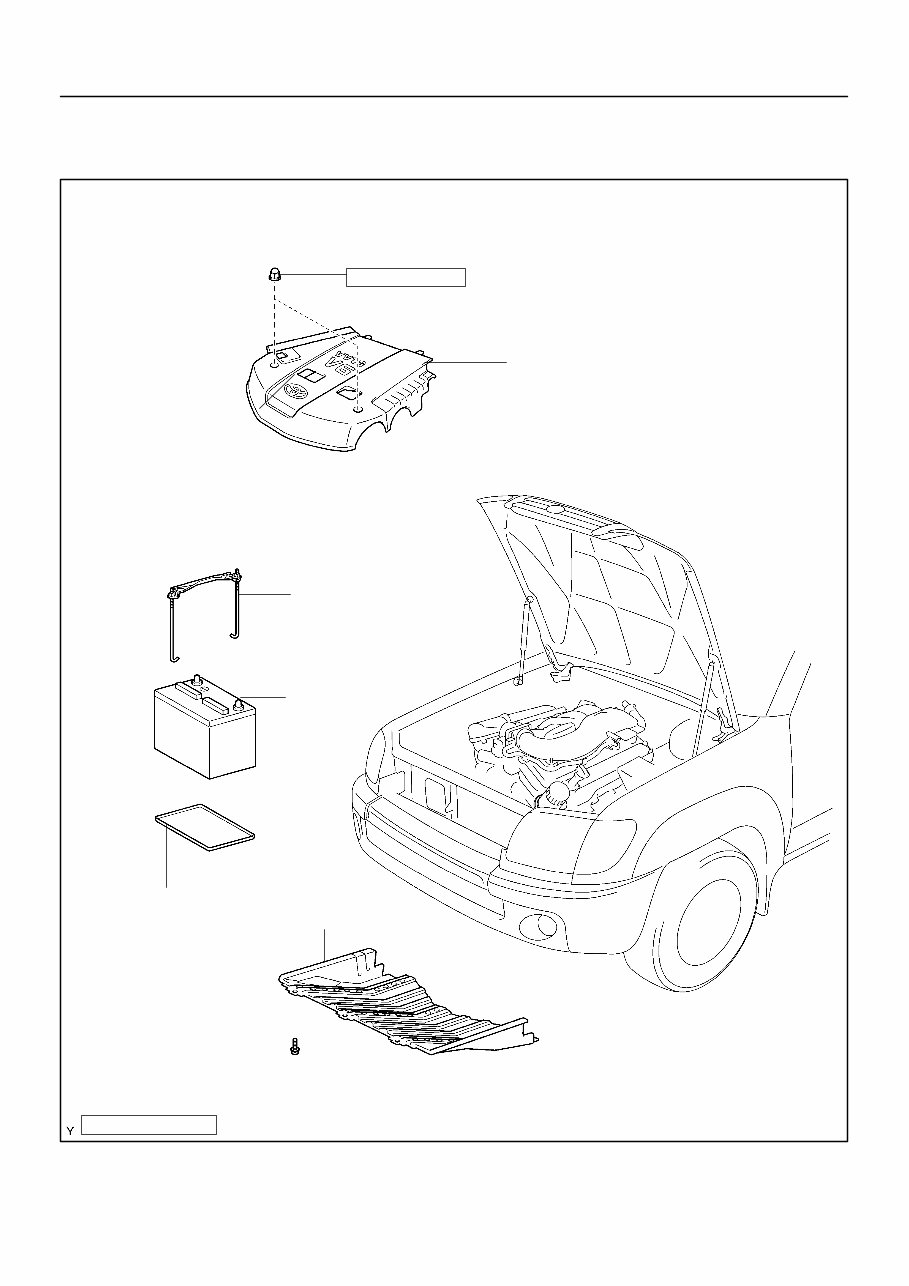
CH0N6-01
B17628
N·m (kgf·cm, ft·lbf) : Specified torque
Engine Under Cover
x 5
Battery Tray
V-Bank Cover
9.8 (100, 87 in.·lbf)
Battery Tray
Battery Clamp
CH-4
- CHARGING (1GR-FE) GENERATOR
3828 Author: Date:
GENERATOR
COMPONENTS
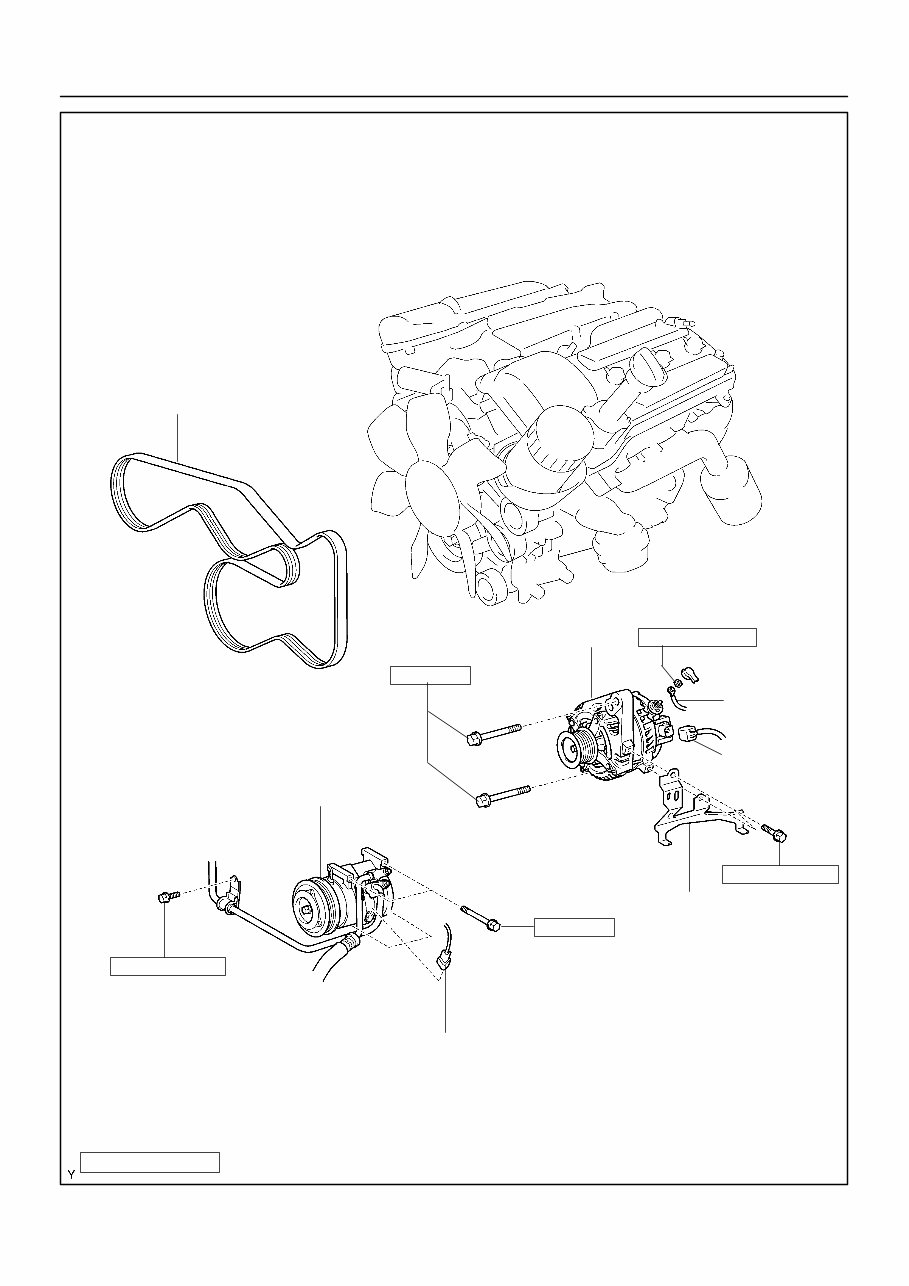
B17629
A/C Compressor
N·m (kgf·cm, ft·lbf) : Specified torque
A/C Compressor
Connector
43 (438, 32)
25 (255, 18)
Generator
Drive Belt
Generator Connector
Wire Harness Clamp Bracket
Generator Wire
9.8 (100, 87 in.·lbf)
8.0 (82, 71 in.⋅lbf)
8.0 (82, 71 in.⋅lbf)
- CHARGING (1GR-FE) GENERATOR
CH-5
3829 Author: Date:
You're Reading a Preview
What's Included?
Lifetime Access
Fast Download Speeds
Offline Viewing
Access Contents & Bookmarks
Full Search Facility
Print one or all pages of your manual
$36.99
Viewed 36 Times Today


Secure transaction
What's Included?
Lifetime Access
Fast Download Speeds
Offline Viewing
Access Contents & Bookmarks
Full Search Facility
Print one or all pages of your manual
$36.99
The 2006 Toyota Tundra Service & Repair Manual is a detailed guide specifically tailored to address the maintenance and repair requirements of the 2006 Toyota Tundra. Whether you are a professional mechanic or a DIY enthusiast, this manual offers comprehensive instructions and step-by-step diagrams to effectively service and repair your vehicle.
Key Features:
- Complete service and repair procedures for the 2006 Toyota Tundra
- In-depth diagrams, illustrations, and specifications included
- Coverage of engine, electrical system, transmission, suspension, brakes, and more
- Essential troubleshooting and diagnostic information provided
- Clear and easy-to-follow instructions suitable for all skill levels
Models covered:
- 2006 Toyota Tundra Base
- 2006 Toyota Tundra SR5
- 2006 Toyota Tundra Limited
- 2006 Toyota Tundra SR5 TRD
- 2006 Toyota Tundra Limited TRD
- 2006 Toyota Tundra SR5 Work Truck
This comprehensive manual empowers you to confidently address any repair or maintenance task for your 2006 Toyota Tundra, ensuring its optimal performance and longevity. Acquire the 2006 Toyota Tundra Service & Repair Manual today and take charge of your vehicle's upkeep!


