


2004 HONDA Element Owners Manual
What's Included?
 Lifetime Access
Fast Download Speeds
Online & Offline Access
Access PDF Contents & Bookmarks
Full Search Facility
Print one or all pages of your manual
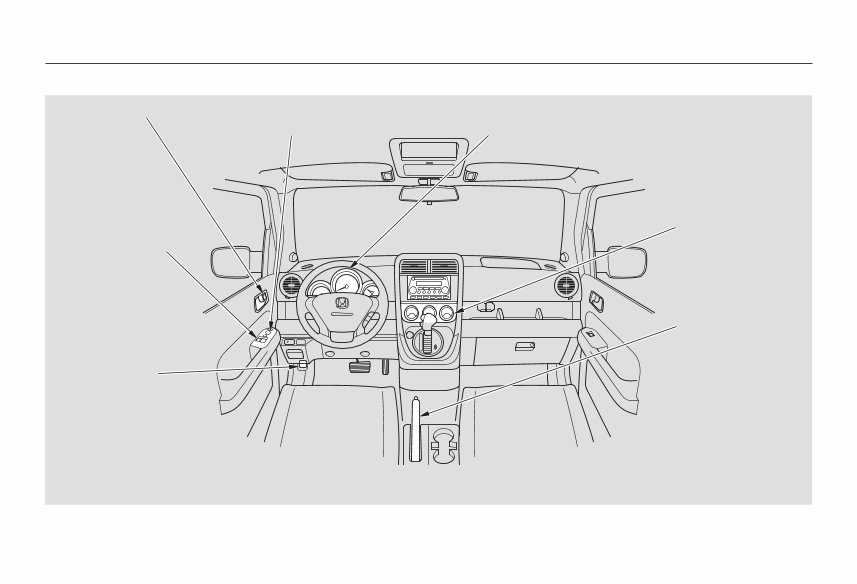
Your Vehicle at a Glance
2
POWER DOOR
LOCK SWITCH
MIRROR CONTROLS
GAUGES
POWER WINDOW
SWITCHES
A/T model is shown.
HOOD RELEASE
HANDLE
INSTRUMENT PANEL
HEATING/COOLING
CONTROLS
PARKING BRAKE
(P.70)
(P.81)
(P.112)
(P.82)
(P.53)
(P.58)
(P.90)
(P.83)
*
*
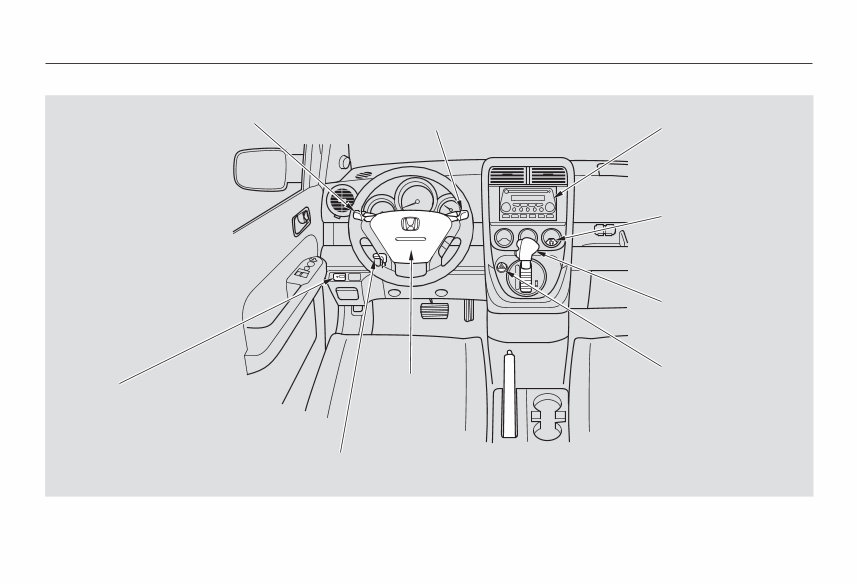
To use the horn, press the center pad of the steering wheel. :
Your Vehicle at a Glance
3
HEADLIGHTS/TURN SIGNALS
REAR WINDOW
DEFOGGER
A/T model is shown.
HORN
HAZARD WARNING
BUTTON
STEERING WHEEL ADJUSTMENT
SHIFT LEVER
AUDIO SYSTEM
WINDSHIELD WIPERS/WASHERS
DIGITAL CLOCK
(P.62)
(P.107)
CRUISE CONTROL
MASTER SWITCH
(P.64)
(P.63)
(P.127)
(P.63)
(P.94)
(P.105)
(P.61)

4

-
This section gives you important
information about how to protect
yourself and your passengers. It
shows you how to use seat belts
properly. It explains how your
airbags work. And it tells you how to
properly restrain infants and
children in your vehicle.
......... Important Safety Precautions .6
....... Your Vehicle’s Safety Features .7
....................................... Seat Belts .8
......................................... Airbags . 10
......... Protecting Adults and Teens . 11
..... 1. Close and Lock the Doors . 11
........... 2. Adjust the Front Seats . 11
............ 3. Adjust the Seat-Backs . 13
... 4. Adjust the Head Restraints . 14
5. Fasten and Position the
.. Lap/Shoulder Seat Belts . 14
.... 6. Adjust the Steering Wheel . 16
7. Maintain a Proper Sitting
................................ Position . 16
..... Advice for Pregnant Women . 17
... Additional Safety Precautions . 18
Additional Information About Your
................................. Seat Belts . 19
.. Seat Belt System Components . 19
...................... Lap/Shoulder Belt . 19
Automatic Seat Belt
............................... Tensioners . 20
............... Seat Belt Maintenance . 21
Additional Information About Your
..................................... Airbags . 22
...... Airbag System Components . 22
How Your Front Airbags
......................................... Work . 22
... How Your Side Airbags Work . 25
How the SRS Indicator
....................................... Works . 26
How the Side Airbag Off
...................... Indicator Works . 27
............................. Airbag Service . 27
... Additional Safety Precautions . 28
Protecting Children General
................................ Guidelines . 29
All Children Must Be
............................... Restrained . 29
All Children Should Sit in the
................................. Back Seat . 30
The Passenger’s Front Airbag
............... Poses Serious Risks . 30
If You Must Drive with Several
................................... Children . 32
If a Child Requires Close
.................................. Attention . 32
... Additional Safety Precautions . 32
Protecting Infants and
......................... Small Children . 34
....................... Protecting Infants . 34
......... Protecting Small Children . 36
..................... Selecting a Child Seat . 37
.................... Installing a Child Seat . 38
........... Protecting Larger Children . 44
............. Carbon Monoxide Hazard . 48
................................... Safety Labels . 49
Driver and Passenger Saf ety
Driver and Passenger Saf ety 5

You’ll find many safety
recommendations throughout this
section, and throughout this manual.
The recommendations on this page
are the ones we consider to be the
most important.
A seat belt is your best protection in
all types of collisions. Airbags
supplement seat belts, but airbags
are designed to inflate only in a
moderate to severe frontal collision.
So even though your vehicle is
equipped with airbags, make sure
you and your passengers always
wear your seat belts, and wear them
properly. (See page .)
Children age 12 and under should
ride properly restrained in a back
seat. Infants and small children
should be restrained in a child seat.
Larger children should use a booster
and a lap/shoulder belt until they
can use the belt properly without a
booster (see page ). Excessive speed is a major factor in
crash injuries and deaths. Generally,
the higher the speed the greater the
risk, but serious accidents can also
occur at lower speeds. Never drive
faster than is safe for current
conditions, regardless of the
maximum speed posted.
Having a tire blowout or a
mechanical failure can be extremely
hazardous. To reduce the possibility
of such problems, check your tire
pressures and condition frequently,
and perform all regularly scheduled
maintenance (see page ).
While airbags can save lives, they
can cause serious or fatal injuries to
occupants who sit too close to them,
or are not properly restrained.
Infants, young children, and short
adults are at the greatest risk. Be
sure to follow all instructions and
warnings in this manual.
Alcohol and driving don’t mix. Even
one drink can reduce your ability to
respond to changing conditions, and
your reaction time gets worse with
every additional drink. So don’t drink
and drive, and don’t let your friends
drink and drive, either.
14
29
152
Important Safety Precautions
Always Wear Your Seat Belt
Restrain All Children
Be Aware of Airbag Hazards
Control Your Speed
Keep Your Vehicle in Saf e
Condition
Don’t Drink and Drive
Driver and Passenger Saf ety 6
Your vehicle is equipped with many
features that work together to
protect you and your passengers
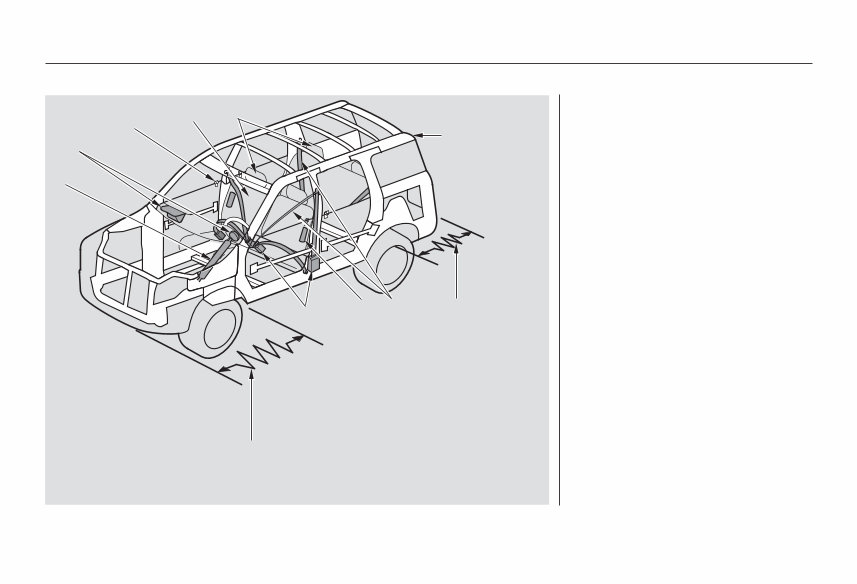
during a crash.
Some safety features do not require
any action on your part. These
include a strong steel framework
that forms a safety cage around the
passenger compartment; front and
rear crush zones; a collapsible
steering column; and seat belt
tensioners that tighten the front seat
belts in the event of a crash.
CONTINUED
Your Vehicle’s Safety Features
Driver and Passenger Saf ety 7
(1)
(2)
(2)
(3)
(4)
(5)
(8)
(6)
(9)
(7)
(10)
(1) Safety Cage
(2) Crush Zones
(3) Seats and Seat-Backs
(4) Head Restraints
(5) Collapsible Steering Column
(6) Seat Belts
(7) Front Airbags
(8) Side Airbags
(optional on EX model)
(9) Front Seat Belt Tensioners
(10) Door Locks

However, you and your passengers
can’t take full advantage of these
safety features unless you remain
sitting in a proper position and
In fact, some safety features can
contribute to injuries if they are not
used properly.
Your vehicle is equipped with seat
belts in all seating positions.
Your seat belt system also includes a
light on the instrument panel to
remind you and your passengers to
fasten your seat belts.
Seat belts are the single most
effective safety device for adults and
larger children. (Infants and smaller
children must be properly restrained
in child seats.)
Not wearing a seat belt properly
increases the chance of serious
injury or death in a crash, even
though your vehicle has airbags.
In addition, most states and all
Canadian provinces require you to
wear seat belts.
The following pages explain how you
can take an active role in protecting
yourself and your passengers.
Your Vehicle’s Safety Features
always wear your seat belts properly.
Why Wear Seat Belts Seat Belts
Driver and Passenger Saf ety 8
When properly worn, seat belts:
Help keep you from being thrown
against the inside of the vehicle
and against other occupants.
Keep you from being thrown out
of the vehicle.
Help keep you in a good position
should the airbags ever deploy. A
good position reduces the risk of
injury from an inflating airbag, and
allows you to get the best
advantage from the airbag.
Of course, seat belts cannot
completely protect you in every
crash. But in most cases, seat belts
can reduce your risk of serious
injury.
Always wear your seat belt, and
make sure you wear it properly.
Keep you connected to the vehicle
so you can take advantage of the
vehicle’s built-in safety features.
Help protect you in almost every
type of crash, including frontal,
side, and rear impacts and
rollovers.
Your Vehicle’s Safety Features
Driver and Passenger Saf ety
What You Should Do:
9
Not wearing a seat belt properly
increases the chance of serious
injury or death in a crash, even
if you have airbags.
Be sure you and your
passengers always wear seat
belts and wear them properly.
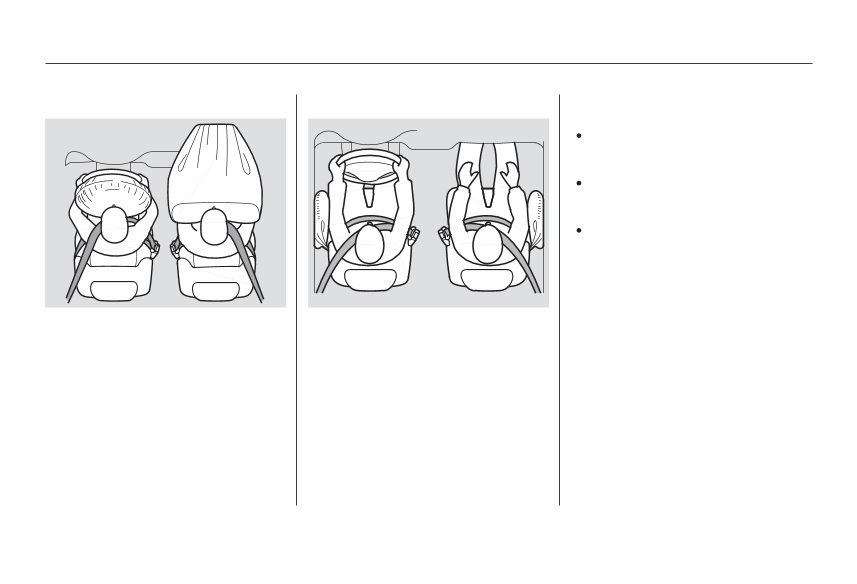
Your vehicle has a Supplemental
Restraint System (SRS) with front
airbags to help protect the heads and
chests of the driver and a front seat
passenger during a moderate to
severe frontal collision (see page
for more information on how
your front airbags work).
The most important things you need
to know about your airbags are:
Your vehicle also has side airbags to
help protect the upper torso of the
driver or a front seat passenger
during a moderate to severe side
impact (see page for more
information on how your side airbags
work).
They are designed to supplement
the seat belts.
To do
their job, airbags must inflate with
tremendous force. So while
airbags help save lives, they can
cause minor injuries or more
serious or even fatal injuries if
occupants are not properly
restrained or sitting properly.
Always wear your seat belt properly,
sit upright, and as far back from the
steering wheel while allowing full
control of the vehicle. A front
passenger should move their seat as
far back from the dashboard as
possible.
22
25
Optional on EX models
Your Vehicle’s Safety Features
Driver and Passenger Saf ety
Airbags
Airbags do not replace seat belts.
Airbags offer no protection in rear
impacts, rollovers, or minor
f rontal or side collisions.
Airbags can pose hazards.
What You Should Do:
10
After everyone has entered the
vehicle, be sure the doors are closed
and locked.
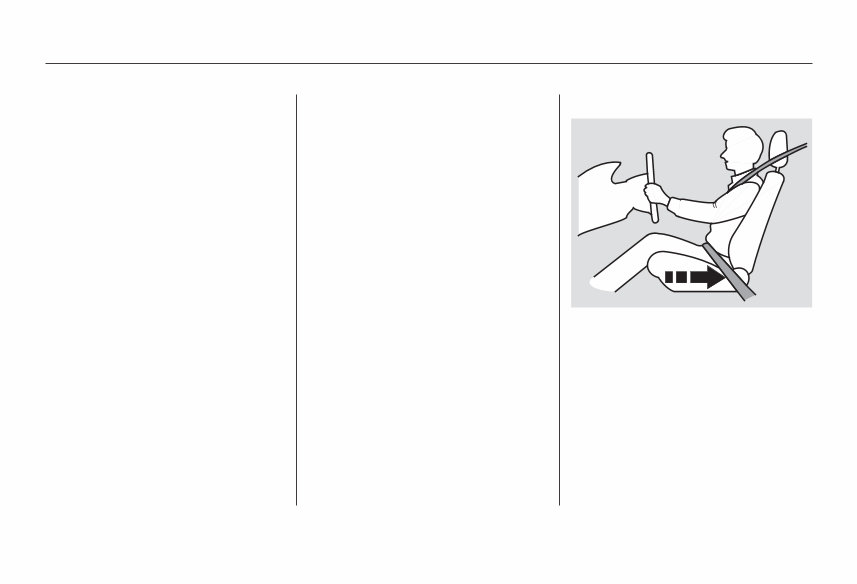
If you sit too close to the steering
wheel or dashboard, you can be
seriously injured by an inflating front
airbag, or by striking the steering
wheel or dashboard.
See page for important guidelines
on how to properly protect infants,
small children, and larger children
who ride in your vehicle.
The following pages provide
instructions on how to properly
protect the driver, adult passengers
and teenage children who are large
enough and mature enough to ride in
the front seat.
Remember however, that no safety
system can prevent all injures or
deaths that can occur in severe
crashes, even where seat belts are
properly worn and the airbags deploy.
The rest of this section gives more
detailed information about how you
can maximize your safety.
Locking the doors reduces the
chance of someone being thrown out
of the vehicle during a crash, and it
helps prevent passengers from
accidentally opening a door and
falling out.
Locking the doors also helps prevent
an outsider from unexpectedly
opening a door when you come to a
stop.
See page for how to lock the
doors.
Adjust the driver’s seat as far to the
rear as possible while allowing you to
maintain full control of the vehicle.
Have a front passenger adjust their
seat as far to the rear as possible. 34
70
CONTINUED
Close and Lock the Doors Adjust the Front Seats Introduction 1. 2.
Protecting Adults and Teens
Driver and Passenger Saf ety 11
You're Reading a Preview
What's Included?
Lifetime Access
Fast Download Speeds
Online & Offline Access
Access PDF Contents & Bookmarks
Full Search Facility
Print one or all pages of your manual
$24.99
$32.99
Viewed 48 Times Today


Secure transaction
What's Included?
Lifetime Access
Fast Download Speeds
Online & Offline Access
Access PDF Contents & Bookmarks
Full Search Facility
Print one or all pages of your manual
$24.99
$32.99
Gain immediate access to a comprehensive manual available in PDF format, extracted from the original factory owner's manual. This digital resource mirrors the content of a traditional physical manual and encompasses a wide array of topics:
- Introduction
- Instrument Cluster
- Entertainment Systems
- Climate Controls
- Lights
- Driver Controls
- Locks and Security
- Seating and Safety Restraints
- Driving
- Customer Assistance
- Reporting Safety Defects (U.S. only)
- Cleaning
- Maintenance and Specifications
- Engine Compartment
- Engine Oil
- Battery
- Fuel Information
- Air Filter(s)
- Part Numbers
- Refill Capacities
- Lubricant Specifications
- Accessories
To access this manual, a PDF reader such as Acrobat Reader, Foxit, or a similar application is required. Please note that all designated trademarks and brands are the property of their respective owners.


