


2018 Honda Accord Repair Manual
What's Included?
 Lifetime Access
Fast Download Speeds
Online & Offline Access
Access PDF Contents & Bookmarks
Full Search Facility
Print one or all pages of your manual

Service Information
The service and repair information contained in this manual is intended for use by qualified, professional technicians. Attempting
service or repairs without the proper training, tools, and equipment could cause injury to you or others. It could also damage the
vehicle or create an unsafe condition.
This manual describes the proper methods and procedures for doing service, maintenance, and repairs. Some procedures require the
use of specially designed tools and dedicated equipment. Any person who intends to use a replacement part, a service procedure, or
a tool that is not recommended by Honda, must determine the risks to their personal safety and the safe operation of the vehicle.
If you need to replace any parts, always use the correct parts supplied by a Honda dealer. Never use inferior quality parts.
FOR YOUR CUSTOMER'S SAFETY
Proper service and maintenance are essential to the customer's safety and the reliability of the vehicle. Any error or oversight while
servicing a vehicle can result in faulty operation, damage to the vehicle, or injury to others.
Improper service or repairs can create an unsafe condition that can cause your customers or others to be seriously hurt or killed.
Follow the procedures and precautions in this manual and other service materials carefully.
FOR YOUR SAFETY
Because this manual is intended for the professional service technician, we do not provide warnings about many basic shop safety
practices (for example, hot parts-wear gloves). If you have not received shop safety training or do not feel confident about your
knowledge of safe servicing practices, we recommend that you do not attempt to do the procedures described in this manual.
Failure to properly follow instructions and precautions can cause you to be seriously hurt or killed.
Follow the procedures and precautions in this manual carefully.
Some of the most important general service safety precautions follow this text. However, we cannot warn you of every conceivable
hazard that can arise in doing service and repair procedures. Only you can decide whether or not you should do a given task.
IMPORTANT SAFETY PRECAUTIONS
Make sure you have a clear understanding of all basic shop safety practices, and that you are wearing appropriate clothing and
using safety equipment. When doing any service task, be especially careful of the following:
-
Read all of the instructions before you begin, and make sure you have the tools, the replacement or repair parts, and the skills
required to do the tasks safely and completely.
-
Protect your eyes by using proper safety glasses, goggles, or face shields anytime you hammer, drill, grind, or work around
pressurized air or liquids and springs, or other stored-energy components. If there is any doubt, put on eye protection.
-
Use other protective wear when necessary, such as gloves or safety shoes. Handling hot or sharp parts can cause severe
burns or cuts. Before you grab something that looks like it can hurt you, stop and put on gloves.
-
Protect yourself and others whenever you have the vehicle up in the air. Anytime you raise the vehicle, either with a lift or a
jack, make sure that it is always securely supported. Use safety stands if needed.
-
Protect yourself by wearing an approved welding helmet, gloves, and safety shoes anytime you are welding. You can receive
burns from hot parts; allow the parts to cool before working in that area.
-
Protect yourself from paints and harmful chemicals by wearing an approved respirator, eye protection, and gloves whenever
you are painting. Spray paint only in an approved paint booth that is well ventilated.
Make sure the engine is off before you begin any servicing procedures, unless the instruction tells you to do otherwise. This will
help eliminate several potential hazards:
-
Carbon monoxide poisoning from engine exhaust. Be sure there is adequate ventilation whenever you run the engine.
-
Burns from hot parts or coolant. Let the engine and exhaust system cool before working in those areas.
-
Injury from moving parts. If the instruction tells you to run the engine, be sure your hands, fingers, and clothing are out of the
way.
Gasoline vapors and hydrogen gases from batteries are explosive. To reduce the possibility of a fire or explosion, be careful when
working around gasoline or batteries:
-
Use only a nonflammable solvent, not gasoline, to clean parts.
-
Never drain or store gasoline in an open container.
-
Keep all cigarettes, sparks, and flames away from the battery and all fuel-related parts.
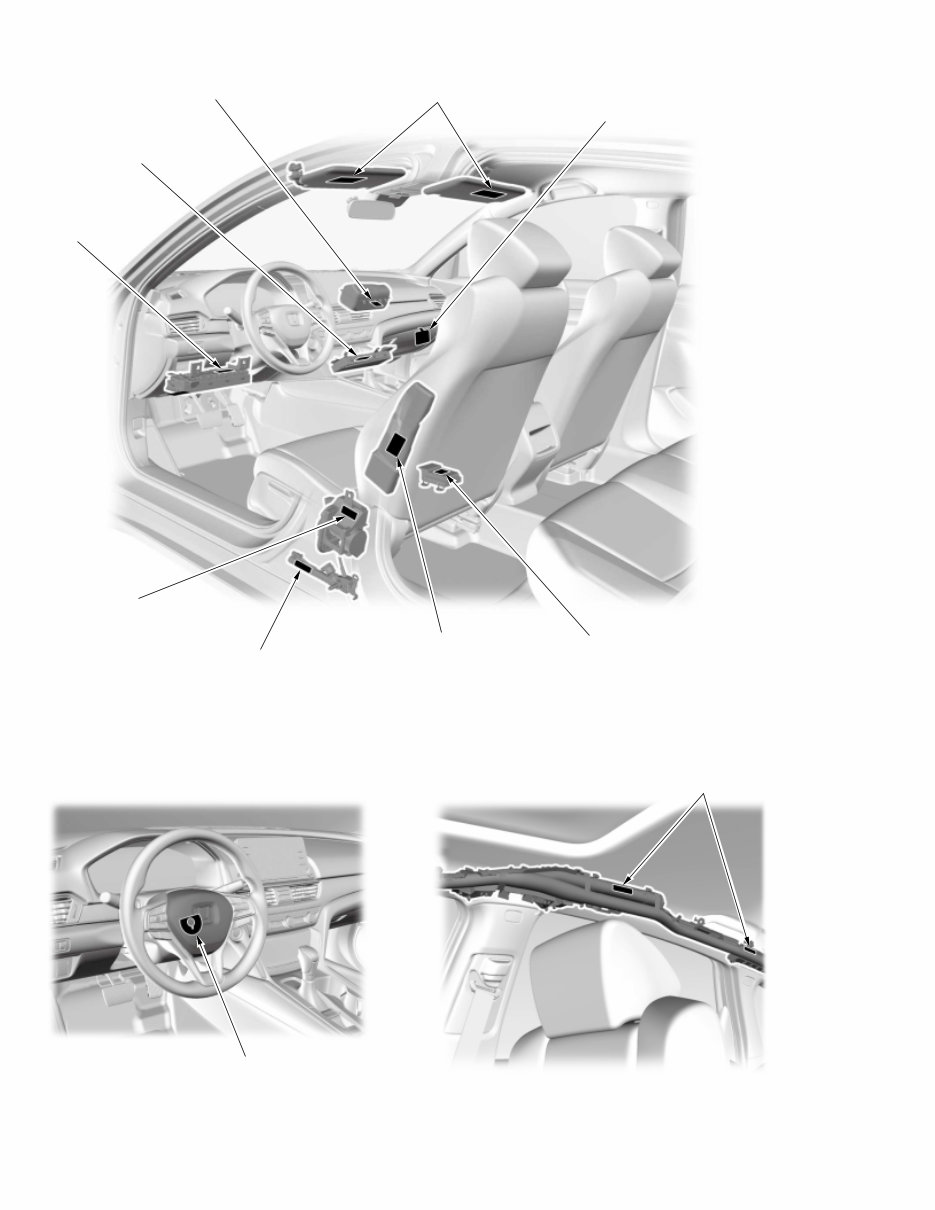
Front Passenger's Compartment:
Steering Wheel: Rear Passenger's Compartment:
Engine Compartment:
SRS WARNING
INFORMATION
SRS UNIT
NOTICE
SEAT BELT TENSIONER
WARNING
SIDE AIRBAG MODULE
DANGER
PASSENGER AIRBAG
MODULE DANGER
SEAT BELT OUTER LAP
TENSIONER WARNING
PASSENGER AIRBAG
WARNING TAG
(CHILD SEAT)
USA models
DRIVER'S KNEE
AIRBAG MODULE
DANGER
PASSENGER'S KNEE AIRBAG
MODULE DANGER
DRIVER AIRBAG
MODULE DANGER
ROOF-SIDE AIRBAG
MODULE DANGER
EMISSION CONTROL
INFORMATION and
ENGINE COOLANT
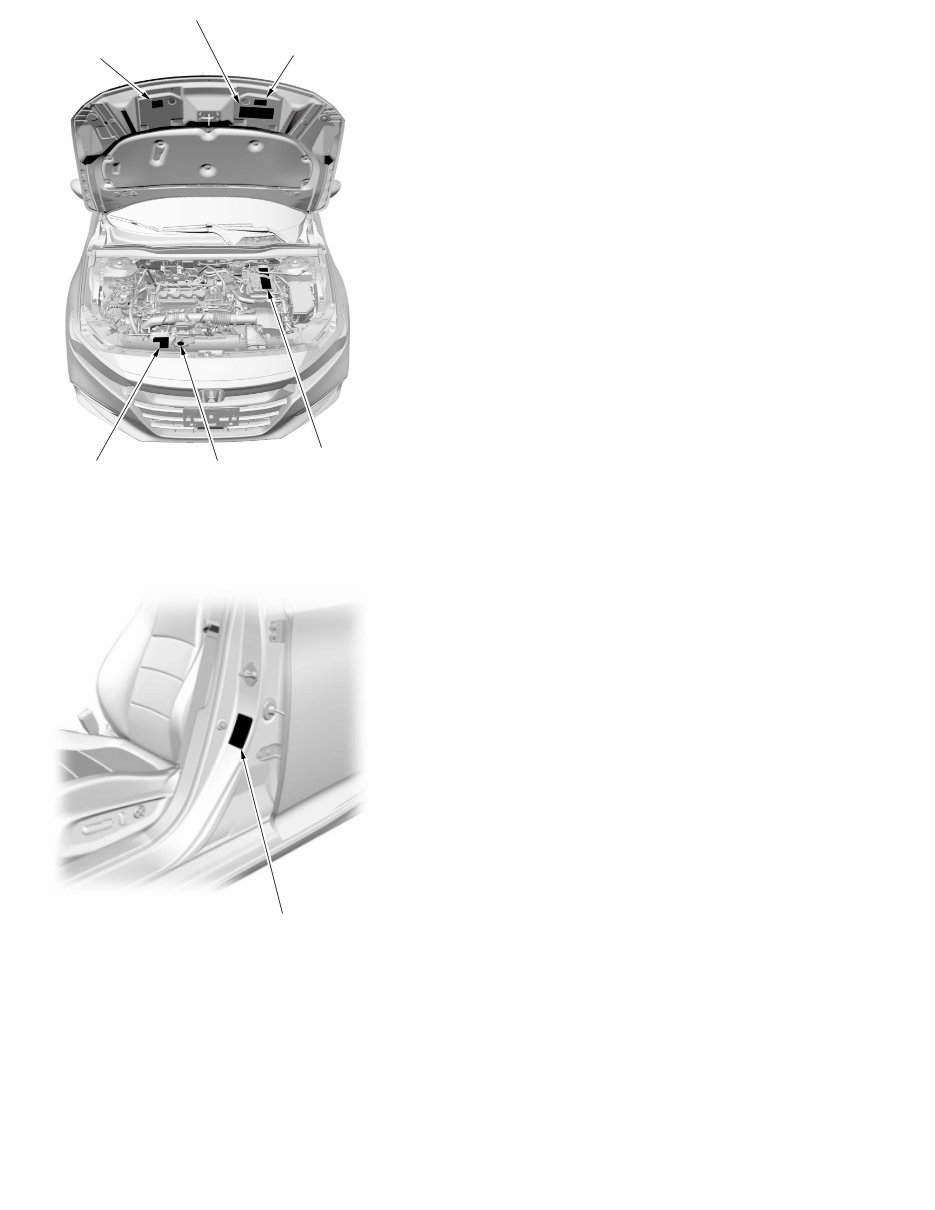
Driver's Doorjamb:
AIR CONDITIONING
INFORMATION
ENGINE COOLANT
INFORMATION CVTF
(HCF-2)
NOTICE
USA models
SUPPORT ROD
WARNING
RADIATOR CAP
DANGER
12 VOLT
BATTERY
DANGER
TIRE INFORMATION
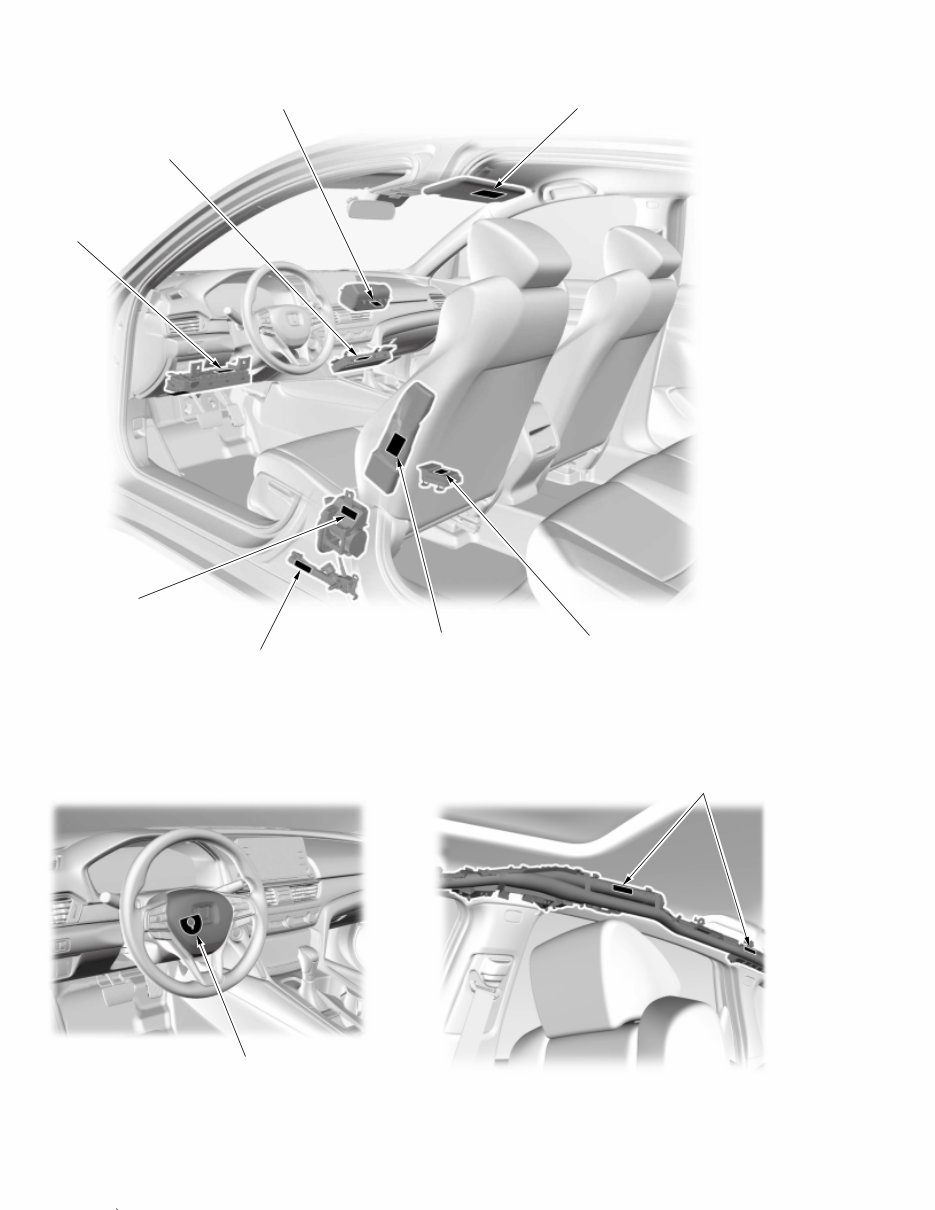
Front Passenger's Compartment:
Steering Wheel: Rear Passenger's Compartment:
Engine Compartment:
SRS WARNING
INFORMATION
SRS UNIT
NOTICE
SEAT BELT TENSIONER
WARNING
SIDE AIRBAG MODULE
DANGER
PASSENGER AIRBAG
MODULE DANGER
SEAT BELT OUTER LAP
TENSIONER WARNING
DRIVER'S KNEE
AIRBAG MODULE
DANGER
PASSENGER'S KNEE AIRBAG
MODULE DANGER
DRIVER AIRBAG
MODULE DANGER
ROOF-SIDE AIRBAG
MODULE DANGER
ENGINE COOLANT
INFORMATION
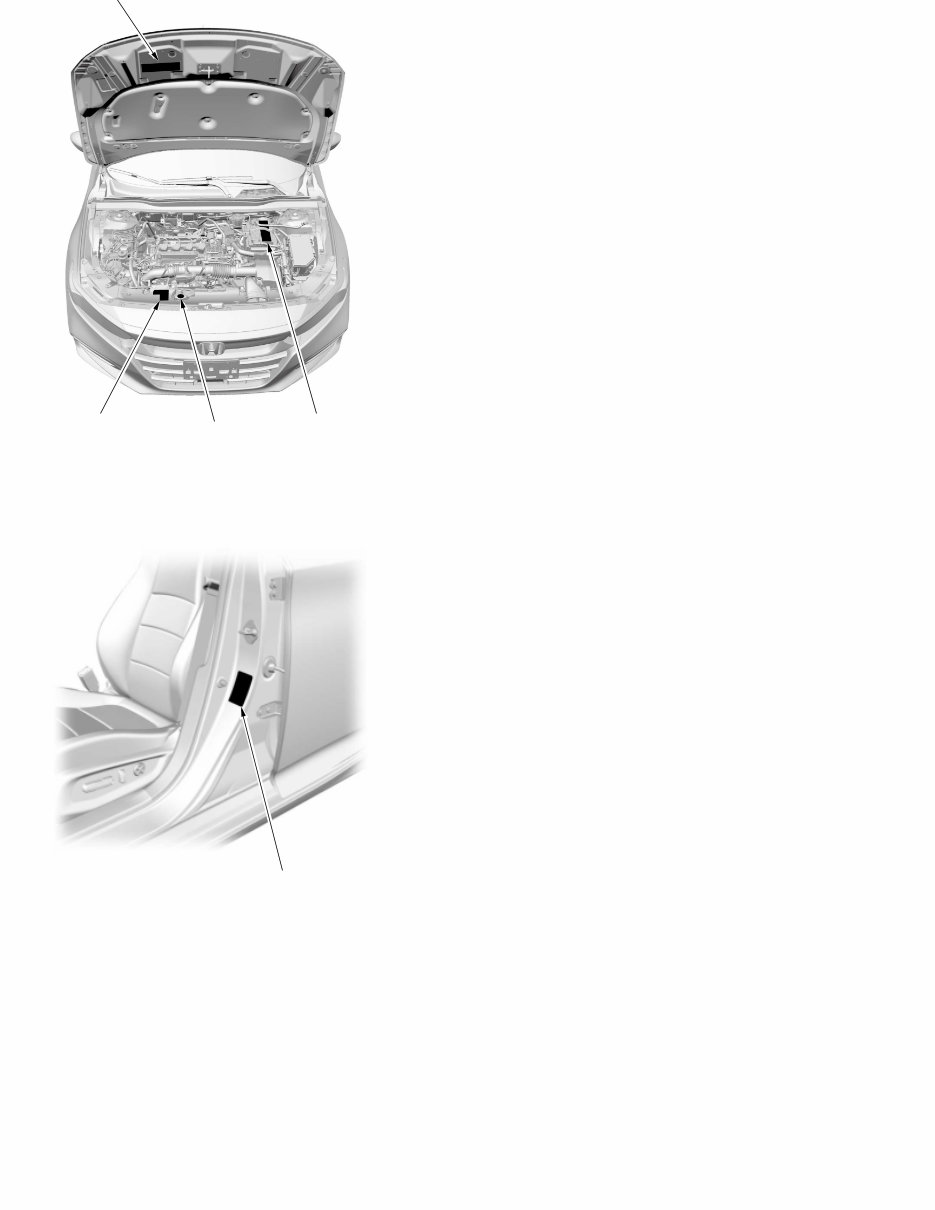
Driver's Doorjamb:
SUPPORT ROD
WARNING
RADIATOR CAP
DANGER
12 VOLT
BATTERY
DANGER
TIRE INFORMATION

Item Measurement Qualification Specification
CLUTCH Type Single plate dry, diaphragm spring
MANUAL
TRANSMISSION (1.5
L engine)
Type Synchronized six-speed forward, one reverse
Primary reduction Direct 1:1
Gear ratio 1st 3.642
2nd 2.080
3rd 1.361
4th 1.023
5th 0.829
6th 0.686
Reverse 3.673
Final reduction Type Single helical gear
Gear ratio 4.105
MANUAL
TRANSMISSION (2.0
L engine)
Type Synchronized six-speed forward, one reverse
Primary reduction Direct 1:1
Gear ratio 1st 3.625
2nd 2.115
3rd 1.529
4th 1.125
5th 0.847
6th 0.686
Reverse 3.757
Final reduction Type Single helical gear
Gear ratio 3.842
AUTOMATIC
TRANSMISSION
(KA/KC)
Type Electronically-controlled automatic, ten-speed forward, one-reverse
Primary reduction Direct 1:1
Gear ratio 1st 5.246
2nd 3.271
3rd 2.185
4th 1.597
5th 1.304
6th 1.000
7th 0.782
8th 0.653
9th 0.581
10th 0.517
Reverse 3.974
Final reduction Type Single helical gear
Gear ratio 3.550
AUTOMATIC
TRANSMISSION
(KX)
Type Electronically-controlled automatic, ten-speed forward, one-reverse
Primary reduction Direct 1:1
Gear ratio 1st 5.246
2nd 3.270
3rd 2.184
4th 1.596
5th 1.303
6th 1.000
7th 0.781
8th 0.653
9th 0.580
10th 0.517
Reverse 3.973
Final reduction Type Single helical gear
Gear ratio 3.550
CVT Type Electronically-controlled continuously variable transmission, multi plate wet sump,
hydraulic
Primary reduction Direct 1:1
Gear ratio Low-High 2.645-0.405
Reverse (KA/KC) 1.859-1.265
Reverse (KX) 1.857-1.264
Final reduction Type Single helical gear
Gear ratio 3.238
STEERING (M/T, A/T) Type Rack and pinion with electrical power-assisted
Overall ratio 17 inch wheels 11.89
19 inch wheels 11.93

Item Measurement Qualification Specification
Turns, lock-to-lock 2.23
Steering wheel diameter 374 mm (14.72 in)
STEERING (CVT) Type Rack and pinion with electrical power-assisted
Overall ratio 17 inch wheels 11.77
19 inch wheels 11.82
Turns, lock-to-lock 2.30
Steering wheel diameter 374 mm (14.72 in)
SUSPENSION Type Front MacPherson strut with stabilizer, coil spring
Rear Independent multilink with stabilizer, coil spring
Shock absorber Front and rear Telescopic, hydraulic, nitrogen gas-filled
TIRES Size See tire information label attached to driver's doorjamb.
BRAKES Type of service brake Front Power-assisted self-adjusting ventilated disc
Rear Power-assisted self-adjusting solid disc
Type of parking brake Electrical parking brake
AIR CONDITIONING Compressor Type Variable capacity, swash plate type
Capacity 140.6 mL (8.57 cu in)/rev
Maximum speed 9,400 rpm
Condenser Type Corrugated fin
Evaporator Type Corrugated fin
Blower Type Ferrite type
Motor type 235 W/12 V
Speed control Infinitely variable
Temperature control Air-mix type
Compressor clutch Type Dry, single plate, poly V-ribbed belt drive
Electrical power
consumption at
68 °F (20 °C)
28 W maximum at 12 V
ELECTRICAL
RATINGS
12 volt battery L2 12 V-60 Ah/20 HR (12 V-48 Ah/5 HR)
LN2 (with auto
idle stop system)
12 V-57 Ah/20 HR (12 V-48 Ah/5 HR)
LN3 12 V-70 Ah/20 HR (12 V-56 Ah/5 HR)
Fuses Under-hood
fuse/relay box
125 A, 70 A, 60 A, 40 A, 30 A, 20 A, 15 A, 10 A, 7.5 A
Under-dash
fuse/relay box
20 A, 10 A, 7.5 A
Fuse/relay holder
(with auto idle
stop system)
15 A, 7.5 A
Light bulbs Headlight low
beam
LED
Headlight high
beam
12 V-60 W (HB3)
LED
Front fog lights LED
Front
parking/daytime
running lights
LED
Front side marker
lights
LED
Front turn signal
lights
LED
Side turn signal
lights
LED
Rear turn signal
lights
12 V-21 W
Brake
lights/taillights
LED
Inner taillights LED
Rear side marker
lights
LED
High mount brake
light
LED
Back-up lights 12 V-16 W
License plate light LED
Ceiling light 12 V-8 W
Front individual
map lights
12 V-8 W
Trunk light 12 V-5 W

Item Measurement Qualification Specification
Ambient light LED
Vanity mirror
lights
14 V-1.4 W
Door inner handle
lights
LED
Console box light LED
Center pocket
light
LED
Door courtesy
lights
12 V-3.8 W
If the vehicle needs to be towed, call a professional towing service.
Improper towing preparation will damage the transmission. Follow the below procedure exactly. If you cannot shift the transmission or start the engine,
the vehicle must be transported on a flat-bed tow truck.
Trying to lift or tow the vehicle by the bumpers will cause serious damage. The bumpers are not designed to support the vehicle's weight.
It is best to tow the vehicle no farther than 50 miles (80 km), and keep the vehicle speeds below 35 mph (55 km/h) except when loading on a flat-bed
tow truck.
For vehicles equipped with the engine start/stop button
If the 12 volt battery is discharged, the ACCESSORY mode cannot be selected by pushing the engine start/stop button. Charge or replace the 12 volt
battery to unlock the steering wheel before towing.
If the ACCESSORY mode cannot be selected because of in an electrical problem other than a discharged 12 volt battery, the flat-bed tow truck is the
only way to transport the vehicle.
For vehicles equipped with the electric parking brake
If the 12 volt battery is discharged, the electric parking brake cannot be canceled by pushing the electric parking brake/automatic brake hold switch.
Charge or replace the 12 volt battery to release the parking brake before towing.
If the electrical parking brake is disabled in an electrical problem or severe vehicle damage, the vehicle must be transported on a flat-bed tow truck.
For vehicles equipped with the neutral position holding mode
Neutral Position Holding Mode is automatically canceled after several minutes.
For vehicles equipped with the park lock
If the transmission cannot shift from the P position/mode to the N position/mode because of an electrical problem or severe vehicle damage, shift to the
N position/mode manually, and transport the vehicle by a flat-bed tow truck. See more information on "How to Release Park Lock."
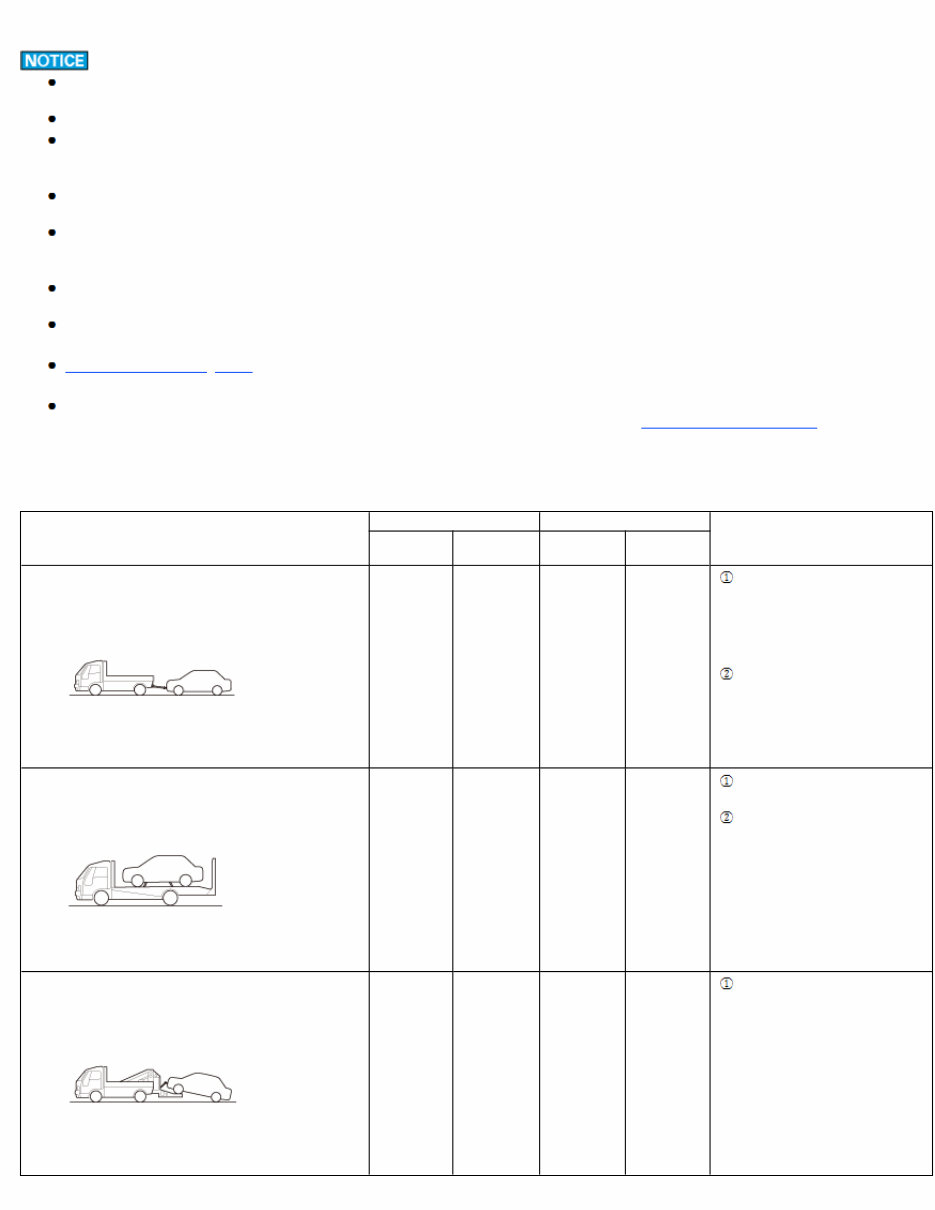
Emergency Towing
There are three popular methods of towing a vehicle.
Towing Method Transmission Type Shift Position Notes
M/T CVT and
A/T
M/T CVT and
A/T
Cable-type Equipment ○ ○ Neutral N
Check the transmission fluid
amount and for leaks. If
transmission fluid leaks are
found or fluid amount is low, the
vehicle must be transported by
a flat-bed tow truck.
Turn the vehicle to the
ACCESSORY or ON mode,
and then release the parking
brake.
Flat-bed Tow Truck Equipment ○ ○ Neutral P
Secure the vehicle securely on
a flat-bed tow truck.
Apply the parking brake.
Front Wheel Lift Equipment ○ ○ Neutral N
Turn the vehicle to the
ACCESSORY or ON mode,
and then release the parking
brake.
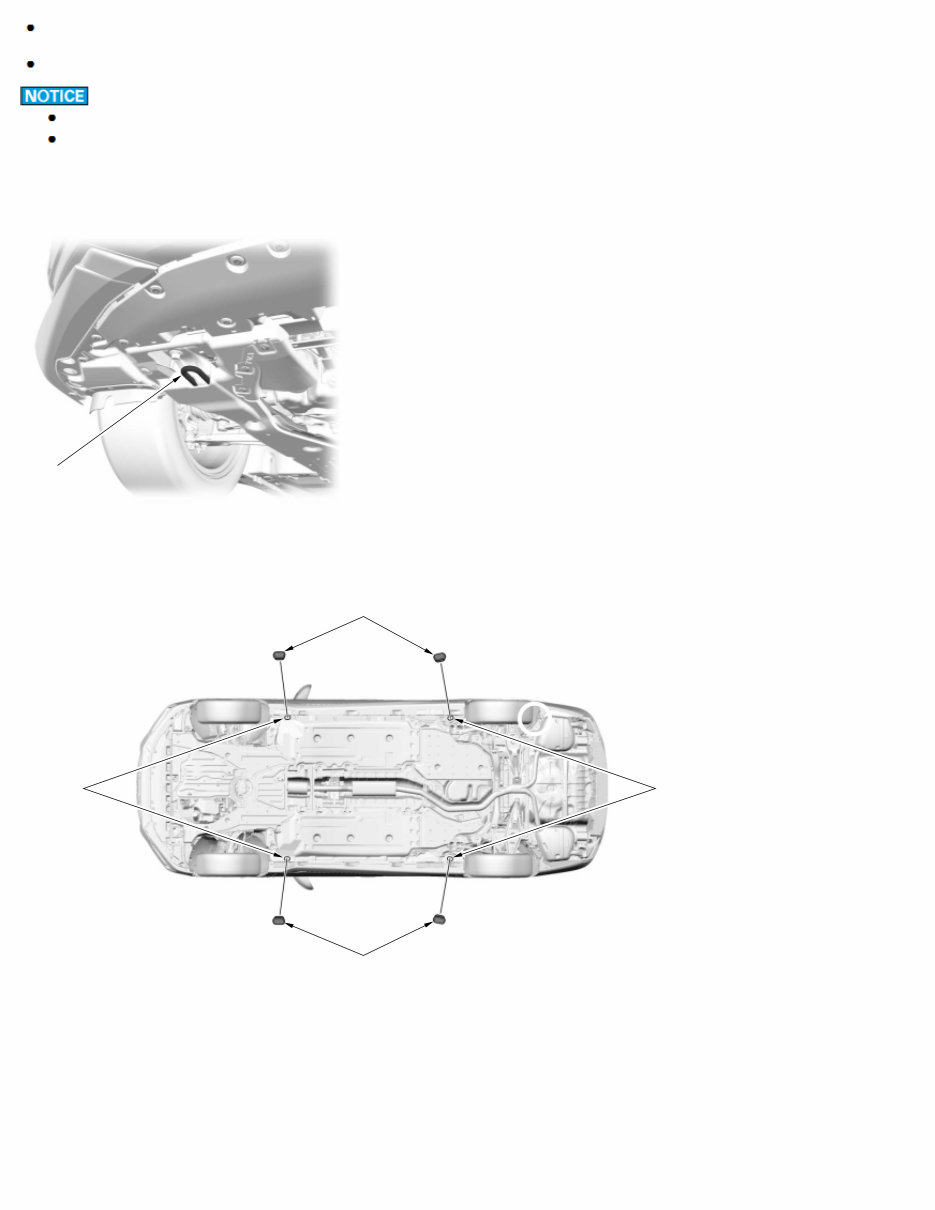
Towing Hook/Tie Down Hook Slots Locations
The front towing hook can be used with a winch to pull the vehicle onto the flat-bed tow truck, and the front/rear tie down hook slots can be used to secure
the vehicle to the flat-bed tow truck.
The tie down hook slots are covered with rubber plugs. Be sure to reinstall them after use.
To avoid damage to the vehicle, use the towing hook for straight flat ground towing only. Do not tow on an angle.
This vehicle is not equipped with a rear towing hook. Do not use the rear bumper or the rear tie down hook slots as a towing hook. It will cause a severe
damage of rear of the vehicle.
Front Towing Hook:
A: Front towing hook
Tie down hook slots:
B: Front tie down hook slots
C: Rear tie down hook slots
D: Rubber plugs: Be sure to reinstall the plugs after use.
A
B C
D
D
You're Reading a Preview
What's Included?
Lifetime Access
Fast Download Speeds
Online & Offline Access
Access PDF Contents & Bookmarks
Full Search Facility
Print one or all pages of your manual
$47.99
Viewed 80 Times Today


Secure transaction
What's Included?
Lifetime Access
Fast Download Speeds
Online & Offline Access
Access PDF Contents & Bookmarks
Full Search Facility
Print one or all pages of your manual
$47.99
The Honda Accord 2018 Repair Manual is an essential resource for maintaining and repairing your vehicle. This comprehensive guide offers detailed instructions, diagrams, and specifications to help you perform a wide range of tasks, from basic maintenance to complex repairs.
Key Features:
- Step-by-step repair procedures
- Detailed illustrations and diagrams
- Complete torque specifications
- Maintenance schedules
- Troubleshooting guides
- Electrical wiring diagrams
- Component locations
Whether you are a professional mechanic or a DIY enthusiast, the Honda Accord 2018 Repair Manual provides the information you need to ensure your vehicle runs smoothly and reliably.


