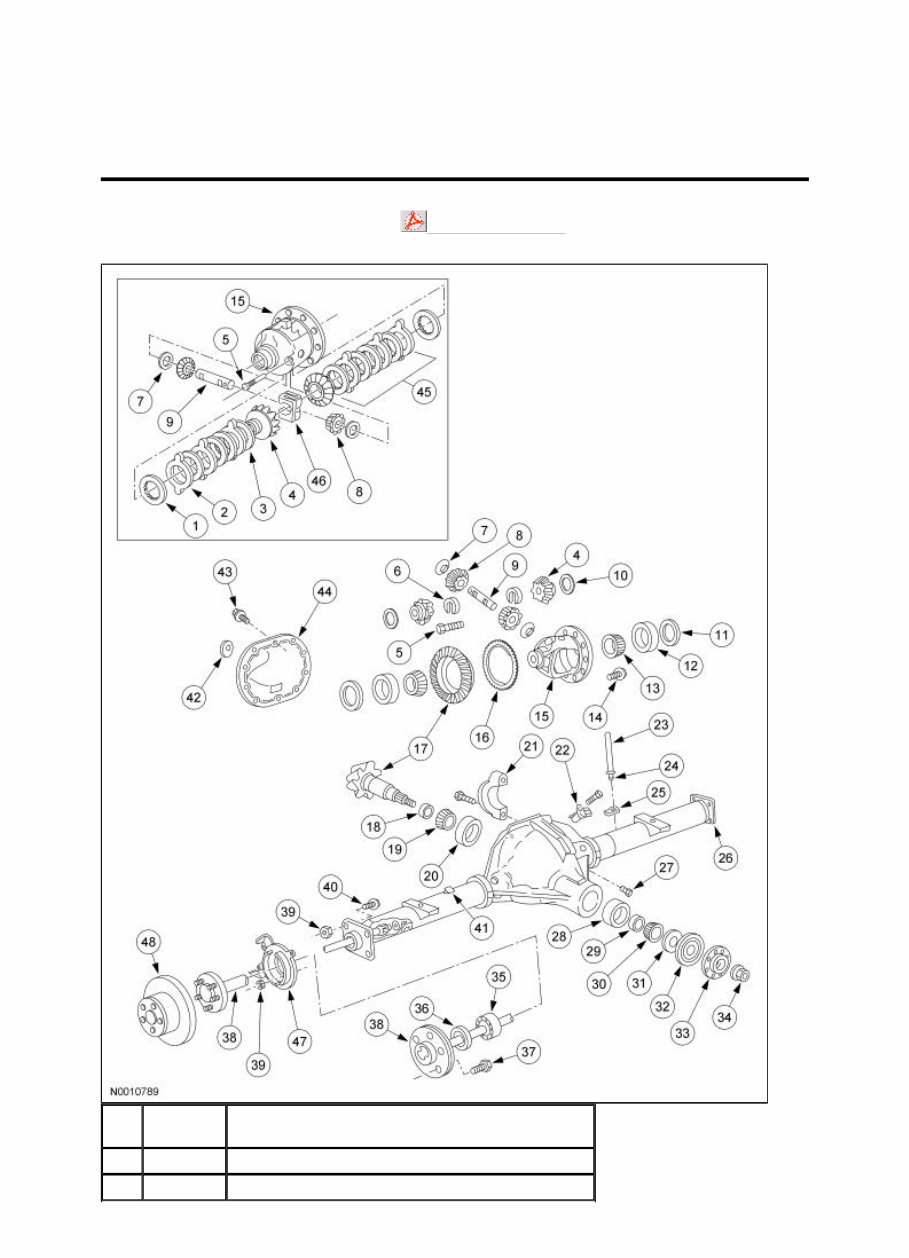
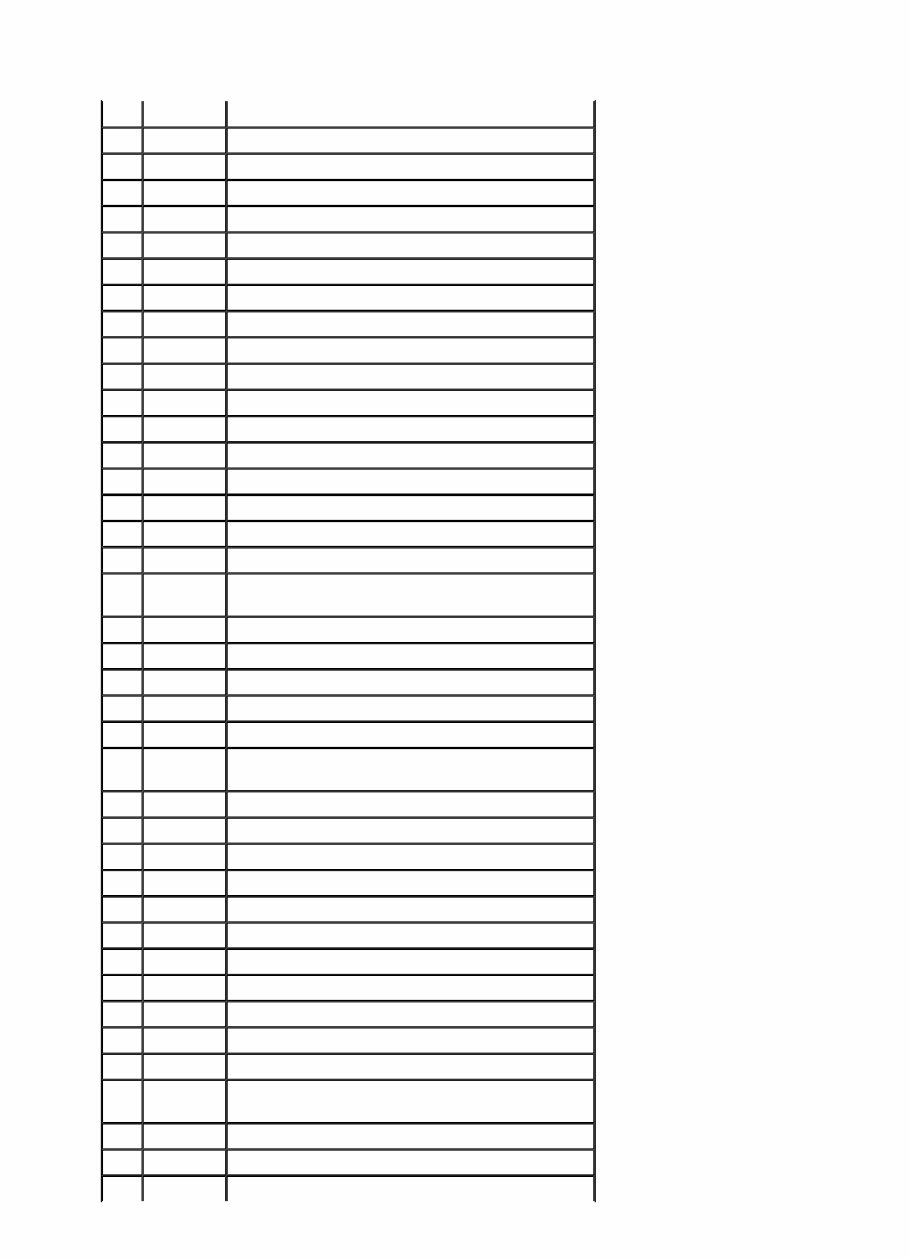
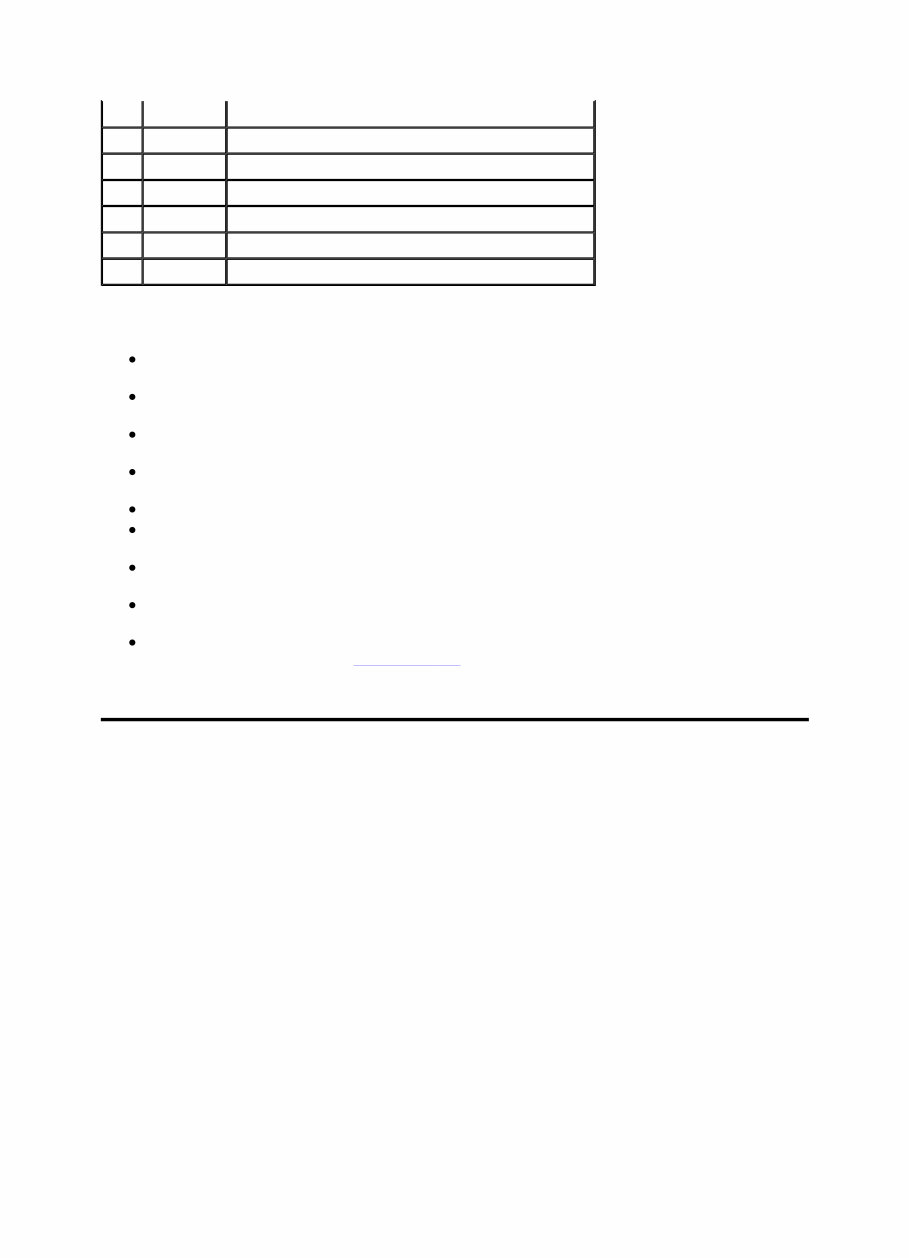
The axle assembly has the following features: An integral-type housing hypoid gear design (center of the pinion set below the centerline of the ring gear). The hypoid ring gear and pinion consists of a ring gear and an overhung drive pinion which is supported by 2 opposed tapered roller bearings. Drive pinion bearing preload is maintained by a drive pinion collapsible spacer on the drive pinion shaft and adjusted by the pinion nut. The axle housing consists of a cast center section with 2 steel tube assemblies and a stamped differential housing cover. The differential housing cover uses silicone sealant as a gasket. The differential pinion shaft is retained by a threaded differential pinion shaft lock bolt assembled to the differential assembly. The differential assembly is mounted in the axle housing between 2 opposing differential bearings that are retained in the axle housing by removable differential bearing caps. Differential bearing preload and differential ring and pinion backlash are adjusted by differential bearing shims located between the differential bearing cups and the axle housing. Axle identification is on an embossed metal tag bolted to the differential housing cover. For additional information, refer to Section 205 - 00 . 42 — Axle identification tag (part of 4001) 43 4346 Differential housing cover bolt (12 required) 44 4033 Differential housing cover 45 4947 Differential clutch pack 46 4214 Differential clutch spring 47 2C220 Rear wheel disc brake adapter (2 required) 48 2C206 Brake disc (2 required) Page 3 of 3 2005 F-150 Workshop Manual
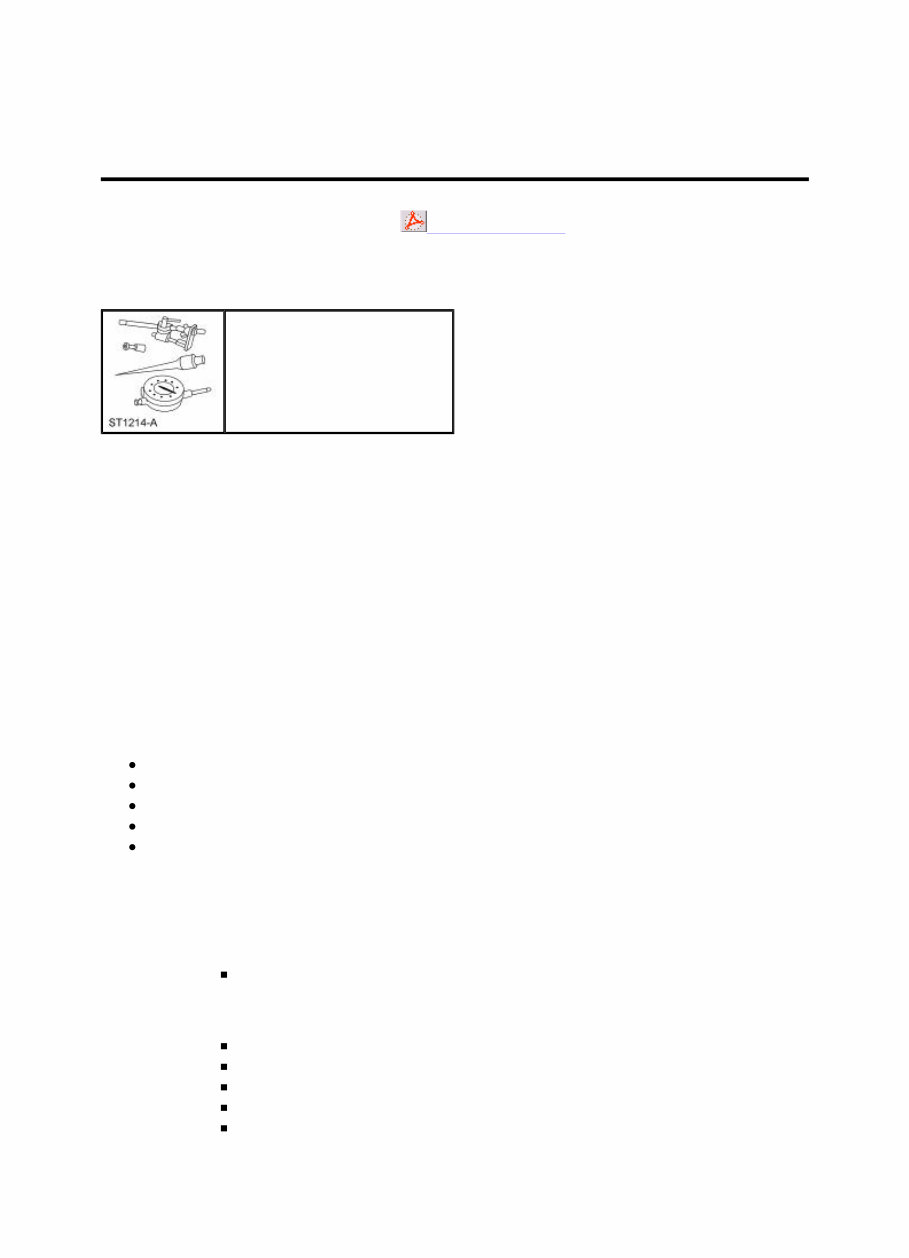
Rear Drive Axle and Differential Printable View (224 KB) Inspection and Verification The technician should have a thorough knowledge of driveline system operation and accepted general driveline guidelines to detect any problems. A gear driven unit will produce a certain amount of noise. Some noise is acceptable and audible at certain speeds or under various driving conditions. Certain conditions, such as road conditions and weather, will amplify normal vehicle noise. Certain rear axle and driveline concern symptoms are also common to the engine, transmission, rear wheel bearings and tire. For this reason, be sure the cause of the concern is in the axle before repairing or installing any axle components. The following is a guide to diagnose a driveline concern: Verify and document the customer concern. Perform a preliminary investigation. Road test the vehicle. Find the cause of the problem. Inspect the components. 1. Verify and document the customer concern. 1. When was it first noticed? 2. Did it appear suddenly or gradually? 3. Did anything unusual occur that would coincide with it or precede it? 4. Has the driveline system been repaired before or new components installed? Check the vehicle service record. Note any repairs other than driveline, such as brakes or suspension. 5. Are there any special conditions affecting the concern or will alter the concern? For example, road speed type of road drive mode temperature vehicle loaded or unloaded 6. Is the condition constant or intermittent? Can the concern be duplicated at any time? 7. Check for TSBs, SSM and OASIS messages. SECTION 205-02B: Rear Drive Axle/Differential — Ford 9.75-Inch Ring Gear 2005 F-150 Workshop Manual DIAGNOSIS AND TESTING Procedure revision date: 01/27/2005 Special Tool(s) Dial Indicator Gauge with Holding Fixture 100-002 (TOOL-4201-C) or equivalent Page 1 of 8 2005 F-150 Workshop Manual
2. NOTE: If the inspection reveals an obvious concern, repair the vehicle. Do a preliminary investigation. Visually inspect for obvious signs of damage. 1. Inspect the driveshaft: for build up of any foreign material. for damage, such as a bent tube or missing weights. U-joints or flex couplers for wear or damage. 2. Inspect the axle: for signs of leakage at the drain or fill plug, differential seal, vent or halfshaft seals. a plugged vent or vent tube will cause a leak. for damage, such as cracks, bent halfshafts or dented rear cover. for missing fasteners. 3. Inspect other suspect components/systems: inspect the halfshaft assemblies for damaged CV joints or torn CV boots inspect the suspension for broken springs, damaged shock absorbers and worn suspension bushings. inspect the rear brake components — lines, cables and calipers. inspect the tires; are they in good condition and do they match? 3. NOTE: A road test is necessary for any customer concern of noise or vibration. Road test the vehicle. 1. During the road test, use the following driving methods to diagnose the problem. Is the concern most noticeable: from a stop? on shifts from REVERSE to DRIVE? on turns? sweeping type turn. tight turn (to the stop). in DRIVE? accelerating the vehicle, definite throttle depression, applying engine torque? in CRUISE? maintain a constant speed with the throttle applied? in COAST? decelerating with the throttle closed? 2. Record when the concern occurs. Write down the kph (mph) range at which the noise/vibration occurs. 4. Find the cause of the problem. 1. Compare the inspection and road test results with the following chart. 2. Use the following diagnostic routine chart to identify the probable cause and know what corrective actions should be taken to repair the component/vehicle, and to prevent a reoccurrence. Diagnostic Routine Chart Condition Action · Fluid loss · GO to Diagnostic Routine — Fluid Loss · Noise louder on turns (sweeping turn) · GO to Diagnostic Routine — Noise Louder On Turns (Sweeping) · Axle noise (growl) a in tight turn · GO to Diagnostic Routine — Noise (Growl) In Tight Turn · Axle noise (chatter/shudder) a in tight turn, limited slip differential · GO to Diagnostic Routine — Noise (Chatter/Shudder) In Tight Turns, Limited Slip Differential · Axle noise (whine) a in all or more than · GO to Diagnostic Routine — Noise (Whine) Page 2 of 8 2005 F-150 Workshop Manual
This complete workshop service repair manual for the Ford Orion covers every service and repair procedure you will need. It is useful for both professional mechanics and DIY enthusiasts.
Description: This manual provides easy-to-follow step-by-step instructions and pictures for all areas of servicing and repairs, allowing you to save money by doing your own repairs. Once downloaded, it is yours to keep forever. You can print out specific pages, chapters, or the entire manual. It is also compatible with tablets and smartphones.
Models Covered: All models, engines, trim, and transmission types are included.
Contents: This high-quality manual covers all repair procedures from A to Z, including every repair and service procedure.
Computer Requirements: This manual is compatible with all PC and MAC computers, tablets, and mobile phones. The only required software is Adobe Reader, which is usually pre-installed or can be downloaded for free.
Delivery: The manual will be instantly emailed to the address used during checkout after receiving payment by Visa, MasterCard, or PayPal. Customer satisfaction is guaranteed.
Recently Viewed
5,521,897Happy Clients
2,594,462eManuals
1,120,453Trusted Sellers
15Years in Business
Price:
Actual Price:
Ford Orion Complete Workshop Service Repair Manual 1983 1984 1985 1986 1987 1988 1989 1990 1991 1992 1993



 Lifetime Access