John Deere GT242/GT262/GT275 Lawn and Garden Tractors Technical Manual
What's Included?
Lifetime Access
Fast Download Speeds
Online & Offline Access
Access PDF Contents & Bookmarks
Full Search Facility
Print one or all pages of your manual
TECHNICAL MANUAL Litho in U.S.A John Deere Worldwide Commercial and Consumer Equipment Division GT242, GT262, and GT275 Lawn and Garden Tractors TM1582 (15JUL97) Replaces TM1582 (22DEC94) and TM1515 (01SEPT92)
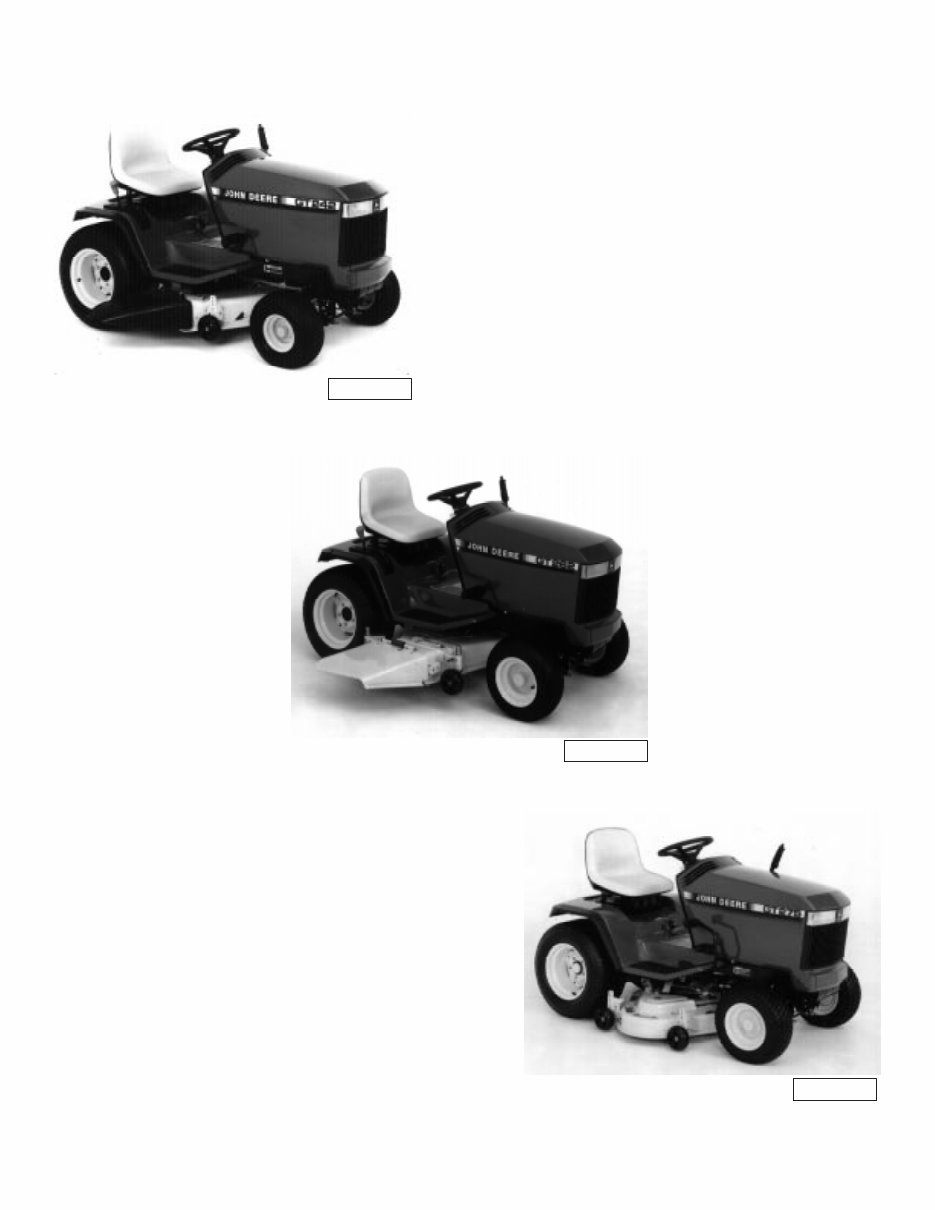
M85683 M85682 M85684 Model GT242 Model GT262 Model GT275
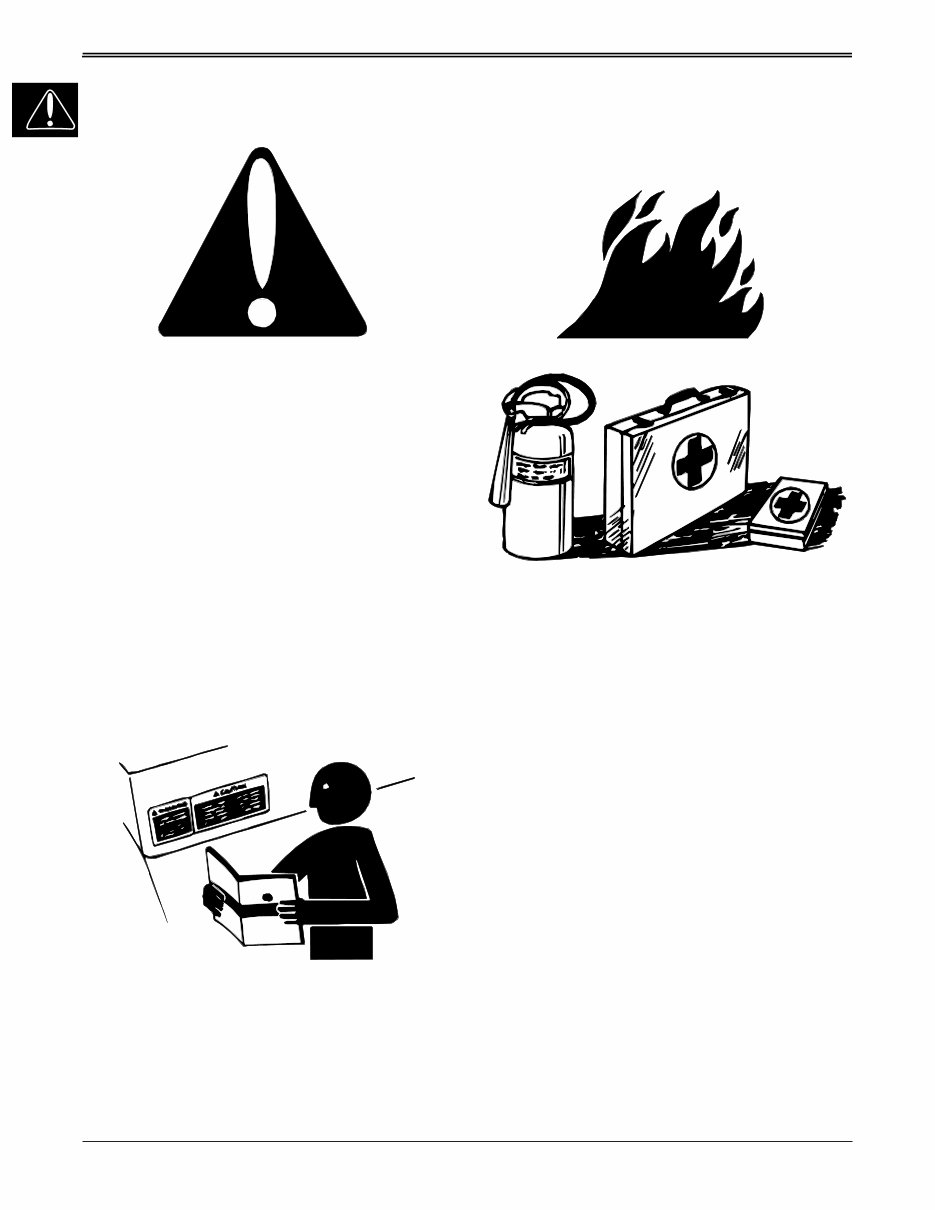
SAFETY 1-2 7/17/97 RECOGNIZE SAFETY INFORMATION This is the safety-alert symbol. When you see this sym- bol on your machine or in this manual, be alert to the po- tential for personal injury. Follow recommended precautions and safe servicing practices. Understand Signal Words A signal word—DANGER, WARNING, or CAUTION—is used with the safety-alert symbol. DANGER identifies the most serious hazards. DANGER or WARNING safety signs are located near specific hazards. General precautions are listed on CAUTION safety signs. CAUTION also calls attention to safety messages in this manual. REPLACE SAFETY SIGNS Replace missing or damaged safety signs. See the ma- chine operator’s manual for correct safety sign place- ment. HANDLE FLUIDS SAFELY-AVOID FIRES Be Prepared For Emergencies When you work around fuel, do not smoke or work near heaters or other fire hazards. Store flammable fluids away from fire hazards. Do not incinerate or puncture pressurized containers. Make sure machine is clean of trash, grease, and de- bris. Do not store oily rags; they can ignite and burn sponta- neously. Be prepared if a fire starts. Keep a first aid kit and fire extinguisher handy. Keep emergency numbers for doctors, ambulance ser- vice, hospital, and fire department near your telephone.
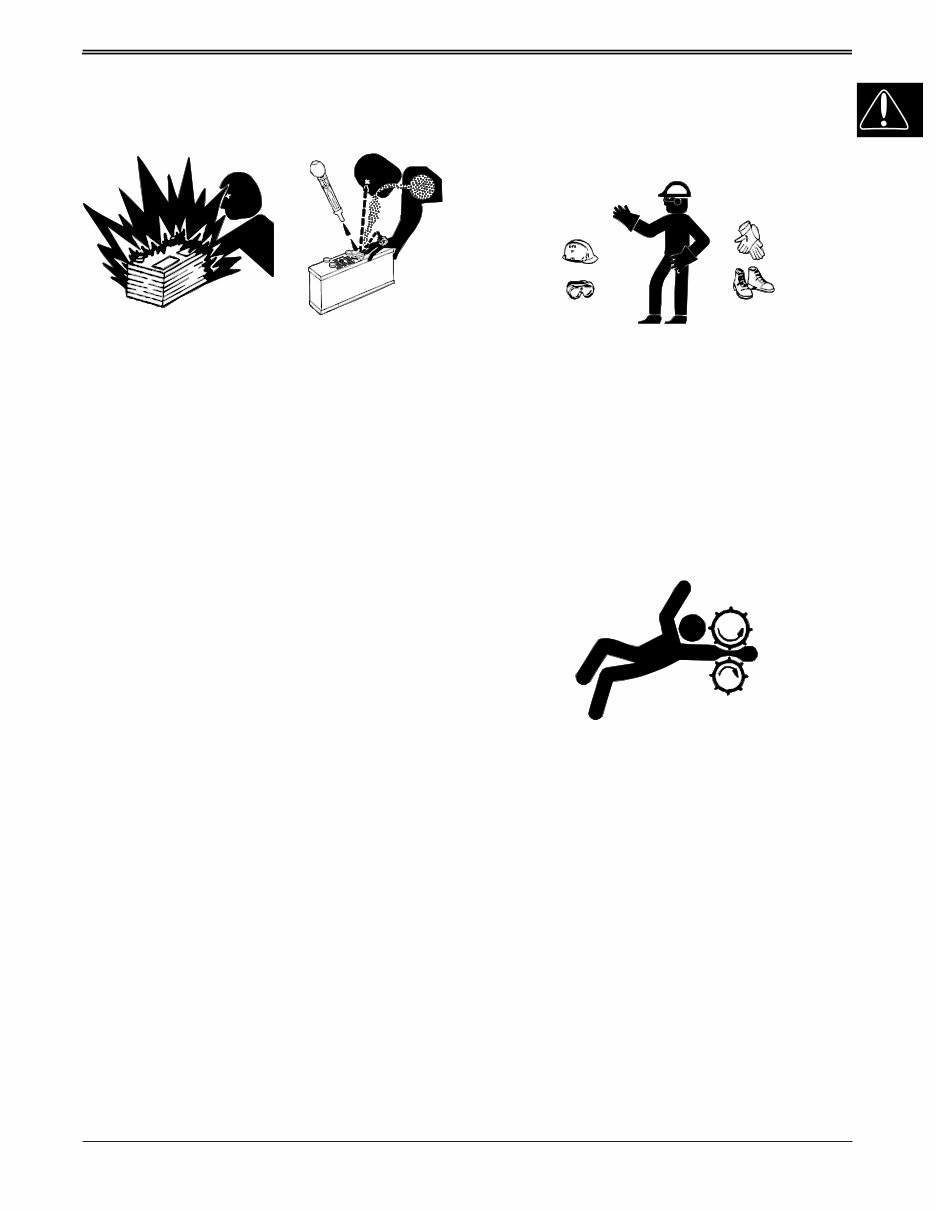
SAFETY 7/17/97 1-3 USE CARE IN HANDLING AND SERVICING BATTERIES Prevent Battery Explosions • Keep sparks, lighted matches, and open flame away from the top of battery. Battery gas can explode. • Never check battery charge by placing a metal object across the posts. Use a volt-meter or hydrometer. • Do not charge a frozen battery; it may explode. Warm battery to 16°C (60°F). Prevent Acid Burns • Sulfuric acid in battery electrolyte is poisonous. It is strong enough to burn skin, eat holes in clothing, and cause blindness if splashed into eyes. • Avoid acid burns by: 1. Filling batteries in a well-ventilated area. 2. Wearing eye protection and rubber gloves. 3. Avoiding breathing fumes when electrolyte is added. 4. Avoiding spilling or dripping electrolyte. 5. Use proper jump start procedure. • If you spill acid on yourself: 1. Flush your skin with water. 2. Apply baking soda or lime to help neutralize the acid. 3. Flush your eyes with water for 10–15 minutes. 4. Get medical attention immediately. • If acid is swallowed: 1. Drink large amounts of water or milk. 2. Then drink milk of magnesia, beaten eggs, or vegetable oil. 3. Get medical attention immediately. USE SAFE SERVICE PROCEDURES Wear Protective Clothing Wear close fitting clothing and safety equipment appro- priate to the job. Prolonged exposure to loud noise can cause impair- ment or loss of hearing. Wear a suitable hearing protec- tive device such as earmuffs or earplugs to protect against objectionable or uncomfortable loud noises. Operating equipment safely requires the full attention of the operator. Do not wear radio or music headphones while operating machine. Service Machines Safely Tie long hair behind your head. Do not wear a necktie, scarf, loose clothing, or necklace when you work near machine tools or moving parts. If these items were to get caught, severe injury could result. Remove rings and other jewelry to prevent electrical shorts and entanglement in moving parts. Use Proper Tools Use tools appropriate to the work. Makeshift tools and procedures can create safety hazards. Use power tools only to loosen threaded parts and fasteners. For loosen- ing and tightening hardware, use the correct size tools. DO NOT use U.S. measurement tools on metric fasten- ers. Avoid bodily injury caused by slipping wrenches. Use only service parts meeting John Deere specifica- tions.
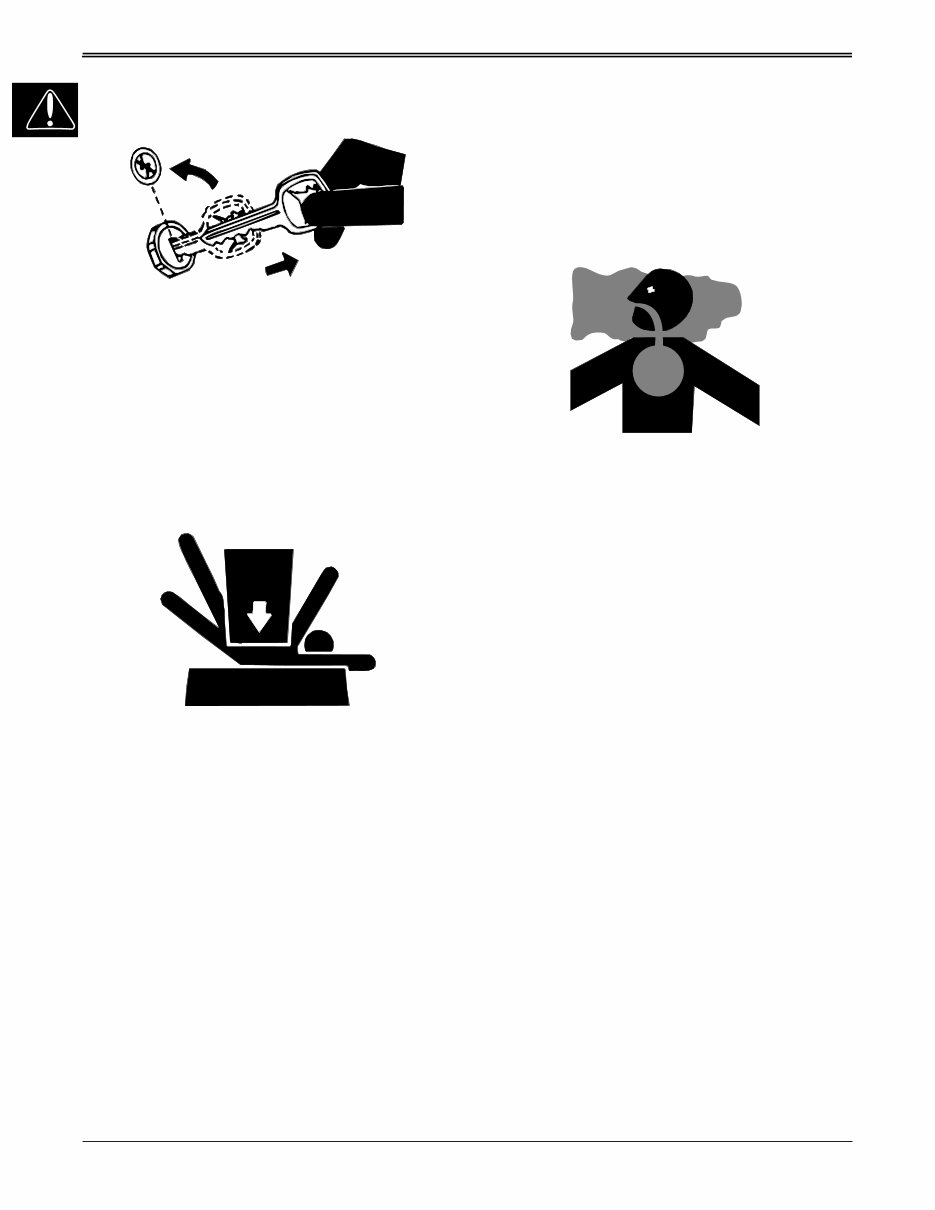
SAFETY 1-4 7/17/97 Park Machine Safely Before working on the machine: 1. Lower all equipment to the ground. 2. Stop the engine and remove the key. 3. Disconnect the battery ground strap. 4. Hang a “DO NOT OPERATE” tag in operator station. Support Machine Properly And Use Proper Lifting Equipment If you must work on a lifted machine or attachment, se- curely support the machine or attachment. Do not support the machine on cinder blocks, hollow tiles, or props that may crumble under continuous load. Do not work under a machine that is supported solely by a jack. Follow recommended procedures in this manual. Lifting heavy components incorrectly can cause severe injury or machine damage. Follow recommended pro- cedure for removal and installation of components in the manual. Work In Clean Area Before starting a job: 1. Clean work area and machine. 2. Make sure you have all necessary tools to do your job. 3. Have the right parts on hand. 4. Read all instructions thoroughly; do not attempt shortcuts. Illuminate Work Area Safely Illuminate your work area adequately but safely. Use a portable safety light for working inside or under the ma- chine. Make sure the bulb is enclosed by a wire cage. The hot filament of an accidentally broken bulb can ig- nite spilled fuel or oil. Work In Ventilated Area Engine exhaust fumes can cause sickness or death. If it is necessary to run an engine in an enclosed area, re- move the exhaust fumes from the area with an exhaust pipe extension. If you do not have an exhaust pipe extension, open the doors and get outside air into the area. WARNING: California Proposition 65 Warning Gasoline engine exhaust from this product contains chemicals known to the State of California to cause can- cer, birth defects, or other reproductive harm. Remove Paint Before Welding Or Heating Avoid potentially toxic fumes and dust. Hazardous fumes can be generated when paint is heated by weld- ing, soldering, or using a torch. Do all work outside or in a well ventilated area. Dispose of paint and solvent properly. Remove paint before welding or heating: If you sand or grind paint, avoid breathing the dust. Wear an approved respirator. If you use solvent or paint stripper, remove stripper with soap and water before welding. Remove solvent or paint stripper containers and other flammable material from area. Allow fumes to disperse at least 15 minutes before welding or heating.
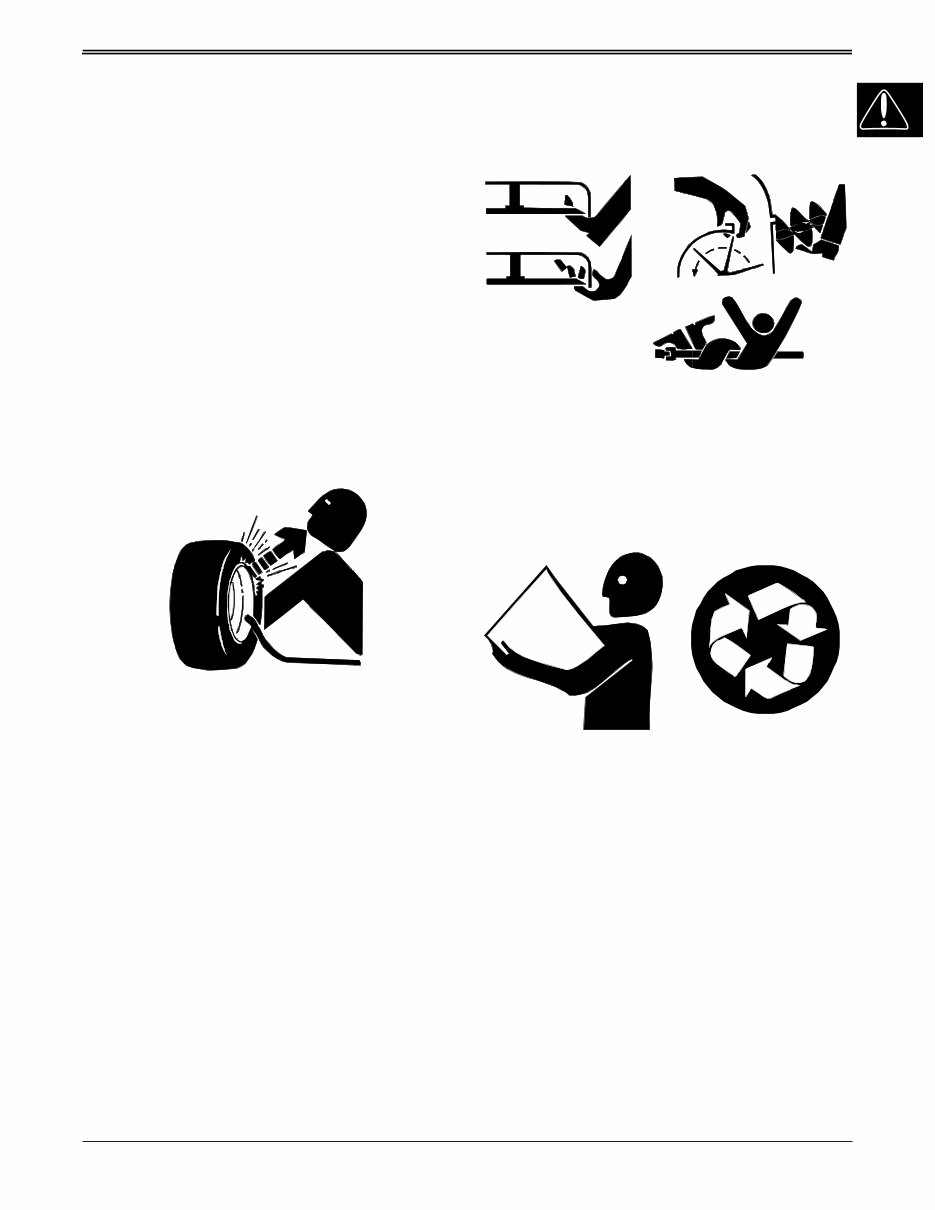
SAFETY 7/17/97 1-5 Avoid Harmful Asbestos Dust Avoid breathing dust that may be generated when han- dling components containing asbestos fibers. Inhaled asbestos fibers may cause lung cancer. Components in products that may contain asbestos fi- bers are brake pads, brake band and lining assemblies, clutch plates, and some gaskets. The asbestos used in these components is usually found in a resin or sealed in some way. Normal handling is not hazardous as long as airborne dust containing asbestos is not generated. Avoid creating dust. Never use compressed air for cleaning. Avoid brushing or grinding material containing asbestos. When servicing, wear an approved respira- tor. A special vacuum cleaner is recommended to clean asbestos. If not available, apply a mist of oil or water on the material containing asbestos. Keep bystanders away from the area. SERVICE TIRES SAFELY Explosive separation of a tire and rim parts can cause serious injury or death. Do not attempt to mount a tire unless you have the prop- er equipment and experience to perform the job. Always maintain the correct tire pressure. Do not inflate the tires above the recommended pressure. Never weld or heat a wheel and tire assembly. The heat can cause an in- crease in air pressure resulting in a tire explosion. Weld- ing can structurally weaken or deform the wheel. When inflating tires, use a clip-on chuck and extension hose long enough to allow you to stand to one side and NOT in front of or over the tire assembly. Use a safety cage if available. Check wheels for low pressure, cuts, bubbles, damaged rims or missing lug bolts and nuts. AVOID INJURY FROM ROTATING BLADES, AUGERS AND PTO SHAFTS Keep hands and feet away while machine is running. Shut off power to service, lubricate or remove mower blades, augers or PTO shafts. HANDLE CHEMICAL PRODUCTS SAFELY Direct exposure to hazardous chemicals can cause se- rious injury. Potentially hazardous chemicals used with John Deere equipment include such items as lubricants, coolants, paints, and adhesives. A Material Safety Data Sheet (MSDS) provides specific details on chemical products: physical and health haz- ards, safety procedures, and emergency response techniques. Check the MSDS before you start any job using a hazardous chemical. That way you will know ex- actly what the risks are and how to do the job safely. Then follow procedures and recommended equipment.
SAFETY 1-6 7/17/97 Dispose of Waste Properly Improperly disposing of waste can threaten the environ- ment and ecology. Potentially harmful waste used with John Deere equipment include such items as oil, fuel, coolant, brake fluid, filters, and batteries. Use leakproof containers when draining fluids. Do not use food or bev- erage containers that may mislead someone into drink- ing from them. Do not pour waste onto the ground, down a drain, or into any water source. Inquire on the proper way to recycle or dispose of waste from your lo- cal environmental or recycling center, or from your John Deere dealer. LIVE WITH SAFETY Before returning machine to customer, make sure ma- chine is functioning properly, especially the safety sys- tems. Install all guards and shields.
This technical manual covers all versions of John Deere GT242, GT262, and GT275 Lawn and Garden Tractors. It is designed to provide detailed guidance for repairs, maintenance, and troubleshooting specific to these models.
John Deere GT242 Lawn and Garden Tractors
John Deere GT262 Lawn and Garden Tractors
John Deere GT275 Lawn and Garden Tractors
Our comprehensive manual includes repair instructions, parts catalogs, and maintenance procedures essential for ensuring the optimal performance of your machine. Within this technical manual, you will find in-depth coverage of the following topics:
General Information
Routine Maintenance
Engine Removal and Installation
Fuel System
Lubrication and Cooling System
Engine Specifications
Transmission, Drive Chain & Sprockets
Steering System
Shocks
Body Work
Intake & Exhaust
Electrical System
Advanced Troubleshooting
And much more! With our digital manual, simply locate the section you need, print it out if necessary, and begin your repair or maintenance work without the hassle of a bulky paper manual.
If you're out in the field with only your smartphone at hand, you can quickly access the information you need to diagnose and resolve issues, minimizing downtime and keeping your work on schedule.
In addition, our digital format supports sustainability efforts by eliminating unnecessary paper use. All our manuals come with a lifetime protection policy—if the digital copy becomes inaccessible or damaged, simply contact us for a free replacement.
We offer a wide range of electronic manuals including service manuals, workshop manuals, repair manuals, owners manuals, parts catalogs, and more for various equipment such as UTVs, motorcycles, ATVs, quads, snowmobiles, Seadoo, small engines, inboards, outboards, and additional machinery.
Instant Access after Payment
No Shipping Cost with Download
Immediate Download for Quick Repairs
Instant Access after Payment. Thank you.
Recently Viewed
5,521,897Happy Clients
2,594,462eManuals
1,120,453Trusted Sellers
15Years in Business
Price:
Actual Price:
John Deere GT242/GT262/GT275 Lawn and Garden Tractors Technical Manual



 Lifetime Access